
Smoked Beef Tenderloin (Reverse-Sear) – Juicy & Crusty

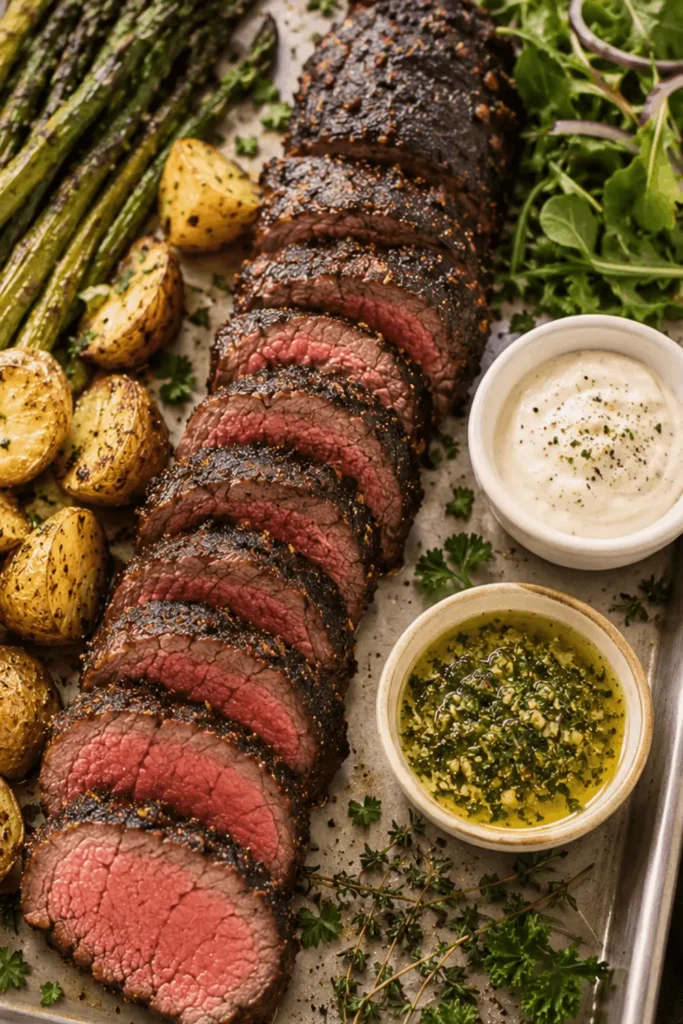
Making this smoked beef tenderloin is actually very easy. It takes about two hours. All you need are a few common spices you already have in your kitchen. It tastes just like something off a steakhouse menu. Once you try the reverse-sear method, you won’t even think of cooking this meat any other way.
When the night is a little special, but not a big celebration, you need a dish that will please everyone. Smoked beef tenderloin is a favorite among chefs. But most people think it can only be eaten on holidays or at restaurants. This cut is perfect for smoking. I first smoke it slowly over low heat. Then finish it with a hard sear. One roast. Two temperatures. No fancy equipment. That’s it.
If you already have a favorite way of smoking beef, that’s great too. And if you’re looking for another similar cut, you can also check out my smoked tomahawk steak. I used the same smoking method there. If you want thinly sliced meat for sandwiches, be sure to check out my smoked beef brisket pastrami guide. And if you’ve never heard of the reverse-sear method, I have a detailed explanation in my reverse-sear tomahawk steak post. But for today, I’ll walk you through the full method for tenderloin, so you know exactly when to take the tenderloin out of the smoker and when to sear it.
- Quick Highlights
- Smoked Beef Tenderloin Recipe Snapshot
- Why Is Smoked Beef Tenderloin So Tender?
- What Makes This Smoked Beef Tenderloin Recipe Different
- How to Buy a Whole Beef Tenderloin (Cuts and Buying Tips)
- Ingredients and Substitutions
- Equipment Needed
- How to Trim a Beef Tenderloin (Before Smoking)
- How to Smoke Beef Tenderloin (Step-by-Step)
- Smoked Beef Tenderloin Cook Time at 225°F
- Reverse Searing Smoked Beef Tenderloin for a Perfect Crust
- Smoked Beef Tenderloin Internal Temperature Guide
- Nutrition Information (Per Serving, 1 of 8)
- What I Learned Testing This Smoked Beef Tenderloin
- Resting and Slicing Smoked Beef Tenderloin
- What to Serve With Smoked Beef Tenderloin
- How to Store and Reheat Smoked Beef Tenderloin
- FAQs
- Final Thoughts
Quick Highlights
- Total time: About 2 hours
- Method: Smoked low and slow, then reverse-seared
- Servings: 8
- Flavor profile: Smoky, beefy, savory
- Skill level: Intermediate, beginner-friendly with a thermometer
- Key tools: Smoker, instant-read thermometer, butcher’s twine
Smoked Beef Tenderloin Recipe Snapshot
Smoked Beef Tenderloin Recipe (Reverse-Sear Method)
6 ingredients. Reverse-seared for a perfect crust. Ready in 1 hour 45 minutes. Juicy and smoky.
Why Is Smoked Beef Tenderloin So Tender?
The tenderloin is the part of a cow’s loin located between spine and alongside the backbone. The muscles in this area are used very little when the cow moves around. That’s why this meat is very tender. The less it’s used, the more tender the meat is. It’s very lean, so it has much less fat marbling compared to ribeye.
Large cuts, such as a whole tenderloin, are best cooked slowly over low heat, like smoking or roasting. This ensures every part of the meat cooks evenly and prevents even very lean meat from drying out. On the other hand, small cuts, like filet mignon steaks, are best cooked quickly at high heat.
That’s why the reverse-sear method works so well. At first, the slow smoke cooks the meat evenly on all sides. Then, the high heat at the end creates a nice crust that doesn’t naturally occur in this lean meat. If you want to use more seasoning, tenderloin works much better than a fattier steak like ribeye.
What Makes This Smoked Beef Tenderloin Recipe Different
Most smoked beef tenderloin recipe simply say to smoke the tenderloin until it’s cooked through. But for such expensive meat, that’s not enough. So in this recipe I’ve also specified exactly at what temperature to take the meat out of the smoker. That way, when cooking this roughly $50 roast, you won’t have to guess anymore.
If you do a little research before buying beef, you surely know that the tenderloin’s greatest virtue is its tenderness. So when cooking this meat, it’s crucial to maintain the right temperature, because this cut isn’t as forgiving as a beef chuck eye steak.
How to Buy a Whole Beef Tenderloin (Cuts and Buying Tips)
You get the best deal by buying a whole tenderloin. Because per pound, a whole tenderloin costs much less than pre-cut filet. The only thing is to know what you’re buying.
When you go to the butcher shop, don’t forget to ask for PSMO tenderloin. PSMO stands for “peeled, side muscle on.” They trim off the extra fat but leave the silver skin and chain parts. You can clean and trim those yourself. This little task will save you quite a bit of money.
Cuts of the Tenderloin
The main cuts of the tenderloin are:
- Butt end – The thick side of the roast. Best for a whole roast, since it holds its shape well.
- Center cut – The most even section in width. This is where classic filet mignon comes from.
- Tail – The thin, tapered end. Cooks fast, so I always tuck it under before tying.
- Chain – A thin strip of meat running along one side. Trim it off and save it for stir-fry or stew meat.
- Silver skin – A tough, silvery membrane covering part of the muscle. Always remove it before cooking.
What to Look For When Buying
In this recipe, I don’t cut the tenderloin into individual steaks. Instead, I fold the tail end underneath and tie it up so the entire roast holds a uniform shape. This ensures the whole roast cooks evenly in the smoke from one end to the other.
When buying tenderloin, choose one that’s firm to the touch and deep red in color. Avoid grayish-looking tenderloin or any that has a lot of liquid in the package. Choice grade is good enough for smoking. And if you want to splurge a bit, you can pick a higher-quality tenderloin.
Ingredients and Substitutions
For beef tenderloin smoked you will need:
Ingredients For Smoked Beef Tenderloin
- 4 pound center-cut beef tenderloin, trimmed and tied – Ask your butcher for the center cut. It’s the most even in thickness, so it smokes and sears at the same rate all the way through.
- 2 tablespoons olive oil – Coats the surface so the rub sticks instead of sliding off.
- 3 tablespoons Smoky Beef Rub (1 tablespoon kosher salt, 1 tablespoon coarse black pepper, 2 teaspoons garlic powder, 1 teaspoon smoked paprika) – My go-to blend for this recipe. The salt and pepper build the crust during the sear, the garlic powder won’t burn bitter like fresh garlic would at high heat, and the smoked paprika adds color and a head start on smokiness before the meat even touches the smoker.
Want a milder version? Drop the smoked paprika and add ½ teaspoon onion powder instead. Want more heat? Add ¼ teaspoon cayenne to the blend.
If you’re still comparing beef cuts before you buy, tenderloin is the leanest of the popular smoking cuts. It carries less fat than a ribeye or brisket, so don’t skimp on the rub. It’s doing more of the flavor work here.
For Garlic Herb Butter Sauce
- 1/2 tsp lemon zest (optional, adds brightness)
- 1/2 cup unsalted butter, softened
- 3 garlic cloves, minced
- 1 tbsp fresh parsley, finely chopped
- 1 tsp fresh thyme leaves (or 1/2 tsp dried)
- 1/2 tsp fresh rosemary, finely chopped
- 1/2 tsp kosher salt
- 1/4 tsp black pepper
Method:
- Let butter soften at room temperature for about 30 minutes — it should be soft enough to mash but not melted.
- In a small bowl, mash the butter with a fork until smooth.
- Add garlic, parsley, thyme, rosemary, salt, pepper, and lemon zest. Mix until fully combined.
- Spoon onto plastic wrap, roll into a log, and twist the ends. Chill for at least 1 hour to firm up.
- Slice into rounds and place directly on the hot sliced tenderloin right before serving, so it melts over the meat.
Equipment Needed
- Butcher’s twine – Keeps the tenderloin’s shape even for consistent doneness. I tie mine every two inches so the shape holds through the whole cook.
- Smoker (pellet, offset, or charcoal) – Any of these holds steady heat for indirect cooking. I use a pellet smoker for this recipe since it’s the easiest to walk away from.
- Instant-read or leave-in probe thermometer – This is how you avoid overcooking a lean cut like tenderloin. I use a leave-in probe so I can watch the temperature without lifting the lid.
You don’t need anything exotic here. A working smoker and an accurate thermometer matter more than brand names.
How to Trim a Beef Tenderloin (Before Smoking)
Removing Silver Skin and Excess Fat
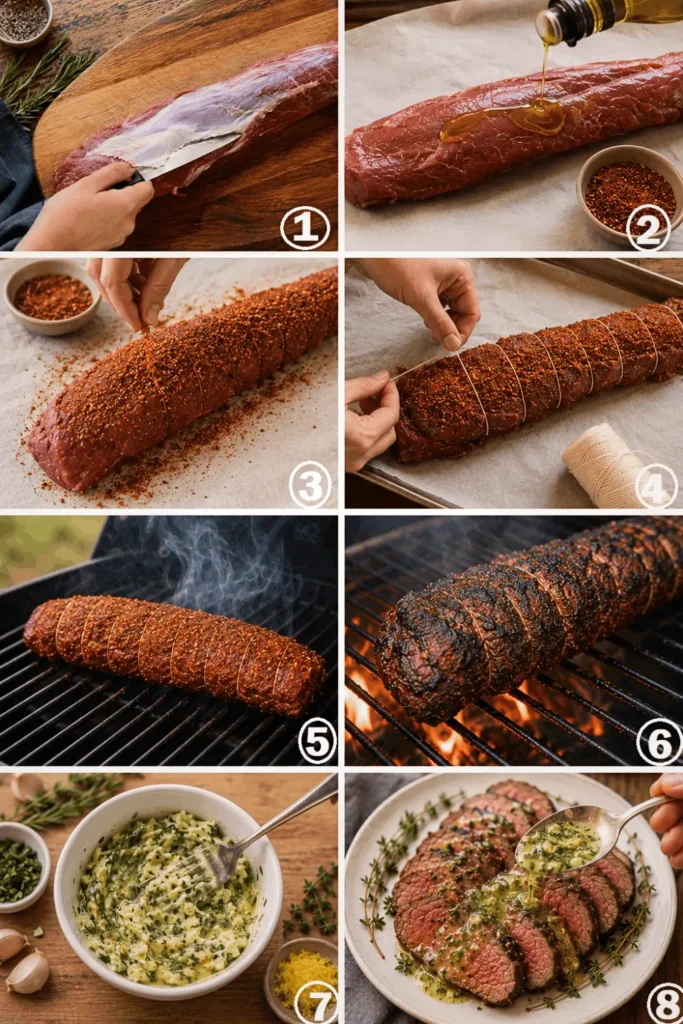
(SEE PIC. 1) Carefully insert the knife under the silver skin. Tilt the blade slightly upward. Then, in one smooth motion, pull it along the entire length. Trim off any excess fat you see. Actually, tenderloin doesn’t have much fat to begin with.
Tucking and Tying the Tail
(SEE PIC. 4) Fold the tail end of the roast down. Then tie it with butcher’s twine every two inches. This keeps the entire piece evenly thick. That’s the real secret to cooking it evenly.
How to Smoke Beef Tenderloin (Step-by-Step)
Smoking a beef tenderloin, cook it slowly over low heat, when the internal temperature reaches 110–115°F, remove it. Then sear it well over high heat. For a 4-pound roast, smoking and searing together take about 70–90 minutes in total.
Step 1: Season the Tenderloin
(SEE PICS. 2 & 3)
| Method | Steps | Best For |
|---|---|---|
| Dry Brine | Salt generously on all sides. Let sit uncovered in the fridge 8 to 12 hours. Salt draws moisture out, then pulls it back in for deeper seasoning. | When you have time to plan ahead |
| Dry Rub | Coat with olive oil first so seasoning sticks. Apply salt, pepper, garlic powder, and smoked paprika evenly. Rest at room temperature 30 to 45 minutes before smoking. | When you’re short on time |
One mistake I see often: people skip the room-temperature rest and go straight from fridge to smoker. That extra 30 minutes helps the meat cook more evenly from the start.
Step 2: Set Up the Smoker for Indirect Heat
Preheat the smoker for indirect cooking, bringing it up to 225°F. I prepare exactly the same way for a smoked tomahawk steak. This method also works great for tenderloin.
Step 3: Pick Your Wood
For beef, oak and hickory are my favorites. They preserve the meat’s natural flavor without overpowering it. If you prefer a milder smoke taste, pecan works well too. But it’s best to avoid mesquite. Its smoke flavor is much stronger, so it masks the tenderloin’s delicate taste. These woods are great for a light smoke flavor. On the other hand, using cherry or apple wood gives the beef a slightly sweeter smoke flavor, which might not be to everyone’s liking.
Step 4: Place and Monitor the Meat
(SEE PIC. 5) Place the tenderloin directly on the smoker grate. Then insert the thermometer probe into the thickest part. Now close the lid and let it cook. Check the temperature every 20 minutes. If you notice one side is getting hotter, turn the meat halfway through every 15 minutes or so. And keep the lid on as tightly as possible, because every time you open it, heat escapes and it takes longer to cook.
Step 5: Sear It
(SEE PIC. 6) Pull the tenderloin at 110 to 115°F. Get the grill or pan to 450 to 500°F. Then sear each side of the tenderloin for 2–3 minutes. The entire process will take about 10–12 minutes. For medium-rare, remove it when the internal temperature of the meat reaches about 120°F.
Step 6: Rest Before Slicing
After taking the meat off, loosely cover it with foil and let it rest for 10–15 minutes. During this time, even while it’s off the heat, its internal temperature will rise to about 130°F. This will leave the meat medium-rare.
Step 7: Slice and Top With Garlic Herb Butter
(SEE PICS. 7 & 8) Slice the smoked whole beef tenderloin against the grain into medallions about ¾ inch thick. Just before serving, place a pat of garlic-herb butter on each hot slice. As soon as the butter hits the hot meat, it will melt. This will beautifully bring out the smoky flavor without ever covering up the meat’s true taste.
Smoked Beef Tenderloin Cook Time at 225°F
smoked whole beef tenderloin at 225°F will take about 60-75 minutes for the internal temperature to reach 110-115°F. A smaller roast (2–3 pounds) can take up to about 45 minutes, a larger roast (5 pounds or more) up to 90 minutes. Always cook based on temperature, not the clock. Every smoker runs differently, and tenderloin’s shape varies piece to piece.
Reverse Searing Smoked Beef Tenderloin for a Perfect Crust
Getting Your Sear Station Hot
When the tenderloin’s internal temperature reaches 110–115°F, remove it from the smoker. Then heat your grill or cooking surface as hot as possible, a cast-iron skillet, a grill grate over direct heat, or the broiler. whatever you’re using, It needs to be piping hot. There’s no time to warm it up gradually here. I use this exact reverse-sear method when cooking a tomahawk steak, too. It works even better on lean cuts like the tenderloin, because there’s very little fat to render off before a beautiful crust forms.
Searing Technique (Timing Per Side)
Sear the tenderloin on both sides for 2–3 minutes each, making sure every rounded edge is also well seared. At this stage, the goal isn’t to cook the meat further; the real aim is to develop a beautiful, thick brown crust on the outside. In total, it will take about 10–12 minutes to complete the sear. Once the crust is properly formed, remove it immediately. The longer you leave it on the heat, the more the internal temperature of the meat will rise.
Smoked Beef Tenderloin Internal Temperature Guide
Doneness Chart (Rare to Medium-Well)
| Doneness | Pull Temp (Before Sear) | Final Temp (After Rest) |
|---|---|---|
| Rare | 115°F | 125°F |
| Medium-Rare | 120°F | 130°F |
| Medium | 130°F | 140°F |
| Medium-Well | 140°F | 150°F |
I pull mine at medium-rare almost every time. Tenderloin is lean enough that anything past medium starts to dry out and lose that melt-in-your-mouth texture people buy this cut for.
Understanding Carryover Cooking
Carryover cooking refers to the fact that meat continues to rise in internal temperature by about 5–10 degrees even after you remove it from the heat, because the outside is hotter than the inside. During the rest period, that heat gradually moves toward the center. That’s why you should never let the tenderloin reach your final target temperature—you need to pull it off just before then. According to the USDA Food Safety, whole muscle cuts of beef, such as steaks or roasts, are safe when the internal temperature reaches at least 145°F and they are allowed to rest for 3 minutes.
Nutrition Information (Per Serving, 1 of 8)
| Nutrient | Amount |
|---|---|
| Calories | 562 kcal |
| Protein | 38g |
| Fat | 45g |
| Saturated Fat | 17g |
| Cholesterol | 135mg |
| Sodium | 841mg |
| Carbohydrates | 1g |
| Fiber | 0.4g |
| Sugar | 0g |
Source: USDA FoodData Central. Nutrition calculated per serving (1 of 8).
A note on sodium: this is calculated using Morton kosher salt (about 15g per tablespoon). If you use Diamond Crystal, which is lighter per tablespoon, actual sodium will run lower, closer to 500-550mg per serving.
What I Learned Testing This Smoked Beef Tenderloin
I’ve made this recipe many times, so I always keep a few small tips in mind, and they really come in handy. First of all, don’t rely solely on the weight or size of the tenderloin to determine cooking time. Even two roasts of the same size may not cook in the same amount of time, because how you tie them with string and their actual shape can affect the cooking time by as much as 15 minutes.
The importance of searing is even greater than many people think. The first few times, I didn’t heat the pan or grill properly before adding the meat, so instead of a nice crust, I ended up with a thin, pale layer. Later, I started waiting a few minutes before searing so the pan or grill could heat up properly and begin to smoke from the surface. That way, the crust turns out much better.
My family has eaten this recipe many times. After one bite, my husband told me why I hadn’t cooked the steak medium-rare for him from the start. Yet when he goes to a restaurant, he usually orders his steak that way. My mom, who usually doesn’t finish her entire meal, ate every last bite this time. She even asked for leftovers for the next day. And my dad, who is quite picky about smoked meat, said it was better than steaks from many steakhouses he’s been to. There’s just something about the smoky flavor that takes the meat to another level.
One more thing I’ve learned time and patience is crucial in this recipe, just like with my smoked beef brisket pastrami. But there’s one big difference. Brisket can handle a lot even when cooked slowly, but tenderloin can’t. So don’t cook by time-always cook by thermometer.
Resting and Slicing Smoked Beef Tenderloin
After searing, lightly cover the tenderloin with foil and let it rest for 10–15 minutes. This step is absolutely essential. If you cut into it too soon, the juices will run out onto the cutting board instead of staying in the meat. Once it’s rested, slice the meat against the grain into pieces about ¾ inch thick for the tenderest bite.
What to Serve With Smoked Beef Tenderloin
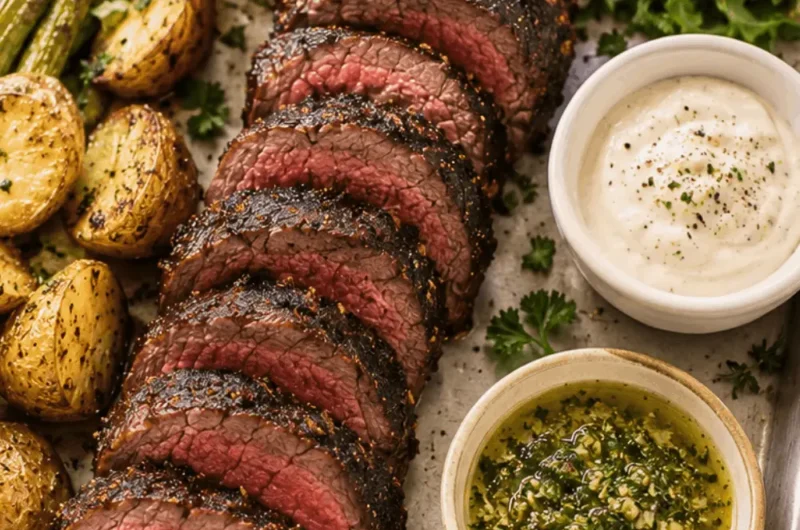
- Roasted potatoes – pairs well without competing with the smoke flavor.
- Grilled asparagus – light and simple, lets the beef stay the star.
- Simple green salad – a fresh, easy side for a heavier main.
- Horseradish cream – the classic pairing for tenderloin, cuts through the richness nicely.
For a full meal, this recipe also works well next to beef chuck eye steak if you’re feeding a bigger group and want two different cuts on the table.
How to Store and Reheat Smoked Beef Tenderloin
- Store leftovers in an airtight container.
- Keep in the fridge for up to 3 days.
- Reheat gently in a low oven around 250°F.
- Warm just until heated through, not longer.
Smoked Beef Tenderloin (Reverse-Sear) – Juicy & Crusty
Course: Main CourseCuisine: American BBQDifficulty: Intermediate8
servings20
minutes1
hour25
minutes562
kcal1
hour45
minutesThis smoked beef tenderloin uses the reverse-sear method for a juicy center and a deep, crusty bark. Simple steps, tested results, no fancy skills needed. Smoked low and slow for 75 minutes, then reverse-seared for 10, for a juicy center and crusty outside every time.
Ingredients
For the Beef Tenderloin
4 pound center-cut beef tenderloin, trimmed and tied
2 tablespoons olive oil
3 tablespoons Smoky Beef Rub1 tablespoon kosher salt
1 tablespoon coarse black pepper
2 teaspoons garlic powder
1 teaspoon smoked paprika
For Garlic Herb Butter Sauce (Optional)1/2 cup unsalted butter, softened
3 garlic cloves, minced
1 tbsp fresh parsley, finely chopped
1 tsp fresh thyme leaves (or 1/2 tsp dried)
1/2 tsp fresh rosemary, finely chopped
1/2 tsp kosher salt
1/4 tsp black pepper
1/2 tsp lemon zest (optional, adds brightness)
Directions
- Preheat your smoker to 225°F and set it up for indirect heat.
- Coat the tenderloin with olive oil, then apply the Smoky Beef Rub evenly over the surface.
- Place the tenderloin on the smoker grate and insert a thermometer probe into the thickest part.
- Close the lid and smoke until it reaches 110 to 115°F internal, about 75 minutes.
- Pull the tenderloin and get your grill or pan to 450 to 500°F.
- Sear 2 to 3 minutes per side, about 10 minutes total, until it reads around 120°F.
- Tent loosely with foil and rest 10 to 15 minutes.
- While it rests, mash the softened butter with garlic, parsley, thyme, rosemary, salt, pepper, and lemon zest until combined.
- Slice into ¾-inch medallions against the grain.
- Top each warm slice with a spoonful of garlic herb butter and serve.
Notes
- Choice grade tenderloin is the best value; save prime grade for a splurge.
- Oak and hickory are the best woods for this cut. Skip mesquite, it overpowers tenderloin’s mild flavor.
- Always cook to temperature, not to the clock, since every smoker and roast shape varies.
- Garlic herb butter can be made ahead, rolled into a log, and chilled up to 3 days or frozen up to 2 months.
FAQs
How Long Does It Take to Smoke a Whole Beef Tenderloin?
A whole beef tenderloin takes about 60 to 90 minutes to smoke at 225°F, depending on its size, plus another 10 to 12 minutes for the reverse sear. Always confirm doneness with a thermometer rather than relying on time alone, since tenderloin shape varies from roast to roast.
What Temperature Should I Pull Beef Tenderloin Off the Smoker?
Pull beef tenderloin off the smoker at 110 to 115°F internal if you plan to reverse sear it, since the sear and rest will carry the temperature up to your final target. For medium-rare, that means finishing around 130°F after the rest.
What’s the Best Wood for Smoking Beef Tenderloin?
Oak and hickory are the best woods for smoking beef tenderloin because they add strong, classic beef flavor without overpowering the meat. Pecan is a solid milder alternative. Avoid mesquite, which tends to overwhelm a lean, mild cut like this one.
Can I Smoke Beef Tenderloin on a Pellet Grill?
Yes, a pellet grill works well for smoked beef tenderloin. Set it to 225°F, use the smoke setting if your model has one, and monitor internal temperature with a probe thermometer just as you would on an offset or charcoal smoker.
Final Thoughts
Smoked beef tenderloin can seem a bit tricky at first. But once you master the reverse-sear method, it’s no longer difficult. smoke it slowly over low heat until the internal temperature reaches 110–115°F. Then sear it quickly over high heat. Finally, let it rest for a few minutes before slicing.
My advice: never skip using a thermometer. And don’t rush the searing. These two things turn good results into great ones. If you make this recipe, be sure to let me know how it turns out. And if you’re looking for more smoked beef recipes, you can also check out my smoked tomahawk steak. Or leave a comment below and share your experience.



[…] for more beef dinner ideas, be sure to try my Smoked Beef Back Ribs, Smoked Dino Beef Ribs, and Smoked Beef Tenderloin recipes. They make great weekend meals and are perfect for anyone who loves tender, flavorful […]