Tomahawk Steak vs Ribeye: Which Cut Should You Buy?

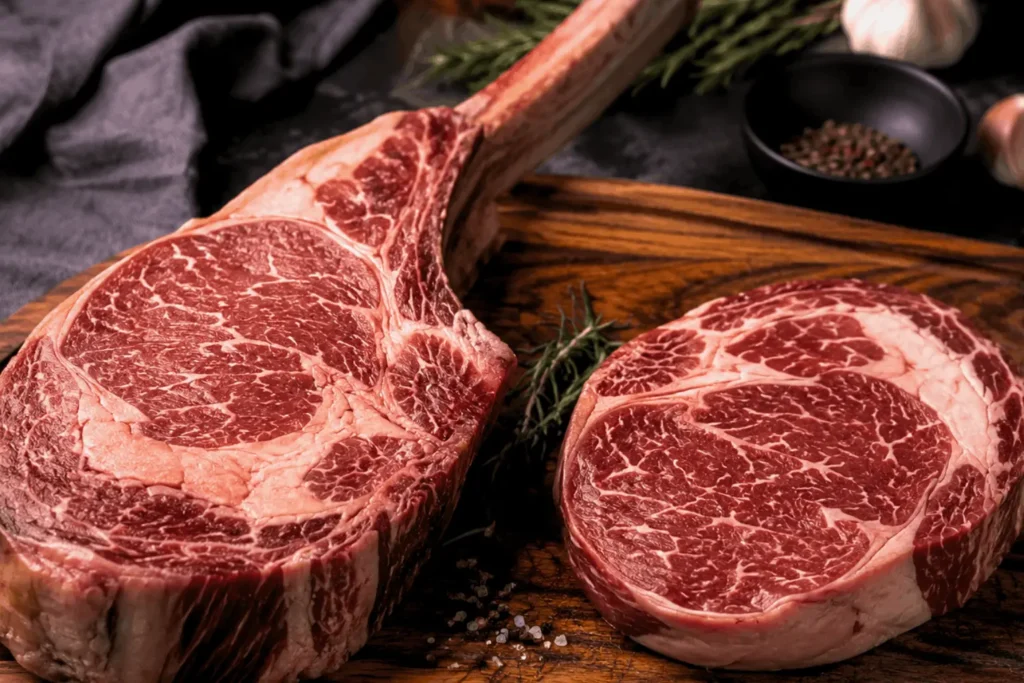
When comparing Tomahawk Steak vs Ribeye, the main difference is the bone. Both are cut from the same part of the cow. That section, called the rib primal, which runs from ribs 6 to 12. But that one difference in bone changes the price significantly. A good quality ribeye often costs $25 per pound. A tomahawk steak with its 16-inch bone costs about $40 per pound.
I’ve cooked both types of steak many times. And believe me, whenever friends are getting ready for a backyard cookout, they ask almost the same question: “Is the tomahawk really that much better, or am I just paying more for a big bone?
That’s exactly what this guide answers. I will cover flavor, price, cooking methods and by the end you’ll know which steak is right for you.
Already set on the tomahawk and cooking on a gas grill? Jump straight to my guide on tomahawk steak on a gas grill.
- Tomahawk Steak vs Ribeye: What's the Main Difference?
- What Is a Tomahawk Steak?
- What Is a Ribeye Steak?
- Tomahawk Steak vs Ribeye: Side-by-Side Comparison
- Flavor Comparison: Does the Bone Actually Add Flavor?
- Price Comparison: What Are You Really Paying For?
- Cooking a Tomahawk Steak vs Ribeye
- Which Is Better for a Backyard BBQ?
- Common Mistakes When Buying and Cooking These Cuts
- FAQs : Tomahawk vs Ribeye:
- Final Recommendation
Tomahawk Steak vs Ribeye: What’s the Main Difference?
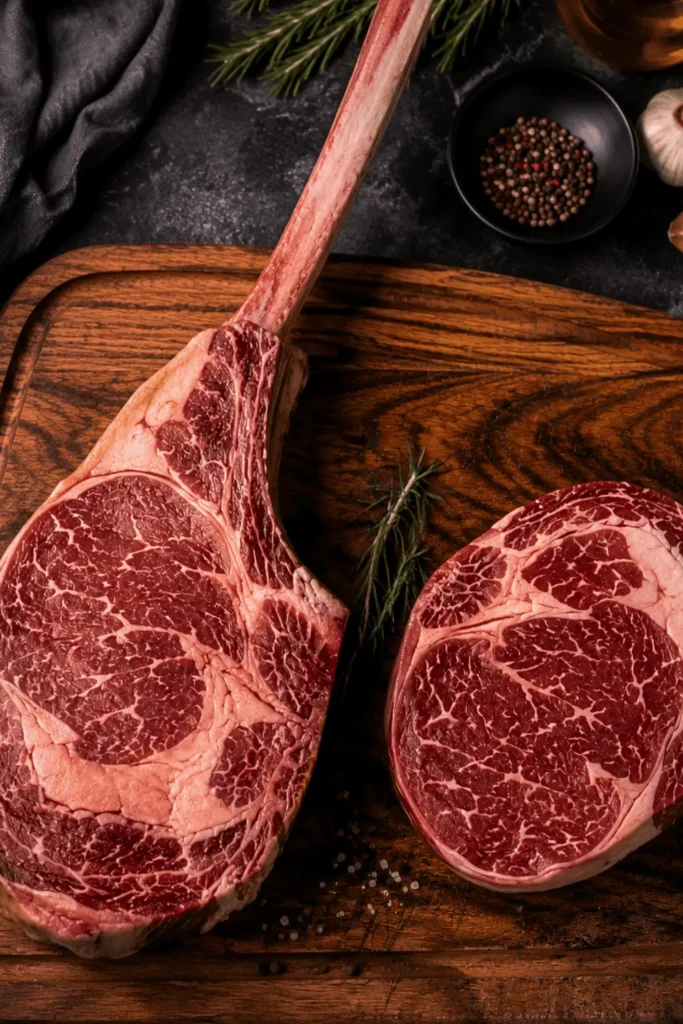
Both of these cuts are taken from the same part rib primal section of the cow. This part is usually between ribs 6 and 12. The ribeye is also cut from this section. It is sold boneless or with a small bone. In fact, the tomahawk is also a ribeye. The difference is that it retains the full rib bone, which is typically 16 to 20 inches long — and to make the presentation more appealing, the bone is well-trimmed, a process called Frenching.
Most articles don’t make this clear. But the truth is, a tomahawk steak is actually a ribeye. The cut of meat, the muscle, the fat marbling, and the trim—it’s all the same. The only differences are in the shape of the bone and how it’s served. It’s that simple but the large bone does create a few key differences. Let’s go through them one by one.
What Is a Tomahawk Steak?
A tomahawk steak is basically a thick bone in ribeye. It’s usually 2 to 2.5 inches thick. It retains the entire rib bone, which is cleaned and trimmed around. The long bone looks a lot like the handle of a tomahawk axe and that’s where the name comes from.
The average weight of a tomahawk steak is typically 30 to 45 oz. However, a large portion of that is bone. In fact, the extra 8 to 12 ounces you’re paying for can’t be eaten.
Key tomahawk steak specs:
- Cut from: Rib primal ribs 6-12
- Typical weight: 30-45 oz
- Bone length: 14-20 inches (full rib bone)
- Thickness: 2 to 2.5 inches
- Best cooking method: Reverse sear or two-zone grill
What Is a Ribeye Steak?
A ribeye is cut from the same rib primal section. It’s usually sold boneless, with only the rib meat. Sometimes it’s also available with a small bone — and if the ribeye has a bone that’s 2 to 5 inches long, it’s generally called a cowboy steak.
The ribeye is known for its excellent marbling. The fat streaked throughout the meat melts during cooking. Making the meat juicier and more flavorful. For this reason ribeye almost always comes out on top in blind taste compared to many leaner cuts.
Key ribeye specs:
- Cut from: Rib primal ribs 6-12
- Typical weight: 12-20 oz (boneless), 16-28 oz (bone-in)
- Bone length: None (boneless) or 2-5 inches (cowboy cut)
- Thickness: 1 to 1.5 inches standard; up to 2 inches thick-cut
- Best cooking method: Cast iron sear, grill, reverse sear
Tomahawk Steak vs Ribeye: Side-by-Side Comparison
| Feature | Tomahawk Steak | Ribeye (Boneless) | Cowboy Ribeye |
|---|---|---|---|
| Cut Source | Rib primal (same as ribeye) | Rib primal | Rib primal |
| Bone | Full rib bone (14-20″) | None | Short stub (2-5″) |
| Typical Weight | 30-45 oz | 12-20 oz | 18-28 oz |
| Thickness | 2-2.5 inches | 1-1.5 inches | 1.5-2 inches |
| Marbling | High | High | High |
| Avg Price/lb | $35-$55 | $20-$35 | $25-$40 |
| Servings | 2 people | 1 person | 1-2 people |
| Presentation | Show-stopping | Classic | Strong |
| Cooking Difficulty | Moderate-High | Easy-Moderate | Moderate |
| Best For | Special occasions or BBQ shows | Weeknight or everyday grilling | Weekend grilling |
To learn more about beef primal cuts and where each steak comes from then visit the Kansas State University Meat Science program.
Flavor Comparison: Does the Bone Actually Add Flavor?
Steak lovers have asked this question so many times and now the answer is pretty clear. I’ll give a straight answer. When cooking, bones have very little impact on the meat’s flavor. So just having bones won’t make the steak taste much better.
Bones add extra flavor — there’s some truth to that but it’s not the whole story. In reality, the tissue around the bone softens as it cooks. Because bone absorbs heat slowly, the nearby meat cooks more gently and stays juicier. As a result, the meat near the bone may taste slightly different. That’s not because flavor is leaching from the bone — it’s simply because that section is cooked less.
A fun finding emerged from blind taste and other food research by America’s Test Kitchen: when meat from the same animal is cooked to the same internal temperature, tasters couldn’t detect any clear difference between bone-in and boneless cuts.
The true impact on a steak’s flavor comes from the meat’s marbling, fat content, beef grade, dry aging and resting the meat after cooking. These factors make the biggest difference in taste and texture.
Bottom line on flavor: The flavor of a tomahawk and a bone-in ribeye is almost the same — they’re both from the same cut of meat. The real difference isn’t in the length of the bone. In restaurants, the flavor of a steak depends more on the quality of the beef, the meat’s marbling, and how much butter is used at the end. It’s the quality of the meat that matters most, not the size of the bone.
Price Comparison: What Are You Really Paying For?
This is where the question of Tomahawk’s price comes up. The part of extra money you’re paying goes straight to a large bone that you actually can’t eat.
In terms of value buy here the Tomahawk loses points.
A tomahawk steak weighs about 40 oz at $40 per pound, that comes to roughly $100 — about 10 to 12 oz of that is bone. So you’re actually paying $100 for about 28 to 30 oz of edible beef.
A bone in ribeye priced at $28 per pound weighs 24 oz, its total cost will be about $42. Both this ribeye and a tomahawk are enough for two people. The tomahawk can cost more than twice as much.
The price premium for a tomahawk comes from:
- Cleaning long bones (French style) takes extra time.
- An extra charge is added for an attractive presentation.
- Special butcher shops or restaurants carry an additional markup.
- People are willing to pay more just for the appearance and presentation.
If you’re planning to feed a lot of people or going to a BBQ party where presentation matters. A tomahawk steak can be worth the price. If your goal is simply to enjoy top-quality beef then a thick cut bone in ribeye or cowboy steak is usually a better choice.
Cooking a Tomahawk Steak vs Ribeye
The thickness difference changes how you cook these cuts.
How to Cook a Tomahawk Steak
A 2.5-inch-thick tomahawk is quite thick for cooking directly over high heat. If you cook it at high heat from the start, the exterior can burn quickly, yet the interior won’t be properly cooked.
The reverse sear method works best — and Cook’s Illustrated has tested it extensively to confirm why low-and-slow before the sear produces the most even cook:
- Season the steak generously with salt and pepper — or use a homemade BBQ spice rub for extra depth of flavor. If you want more options, these dry rub recipes work beautifully on beef too.
- Place it on a wire rack in a 250°F oven
- Cook until internal temperature reaches 120-125°F (about 45-60 minutes)
- Pull it out and rest for 10 minutes
- Sear on a screaming-hot grill or cast iron for 1-2 minutes per side
- Rest 5-10 minutes before cutting
Target internal temperatures:
- Rare: 120-125°F
- Medium-rare: 130-135°F (recommended)
- Medium: 140-145°F
How to Cook a Ribeye
A 1- to 1.5 inch thick ribeye is more forgiving. You can cook the whole thing on the grill using a two-zone method, or you’ll get great results in a cast-iron pan.
Simple cast iron method:
- Pat the steak dry and season with kosher salt and pepper
- Heat cast iron until smoking hot
- Sear 2-3 minutes per side
- Add butter, garlic, and thyme baste for 1 minute
- Rest 5 minutes and serve
Ribeye cooks relatively quickly. It’s also less likely to be overcooked by mistake, making it quite convenient for busy weeknight dinners. When you need to serve steaks to several people at different preferred doneness levels, ribeye is still a much more practical choice.
Which Is Better for a Backyard BBQ?
If your goal is create everyone WOW moment at the cookout? The tomahawk is definitely the best option. When you bring that massive bone in steak to the table, all eyes will be on it. In that moment the presentation of the steak itself becomes the main attraction.
For practical backyard cooking for 4 to 6 people, thick cut bone in ribeye or cowboy steaks are the best choice. They make it easy to cook several steaks at once and are convenient to handle. The best part is that they’re much more budget friendly.
Choose the tomahawk if:
- You’re cooking for 2 and want a centerpiece moment
- Budget isn’t the priority
- You have a grill that can handle two-zone cooking
- You want the photo and the experience
Choose the ribeye if:
- You’re feeding more than 2 people
- You want consistent, foolproof results
- You care more about flavor-per-dollar
- You’re newer to grilling thick steaks
Common Mistakes When Buying and Cooking These Cuts
I often see a common mistake. Many people end up buying a thin tomahawk steak. The steak is less than two inches thick yet you pay premium tomahawk prices. After cooking it doesn’t look as impressive as you’d hoped. In my opinion, when you buy a tomahawk and ask the butcher to cut it at least two inches thick. This little trick works wonders.
Another mistake is not letting the steak rest. If you let it sit for a while after cooking then the meat’s juices redistribute throughout. But if you cut into it too soon a lot of that delicious juice will end up on the cutting board. Let the steak rest for at least 10 minutes. That way both the flavor and juiciness will be much better.
The third point is: don’t cook a steak by time alone — especially thick steaks. The best way to know if they’re cooked properly is to use a meat thermometer. Don’t rely on guesswork. Measuring the temperature correctly gives the best results.
FAQs : Tomahawk vs Ribeye:
Is a tomahawk steak the same as a ribeye?
Yes. A tomahawk steak is actually a bone in ribeye. It has the entire rib bone cleaned and left intact. However, the meat cut and marbling are just like a regular ribeye. So there isn’t much difference between the two in terms of the actual meat.
Why is a tomahawk steak so expensive?
There are a few reasons why a tomahawk steak is more expensive. One is the large rib bone. Another is the extra work the butcher does to clean and French the bone. You also pay a premium for its attractive presentation.
Does the long bone on a tomahawk add flavor?
There can be a very slight difference. The bone shields the meat next to it from some of the heat. So the part close to the bone can stay a bit juicier. Interestingly, blind tests have shown that when cooked at the same temperature, most people can’t detect any clear difference between a bone in ribeye and a boneless ribeye.
How many people does a tomahawk steak feed?
A 36- to 42-ounce tomahawk steak is usually enough for two people. If you serve it with some side dishes then you can easily feed three.
What is a cowboy steak?
The bone in a ribeye steak is typically 2 to 5 inches long and it’s known as a cowboy steak. You could call it a middle ground option between a classic bone-in ribeye and a full tomahawk. It’s more visually appealing than a boneless ribeye and much more affordable than a tomahawk.
Which is better for grilling: tomahawk or ribeye?
Both types of steak cook wonderfully on the grill. However, because the tomahawk is much thicker. It’s generally best to use a two-zone setup and the reverse sear method to cook it. On the other hand a ribeye is much easier to cook and cooks quickly.
Final Recommendation
Bringing a tomahawk steak to the table at a backyard BBQ really grabs everyone’s attention. It’s fantastic in terms of presentation. If you’re cooking for a crowd and need to keep the budget in mind then it’s better to choose a thick cut bone-in ribeye or cowboy steak. Trust me, you’ll enjoy almost the same steak experience for a lot less money.
Both cuts are outstanding. In the end it comes down to whether you want to enjoy a great steak or create a moment that will wow everyone.
Try either cut at your next barbecue. Then don’t forget to let me know how it went. If you’ve already grilled both I’d love to know which one is your favorite. Share your experience in the comments below.
Love working with premium beef cuts? My beef brisket pastrami recipe is another showstopper worth adding to your BBQ rotation.
Cooking for a crowd? Pair your tomahawk with juicy grilled boneless chicken thighs or this crowd-pleasing Cava grilled chicken recipe to feed everyone at the table.