Smoked Tomahawk Steak: How to Get Perfect Bark Every Time

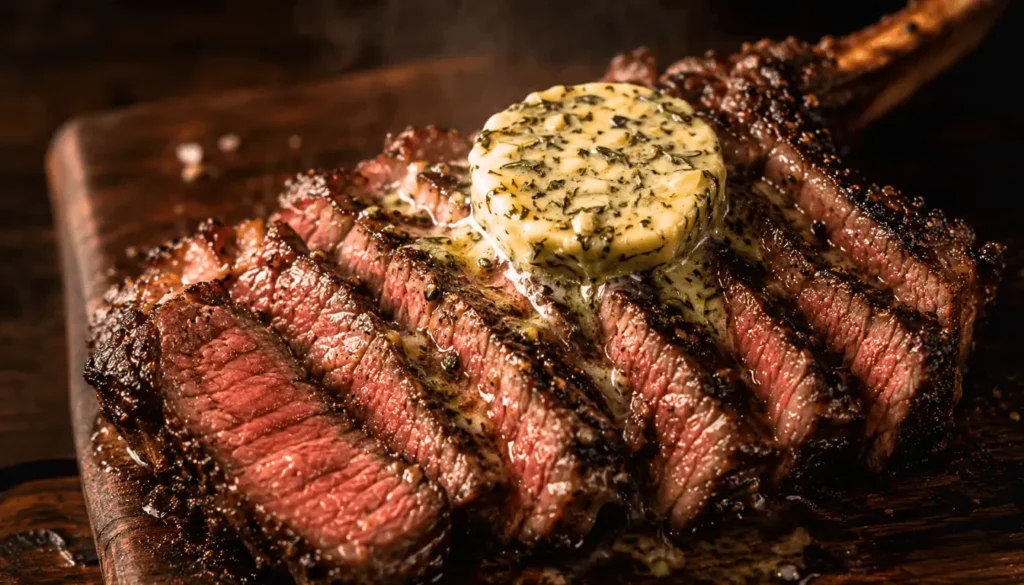
A smoked tomahawk steak isn’t just a bigger ribeye on a longer cook time. At 2-2.5 inches thick, this cut is more like a small roast than a regular steak. So cooking over direct heat can cause the outside to burn before the inside is properly heated.
The first time I smoked one, I treated it like any other piece of beef, same temp, same lazy guesswork. The bark turned out patchy and the center landed somewhere between medium-rare and “close enough.” A cut this expensive doesn’t forgive that kind of shortcut.
In this guide, I’ll walk through exactly how I smoke a tomahawk from dry brine to finishing sear, the wood and smoker setups that work, and the mistakes that wreck an expensive piece of beef. Still deciding on the cut? My tomahawk vs ribeye comparison breaks down price and value. Want the science behind the sear? My reverse sear tomahawk guide covers that in detail.
- Why Smoke a Tomahawk Instead of Grilling It?
- Recipe Overview
- What I Learned Testing This
- What Smoker Works Best for a Tomahawk Steak?
- Best Wood for Smoking a Tomahawk Steak
- Equipment and Ingredients You'll Need
- How to Smoke a Tomahawk Steak (Step-by-Step)
- How Long to Smoke a Tomahawk Steak at 225°F
- Smoked Tomahawk Steak Temperature Chart
- What Is a Smoke Ring? (And Why It Doesn't Mean What You Think)
- Common Mistakes to Avoid
- What to Serve with Smoked Tomahawk Steak
- The Best Butter for Smoked Tomahawk Steak
- Storage and Reheating Tips
- Nutrition Information
- Health Benefits of Smoked Tomahawk Steak
- FAQs About Smoked Tomahawk Steak
- Conclusion
Why Smoke a Tomahawk Instead of Grilling It?
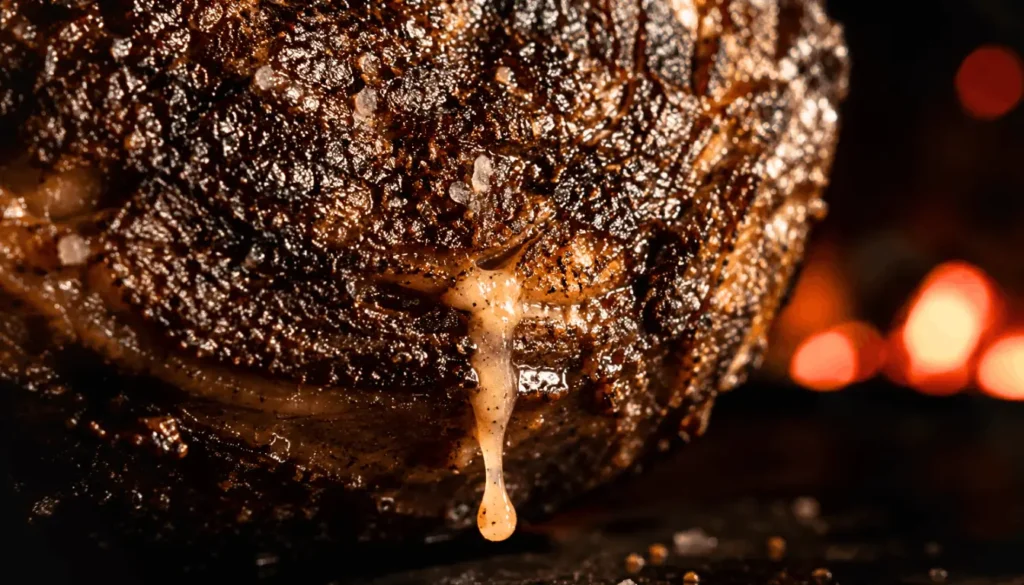
The same rule applies to thick meats. You need to apply heat to get a good crust and even cooking. Smoking and grilling are both effective methods for doing this, but they work differently. On a gas grill, hot air circulates around the meat to cook it. In a smoker, on the other hand, the smoke from burning wood is trapped inside. This smoke typically stays around the meat for an hour or more, giving the meat extra smoky flavor and helping to form a better crust.
Real wood smoke vs. gas grill flavor. My gas grill tomahawk post uses a foil pouch of wood chips on the burner for a hint of smoke. It works, but it’s a shortcut. A real smoker gives you sustained smoke contact for the entire cook, not just a wisp near the end.
More even cooking, edge to center. Smokers run cooler and steadier than a grill’s indirect zone. That slower climb means less risk of a gray band of overcooked meat near the surface.
Better control over a thick cut. You’re not fighting flare-ups or babysitting two heat zones. Set the temperature, insert the probe, and let the smoker do the patient work.
Bark formation. This is why I prefer smoking cuts of this size. The dry salt, airflow around it, and low heat over a long period combine to create a layer of incredible flavor on the outside of the meat. You can’t achieve that taste by simply searing it on a high-heat grill. It’s this bark that makes the meat’s flavor deeper and richer.
Smoke penetration. Wood smoke doesn’t just sit on the surface. Over 90 minutes to 2 hours, it works its way into the outer layer of the meat, not just the crust.
Recipe Overview
Smoked Tomahawk Steak: Perfect Bark
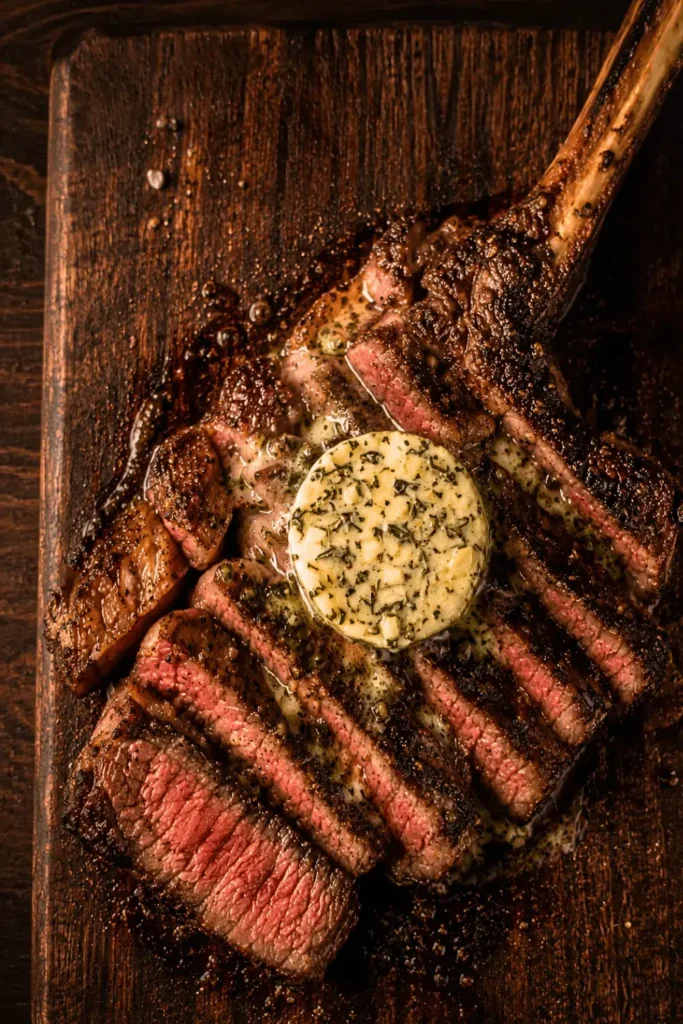
Note: Cook time and difficulty reflect a real smoker, not a gas grill shortcut. Build in extra time if you’re cooking in cold or windy weather.
What I Learned Testing This
I’ve smoked this same cut more times than I can count at this point, and a few things surprised me along the way.
Post oak gave me the most balanced result, smoke that complemented the beef instead of fighting it. Hickory was noticeably stronger, but it still worked well, it just leaves less room for error. Cherry produced the best-looking bark of anything I tried, a deep mahogany color, even though the smoke flavor itself was lighter. Mesquite, on the other hand, overpowered the meat almost every time I used it at standard smoking length. In the beginning, I made a lot of mistakes. For example, I used too much mesquite wood, as if it were just like any other wood.
Later I realized that pulling the steak at 118°F to 120°F before the sear consistently gave me the best medium-rare result. Pull it any earlier, and the sear has to do too much work to finish the center, which risks burning the crust before the inside catches up.
The outside weather also significantly affects cooking time. The same steak can take about 20 minutes longer to cook on a cold, windy day compared to a calm, 70°F afternoon. So, plan for a little extra time when smoking in the winter. And trust the thermometer reading over guesswork.
What Smoker Works Best for a Tomahawk Steak?
Any smoker capable of holding a steady 225°F for two hours will work. The differences come down to flavor strength and how much attention the fire needs.
| Smoker Type | Best For | Flavor Strength | Effort Required |
|---|---|---|---|
| Pellet Smoker | Beginners, set-and-forget cooks | Mild to moderate | Low |
| Offset Smoker | Strongest, most traditional smoke flavor | Strong | High |
| Kettle Grill (Snake Method) | Anyone without a dedicated smoker | Moderate | Moderate |
Pellet smoker. This is the easiest entry point. Set the temperature, load the hopper, and the auger handles the rest. Temperature stability is excellent, which matters a lot on a cook where 15 degrees of drift can change your timing.
Offset smoker. This delivers the strongest, most traditional smoke flavor of the three, but it asks more of you. You’re managing an actual fire, adjusting airflow, and watching temperature swings the whole cook.
Kettle grill with the snake method. Don’t underestimate this one. Arranging charcoal in a slow-burning line around the kettle’s edge, with wood chunks placed along the way, gets you a genuinely good low-and-slow cook without buying a dedicated smoker.
Which one I prefer. I reach for my pellet smoker for tomahawk steaks most often. A cut this expensive isn’t the place to be fighting an unpredictable fire. The consistency matters more to me than squeezing out the last bit of smoke intensity, especially on a 2-hour cook where a single bad swing in temperature can throw off your timing.
Best Wood for Smoking a Tomahawk Steak
The wood you choose changes the flavor more than almost any other decision in this whole process.
Post oak. Balanced and beef-forward. This is my go-to for tomahawk, since it adds smoke without covering up the actual taste of the meat.
Hickory. Bold and classic. A great choice if you want a stronger, more traditional barbecue flavor, just don’t pair it with an already heavily seasoned rub.
Cherry. Milder smoke with excellent color. If you care about how the steak photographs or presents at the table, cherry gives you that deep mahogany bark with a gentler flavor underneath.
Mesquite. It is best to use it carefully. It burns at quite high temperatures and burns quickly. If you are not careful, its flavor can become too intense and strong.
Can you mix woods? Yes, and it’s worth trying. Oak with a bit of cherry mixed in gives you balanced flavor with better color than oak alone. I wouldn’t go past two wood types on one cook, though, or the flavors start to compete instead of working together.
Equipment and Ingredients You’ll Need
You don’t need a long shopping list here. Most of the heavy lifting comes from the smoker itself and a little patience.
Equipment
- Smoker (pellet, offset, or kettle set up for the snake method) — Any of the three works. See the smoker comparison section above if you’re still deciding which setup fits you.
- Instant-read thermometer — A Thermapen or ThermoPop works well here too. You’ll use this to confirm your final sear temp before slicing.
- Leave-in probe thermometer — This is the one that actually matters for this cook. You’re not opening the lid every 15 minutes to check, you’re watching the probe from outside the smoker.
- Wire rack — Elevates the steak during the dry brine so air circulates on all sides, not just the top.
- Tongs — For moving the steak on and off the smoker and flipping during the sear. Skip the fork, piercing the meat lets the juices you just smoked for two hours run right out.
- Cast-iron skillet, for the finishing sear — Holds heat better than any other pan, and it’s where the butter baste actually does its job.
- Butcher’s twine (optional) — Useful if you want to tie the bone side down for a more even shape on the smoker grate, though it’s not required for a good result.
Ingredients
- 1 tomahawk steak (2 to 2.5 inches thick) — Thinner than 2 inches and you lose the whole point of smoking it this slow. Stick with USDA Choice or Prime grade for the marbling this method rewards. Learn more about USDA beef grading standards.
- Kosher salt — Coarse grind for the dry brine. Morton or Diamond Crystal both work fine here.
- Black pepper — Coarse cracked, not fine. Fine pepper can scorch during the hard sear at the end.
- Unsalted butter — For the baste during the sear. Unsalted gives you control since the dry brine already handled seasoning.
- Garlic — Crushed or sliced, added to the butter baste in the final minute of the sear.
- Rosemary — Fresh sprigs for the baste. Dried works in a pinch but won’t release the same aroma.
- Thyme — Same role as the rosemary, added alongside it for the baste.
Want to push the seasoning further before it hits the smoker? My homemade BBQ spice rub works well underneath the salt and pepper, the same way it does on the gas grill version.
How to Smoke a Tomahawk Steak (Step-by-Step)
Quick answer: Dry brine the steak overnight, smoke at 225°F until it hits 118-120°F internally (roughly 90 minutes to 2 hours), rest, then finish with a hard sear in a cast-iron skillet before a short final rest and slice.
Step 1: Dry Brine Overnight
Salt the steak generously on all sides. Place it uncovered on a wire rack in the fridge overnight. This pulls moisture to the surface, then reabsorbs it back into the meat, seasoning it all the way through and setting up a drier surface for better bark.
Step 2: Bring the Steak Out While the Smoker Stabilizes
Pull the steak from the fridge while you preheat the smoker to a steady 225°F. Insert your leave-in probe thermometer into the thickest part of the meat, away from the bone.
Step 3: Smoke Until the Target Internal Temperature
Place the steak on the smoker and let it work. Resist the urge to lift the lid every ten minutes. Every peek lets out heat and smoke, and adds time you didn’t need to add.
Step 4: Rest Before the Sear
Once the steak hits 118°F to 120°F, pull it off and let it rest for about 10 minutes. This settles the juices before the high-heat finish.
Step 5: Sear Over High Heat
Finish in a screaming-hot cast-iron skillet or over direct flame, 60 to 90 seconds per side. This is where the Maillard reaction builds that deep, dark crust. For the full breakdown of why this step matters so much on a thick cut, my reverse sear tomahawk guide goes deeper into the science.
Step 6: Butter Baste
Add butter, crushed garlic, rosemary, and thyme to the skillet during the sear. Tilt the pan and spoon the melted butter over the steak as it finishes.
Step 7: Final Rest and Slice
Move the steak to a cutting board, tent loosely with foil, and rest for 10 minutes. Slice against the grain and serve right away.
How Long to Smoke a Tomahawk Steak at 225°F
Quick answer: A 2 to 2.5 inch tomahawk steak takes roughly 90 minutes to 2 hours at a steady 225°F to reach 118-120°F internally, before the finishing sear.
That range isn’t fixed, and a few things push it longer or shorter:
- Thickness. A 2.5-inch steak runs longer than a 2-inch one, even at the same smoker temperature.
- Smoker airflow. Less airflow means a slower, steadier cook. More airflow can speed things up but risks temperature swings.
- Outdoor conditions. Cold or windy weather can add 15 to 20 minutes or more, as I found out the hard way.
- Starting meat temperature. A steak straight from the fridge takes longer than one that’s had 30 to 45 minutes to come up slightly in temperature first.
Time matters less than temperature. Don’t set a timer and walk away expecting a clean result. Use a probe thermometer and pull the steak based on internal temperature, not the clock. This single habit prevents more ruined tomahawk steaks than anything else on this list.
Smoked Tomahawk Steak Temperature Chart
| Doneness | Pull Temp | Final Temp After Resting |
|---|---|---|
| Rare | 110°F – 115°F | 120°F – 125°F |
| Medium Rare | 118°F – 120°F | 130°F – 135°F |
| Medium | 128°F – 130°F | 140°F – 145°F |
| Medium Well | 138°F – 140°F | 150°F – 155°F |
| Well Done | 148°F+ | 160°F+ |
A quick note on carryover: a heavy bark holds heat slightly differently than a plain seasoned surface. In my testing, a well-developed bark added a degree or two of extra carryover compared to a steak with a lighter crust. If you’re cooking for medium-rare, pulling at the low end of that range gives you a buffer.
What Is a Smoke Ring? (And Why It Doesn’t Mean What You Think)
A lot of people judge a smoked steak by the pink ring just under the bark.
“A smoke ring isn’t a flavor indicator. It’s a chemical reaction between nitrogen dioxide in the smoke and the myoglobin in the meat.”
That same compound, myoglobin, is responsible for a steak’s red color in the first place, which is why the ring forms where it does and not somewhere random.
That means a steak with barely any visible smoke ring can still taste fantastic, and one with a dramatic ring isn’t automatically more flavorful. I’ve pulled steaks with a thin ring that tasted incredible, and others with a thick ring that were just average. Judge the result by flavor and texture, not by how pink the edge looks when you slice it.
Common Mistakes to Avoid
1. Running the smoker too hot. Pushing past 250°F to save time rushes the bark and risks overcooking the outer layer before the center catches up.
2. Opening the lid too often. Every peek drops the temperature and extends your cook time. Trust the probe, not your curiosity.
3. Skipping the dry brine. Without it, you lose both seasoning depth and the drier surface that builds better bark.
4. Skipping the rest before searing. Searing a steak straight off the smoker without resting first makes it harder to control the final internal temperature.
5. Choosing an overpowering wood. Mesquite on a tomahawk, used the same way you’d use it on a quick-cooking cut, almost always ends up too strong.
6. Cooking to time instead of temperature. This is the single most common mistake I see. A thermometer costs less than the steak you’re about to ruin without one.
What to Serve with Smoked Tomahawk Steak
- Chimichurri
- Roasted potatoes
- Grilled vegetables
- Crusty bread
- Fresh salads with acidic vinaigrettes
A smoke-specific tip: vinegar-forward sauces tend to balance smoky beef better than heavy cream-based ones. The acidity cuts through the richness of both the fat and the smoke, where a cream sauce can end up making the whole plate feel heavy.
Cooking for a crowd? My beef brisket pastrami recipe pairs well on the same smoker if you want to feed a bigger group without doubling up on tomahawks.
The Best Butter for Smoked Tomahawk Steak
After testing a handful of butter finishes, these compound butters stood out as genuinely good pairings for smoked beef.
1. Smoked Garlic & Thyme Butter. Rich and aromatic. It complements the smoke instead of competing with it, and it’s a natural extension of the garlic, rosemary, and thyme already in the basting butter.
2. Black Pepper and Mushroom Butter. Earthy and savory, with a steakhouse-style depth that works especially well with oak-smoked tomahawk.
3. Spicy Mustard Butter. Tangy with gentle heat. It cuts through the richness of a heavily marbled cut like this one.
4. Bloody Mary Butter. Inspired by the cocktail, tomato, horseradish, and Worcestershire give it a bold, slightly savory edge.
5. Charred Scallion Butter. Fresh and smoky, it adds brightness without overpowering the steak underneath.
6. Ancho and Lime Butter. Slight heat from ancho chile, balanced by citrus. Pairs particularly well with hickory-smoked beef.
Which butter is my favorite? If I had to pick just one, it’s the Smoked Garlic & Thyme Butter. It’s flavorful without masking the beef, and it feels like the right finishing touch for a steak this size.
Storage and Reheating Tips
How to store leftovers. Let the steak cool at room temperature for about 30 minutes, then wrap tightly in plastic or foil and store in an airtight container in the coldest part of the fridge.
How long they’ll keep. 3 to 4 days in the refrigerator.
Best way to reheat without drying out. Skip the microwave. Reheat low and slow in a 250°F oven for 15 to 20 minutes, then finish with a quick 30 to 60 second sear in a hot cast-iron pan to bring the crust back.
Can you freeze smoked tomahawk steak? Yes. Wrap cooled leftovers tightly in plastic, then foil, label with the date, and freeze for up to 3 months. Thaw in the fridge, never on the counter.
Nutrition Information
Per serving (6oz cooked, without added butter or sauce)
| Nutrient | Amount Per Serving | % Daily Value* |
|---|---|---|
| Calories | 495 kcal | |
| Total Fat | 37g | 47% |
| Saturated Fat | 16g | 80% |
| Trans Fat | 2.5g | |
| Cholesterol | 136mg | 45% |
| Sodium | 92mg | 4% |
| Total Carbohydrates | 0g | 0% |
| Dietary Fiber | 0g | 0% |
| Sugars | 0g | |
| Protein | 40g | 80% |
| Iron | 3.7mg | 21% |
| Potassium | 442mg | 9% |
| Calcium | 19mg | 1% |
*Percent Daily Values are based on a 2,000 calorie diet. Actual values may vary based on steak size, trim, and preparation method.
Health Benefits of Smoked Tomahawk Steak
| Ingredient | Key Nutrient | Health Benefit |
|---|---|---|
| Tomahawk steak | Protein (40g) | Muscle repair, keeps you full longer |
| Tomahawk steak | Heme iron (3.7mg) | Better absorbed than plant iron, prevents fatigue |
| Tomahawk steak | Zinc (10mg) | Immune function, wound healing |
| Tomahawk steak | Potassium (442mg) | Healthy blood pressure, muscle function |
| Tomahawk steak | Vitamin B12 (3.6mcg) | Red blood cell production, nerve health |
| Tomahawk steak | Vitamin B6 (0.8mg) | Brain function, protein metabolism |
| Butter | Vitamin A, D, K2 | Fat-soluble vitamin absorption |
| Garlic | Allicin | Antioxidant, anti-inflammatory |
| Rosemary | Rosmarinic acid | Anti-inflammatory, antioxidant |
| Thyme | Vitamin C, Vitamin A | Immune support, skin health |
Note: Values are based on the steak and optional aromatics. Adding extra butter, oil, or sauces changes the overall nutritional profile.
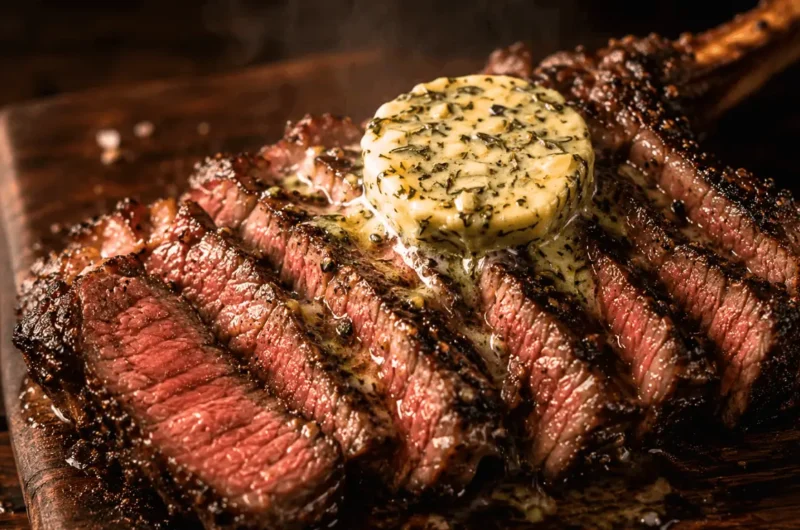
Smoked Tomahawk Steak: How to Get Perfect Bark Every Time
Course: Main CourseCuisine: American BBQDifficulty: Medium-High3
servings15
minutes2
hours15
minutes495
kcal2
hours30
minutesA 2 to 2.5 inch tomahawk steak, dry-brined overnight, smoked low and slow at 225°F, then finished with a hard sear and a garlic-herb butter baste for a deep bark and a medium-rare center.
Ingredients
For the Steak
1 tomahawk steak (2 to 2.5 inches thick, about 2 to 2.5 lbs)
2 tbsp kosher salt
1 tbsp coarse black pepper
For the Butter Baste4 tbsp unsalted butter
4 cloves garlic, crushed
2 sprigs fresh rosemary
2 sprigs fresh thyme
Directions
- Dry Brine (Night Before)
- Pat the tomahawk steak dry, then season generously on all sides with kosher salt.
- Place on a wire rack set over a baking sheet, uncovered, and refrigerate overnight, 8 to 12 hours.
- Smoke
- Remove the steak from the fridge and let it sit at room temperature for 30 to 45 minutes while the smoker preheats to 225°F.
- Season with black pepper, then insert a leave-in probe thermometer into the thickest part of the meat, away from the bone.
- Place the steak on the smoker and cook until the internal temperature reaches 118°F to 120°F, roughly 90 minutes to 2 hours.
- Rest and Sear
- Remove the steak from the smoker and rest for 10 minutes.
- Heat a cast-iron skillet over high heat until smoking hot. Sear the steak 60 to 90 seconds per side.
- Add the butter, garlic, rosemary, and thyme to the skillet. Tilt the pan and spoon the melted butter over the steak for the last 30 seconds.
- Transfer to a cutting board, tent loosely with foil, and rest for 10 minutes.
- Slice against the grain and serve immediately.
Notes
- Equipment needed: Smoker (pellet, offset, or kettle set up for the snake method), instant-read thermometer, leave-in probe thermometer, wire rack, tongs, cast-iron skillet, butcher’s twine (optional)
- Use a leave-in probe thermometer rather than relying on time alone. Smoker airflow and outdoor temperature change the cook time more than people expect.
- The dry brine happens the night before, so plan a day ahead.
- Post oak or cherry are the safest wood choices if you’re new to this. Use mesquite sparingly.
FAQs About Smoked Tomahawk Steak
How long does it take to smoke a tomahawk steak?
It takes about 90 minutes to 2 hours at 225°F to reach an internal temperature of 118°F to 120°F. The exact time depends on the steak’s thickness and the outdoor temperature. After that, it rests for 10 minutes, then finishes with a hard sear over high heat, about 60 to 90 seconds per side.
How long do you smoke a tomahawk steak at 225°F?
Allow about 90 minutes to 2 hours for the internal temperature to reach 118–120°F before resting and searing.
Why Smoke a Tomahawk Instead of Grilling It?
A cut this thick needs sustained heat to build a good crust without overcooking the inside. Smoking and grilling can both get you there, but they work differently. On a gas grill, hot air circulates around the meat to cook it. In a smoker, wood smoke surrounds the meat and stays trapped inside for an hour or more, giving you extra flavor and helping form a better crust along the way.
Which is better, smoked steak or grilled steak?
Both work equally well. Cutting it thick ensures more even cooking, and smoking gives you more of the wood’s flavor. Grilling requires fewer tools, and some methods take less time. Really, it all depends on the exact result you’re looking for.
Do you wrap a tomahawk steak while smoking?
No. But there are some cuts of meat, like brisket, that may need to be wrapped to get past the stall when the meat is tough. But with tomahawk, that’s not necessary. In fact, wrapping it actually prevents a good bark from forming.
Can you smoke a tomahawk steak without a smoker?
Yes. A kettle grill can be easily set up for “low and slow” smoking. It doesn’t require any extra equipment. This is how you can get the authentic taste of a “low and slow” smoke.
Should you reverse sear a smoked tomahawk steak?
Yes. The smoking step actually works like the oven’s “reverse sear” or indirect heat cooking step. After that, if you sear it well over high heat, you’ll still get a great crust.
Why do chefs put butter on steak?
Butter during the final sear enhances the meat’s flavor. It also helps the flavors of garlic and herbs adhere well to the meat. And this little trick is also quite effective at producing a beautiful, even brown color on the surface.
Conclusion
Smoking a tomahawk steak might seem a bit difficult or intimidating at first. Trusting the thermometer instead of the clock actually makes it much easier. The most important thing is the temperature, not the time. Choose a wood that won’t mask the meat’s natural flavor. Have the patience this cut of steak requires, then finish it off with a proper sear.
This is a cut that, when smoked while cooking, really sets it apart from a regular grilled tomahawk. Its bark develops a unique texture, and you get the true flavor of the wood. The end result is a dish you’ll definitely want to place in the center of the table. And if you make it, don’t forget to let us know how your bark turned out in the comments.
And if you haven’t settled on your cooking method yet, my tomahawk vs ribeye guide and reverse sear guide are good next stops.