
CAVA Garlic Dressing Recipe (Copycat) – Easy & Creamy

Make CAVA garlic dressing (or garlic sauce) at home in 10 minutes with 5 ingredients. Bold, garlicky, tangy with lemon, and fully vegan. Tastes just like the restaurant version. Some people call it CAVA garlic sauce instead of dressing. It’s the same thing, just a different name for the same creamy jar.
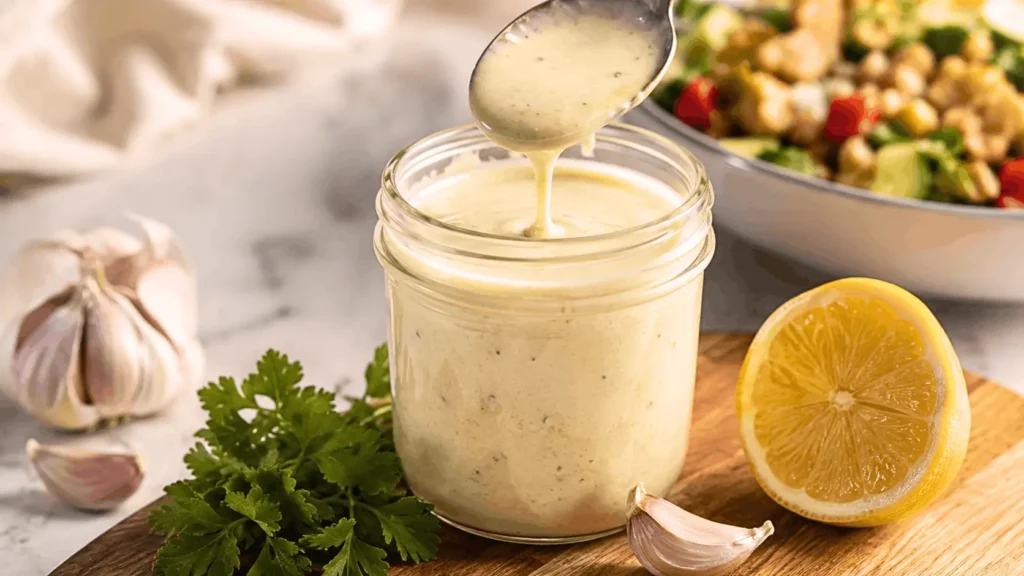
I first had it in a grain bowl with our CAVA grilled chicken recipe. The garlic dressing cava was creamy, packed with garlic flavor, and the lemon kept it from feeling heavy. It made everything on the plate taste better. After that, I started putting it on almost everything, even swirling it with my harissa vinaigrette for a creamy-spicy combo, or layering it with lemon herb tahini for extra brightness.
CAVA hasn’t released their original recipe. So I tried making it myself. I made it three times, messed it up twice, and got it right once. Then I figured out what the real deal was. Here’s what I’ve learned.
- Quick Highlights
- Recipe Snapshot
- What Is CAVA Garlic Dressing?
- Why This Recipe Works
- What You Need to Make CAVA Garlic Dressing
- How to Make CAVA Garlic Dressing Recipe at Home
- What I Learned Testing This Recipe
- Common Problems and Fixes
- CAVA Garlic Dressing Recipe — Thick, Medium or Thin?
- Why Resting Makes This Recipe Taste Better?
- Garlic Dressing Cava Flavor Profile Breakdown
- Best Ways to Use CAVA Garlic Dressing
- Make-Ahead and Storage
- Nutrition Information
- Does It Really Taste Like CAVA?
- FAQs
- Final Verdict
Quick Highlights
- 5 ingredients, 10 minutes, no cooking
- Vegan and dairy-free by default
- Drizzles clean without feeling heavy
- Tastes closer to CAVA than most copycat recipes
- Keeps fresh in the fridge for up to 7 days
- Control the garlic intensity to your own taste
Recipe Snapshot
CAVA Garlic Dressing Recipe (Copycat)
5 ingredients. No cooking. Ready in 10 minutes. Creamy, bold, and vegan.

What Is CAVA Garlic Dressing?
CAVA Garlic Dressing is a creamy white garlic sauce. At CAVA Mediterranean restaurants, it’s served with salads, wraps, and dips. It’s a bit like Lebanese toum, but slightly thinner and smoother. So it drizzles on easily. CAVA doesn’t use egg whites as the emulsifier in it. Instead, use aquafaba. So it’s vegan and surprisingly light. The flavor is quite strong. The garlic tang is clearly noticeable. And the lemon gives it a refreshing and bright flavor. There’s no dairy, no eggs, and it doesn’t feel heavy at all. If you’ve searched for a CAVA garlic dressing dupe, this is it. Same white sauce, same bold garlic bite, made in your own blender.
Some copycat versions online use roasted garlic, vinegar, and mustard instead of aquafaba. That makes a completely different sauce, closer to a vinaigrette than to what CAVA actually serves. This recipe sticks to the real base. This isn’t ranch. Not aioli either. It’s made with just garlic, oil, and lemon. Everything comes together into a beautifully stable emulsion. Once you know how it’s made, making it at home doesn’t seem so difficult or intimidating.
CAVA sells some of their sauces bottled at Whole Foods. But the garlic dressing still isn’t available in stores. So the closest way to get it without going to the restaurant is to make this recipe at home.
Why This Recipe Works
- Fresh garlic has a much sharper, more pungent flavor. You can’t get that same taste from garlic that’s been minced in advance.
- The natural proteins and starches in the aquafaba help to stabilize the emulsion.
- Pouring the oil slowly creates a nice, creamy texture. Pouring too quickly can cause the emulsion to break.
- The lemon juice balances the garlic flavor and adds a bright, fresh taste.
- Resting it in the refrigerator for a while will mellow the intensity of the raw garlic and make the texture slightly firmer.
What You Need to Make CAVA Garlic Dressing
Here are the CAVA garlic dressing ingredients you need. All five are easy to find at any grocery store.
- Fresh Garlic (½ cup, about 12 to 15 medium cloves): The foundation of this recipe. Always use fresh, not jarred. Jarred garlic tastes flat and won’t give you the same bold flavor.
- Aquafaba (¼ cup): The liquid from a can of chickpeas. It works as the emulsifier and keeps the whole dressing vegan.
- Fresh Lemon Juice (¼ cup, about 2 lemons): Bottled juice works in a pinch, but fresh gives a cleaner, brighter flavor.
- Kosher Salt (1 teaspoon): Pulls every other flavor together.
- Neutral Oil, canola or grapeseed (¾ cup): Skip olive oil here. Its flavor is too strong and turns the dressing bitter.
Ingredient Substitutes
| Ingredient | Substitute | Result |
| Aquafaba | 1 egg white | Traditional toum texture, no longer vegan |
| Canola oil | Avocado oil or grapeseed oil | Slightly richer flavor, still works well |
| Fresh lemon juice | Bottled lemon juice | Slightly less vibrant but acceptable |
| Fresh garlic | Blanched garlic cloves (30 sec in boiling water) | Milder, less sharp flavor |
Equipment Needed
- High-speed blender or food processor
- Rubber spatula
- Measuring cups and spoons
- Airtight glass jar for storage
Using a blender yields a smoother result than a food processor. However, if you only have a food processor, that will work too-it just might result in a slightly less creamy texture.
You can make this even without a blender. In a bowl, whisk together garlic, aquafaba, lemon juice, and salt until well combined. Then, while whisking continuously, slowly pour in the oil in a very thin stream. It takes a bit more elbow grease.
How to Make CAVA Garlic Dressing Recipe at Home
1. Add Your Base Ingredients
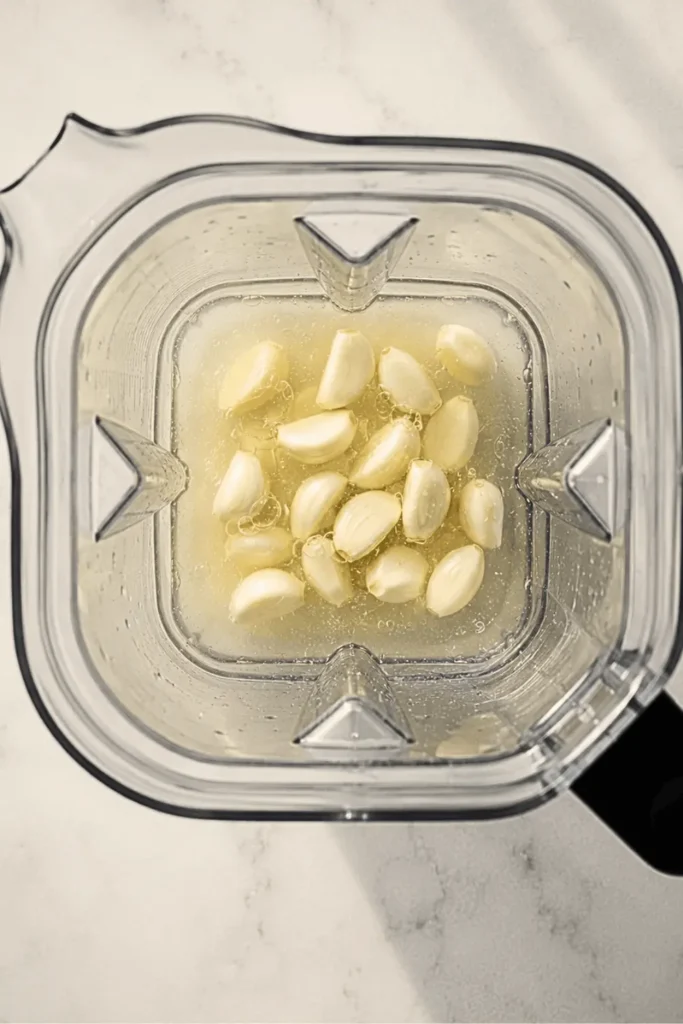
Add the garlic cloves, aquafaba, lemon juice, and salt to a blender. First, peel and roughly chop the garlic. This will help everything blend evenly in the blender.
2. Blend Until Smooth
Start on high for 30–45 seconds, until the garlic is completely broken down and the mixture is smooth and slightly foamy. Then, before moving on, use a spatula to scrape down the sides of the blender thoroughly. Don’t forget to “scrape”—unmixed bits of garlic can ruin the texture later.
3. Drizzle in the Oil Slowly
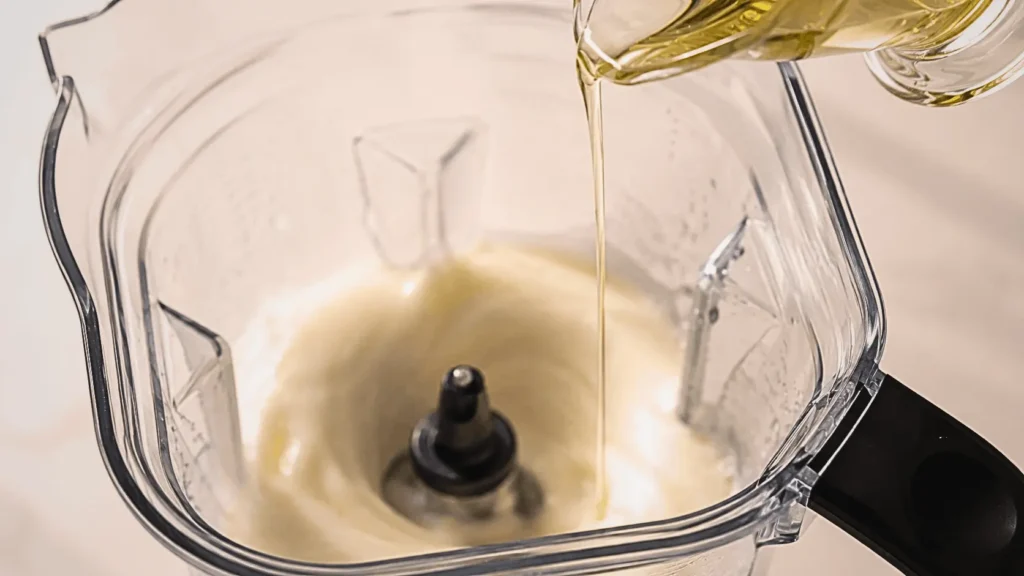
Pour the oil very slowly while the blender is running on low. This step takes 3 to 4 minutes. It may seem slow, but rushing it is the most common mistake people make.
If you pour the oil too quickly, the emulsion breaks. You end up with a thin, oily mixture instead of a creamy dressing.
Are you doubling this recipe? If so, give yourself a little extra time to add the oil. For a double batch, instead of 3–4 minutes, gradually add the oil over 6–7 minutes. Rushing a large batch is the most likely way for the emulsion to break.
4. Blend Until Creamy
After pouring in all the oil, continue blending for another 20–30 seconds. During this time, the dressing will become thick, white, and cava creamy garlic dressing. If it’s still thin or the oil has separated on top, keep blending for a bit longer.
5. Taste and Adjust
Now taste it. If needed, adjust the salt or lemon juice. If it tastes too sharp, add a little aquafaba and blend for a few seconds. This small change has saved many batches for me.
6. Chill Before Serving
Place it in a glass jar and chill in the refrigerator for at least 30 minutes. This softens the sharpness of the raw garlic, firms up the texture, and allows the flavor to develop fully. It genuinely tastes better when cold.
What I Learned Testing This Recipe
The first batch was very sharp and pungent. Half a cup of raw garlic is easy to handle until it hits the back of your throat. I remember tasting it while talking to my younger sister. She immediately said it was way too strong. I also called my dad into the kitchen. He tasted it, and it didn’t take much for him to realize it and same quick reaction. So I cut the garlic down to about one third of a cup. I also added another tablespoon of lemon juice to balance the flavor. It makes a huge difference.
The second batch turned out completely differently. Halfway through, I got impatient and added more oil. The mixture then gelled almost immediately and became thin and oily. It couldn’t be salvaged, so I had to start over. It was frustrating, but it helped me understand the entire process clearly.
The third time, I set a timer and very slowly dripped in the oil for about four minutes. The mixture then became almost like thick, white, and creamy, very close to the CAVA version. After about an hour in the fridge, the raw garlic had softened, and the lemon flavor had become even more pronounced.
Two key things to remember are: don’t use too much garlic, and don’t pour the oil in too quickly. If you can get those two right, the rest of the work becomes much easier.
Common Problems and Fixes
Dressing separated. You added the oil too quickly. Pour it back into the blender and add 1 tablespoon of aquafaba. Then very slowly start drizzling in the oil drop by drop.
Too sharp or overpowering. There’s too much garlic. Briefly blend again. Add a little more lemon juice or a pinch of aquafaba. Taste immediately.
Too thin. The emulsion isn’t forming properly. Keep blending and add more oil one drop at a time until the mixture thickens.
Too thick. The oil has become more abundant than the liquid. Add 1 tablespoon of aquafaba, then blend for about 10 seconds.
Bitter flavor. You’ve used old garlic or overcooked it. Blend again with fresh garlic. Stop blending once the mixture is smooth.
People often make a mistake—thinking the emulsion has stabilized, they end up increasing the oil flow. But that doesn’t keep it stable. Throughout the entire process, the oil must always be added slowly.
CAVA Garlic Dressing Recipe — Thick, Medium or Thin?
All three versions are made with the same five-ingredient aquafaba base. The only differences are the amount of oil and an optional addition. Choose the texture that best suits your intended use or application.
Thick Version — Dip & Spread Style
Best for: as a spread on baked pita chips, French fries, sandwiches, and as a dip for vegetable platters.
| Ingredient | Amount |
|---|---|
| Fresh garlic cloves | ½ cup |
| Aquafaba | ¼ cup |
| Fresh lemon juice | ¼ cup |
| Kosher salt | 1 tsp |
| Neutral oil (canola or grapeseed) | ½ cup |
Add the garlic, aquafaba, lemon juice, and salt. Blend on high speed for about 30 seconds. Then, with the blender running, slowly pour in the oil over about 60 seconds. Less oil makes it easier to dip, which is what you want.
Texture: It holds its shape when scooped with a spoon. Thick and creamy. It doesn’t pour easily.
Tip: Chill in the fridge for at least 30 minutes before serving. This will make the texture firmer and mellow the sharp taste of the raw garlic.
Medium Version — Bowl & Wrap Style (Closest to CAVA)
Best for: Grain bowls, grilled chicken, pita wraps, roasted vegetables
| Ingredient | Amount |
|---|---|
| Fresh garlic cloves | ½ cup |
| Aquafaba | ¼ cup |
| Fresh lemon juice | ¼ cup |
| Kosher salt | 1 tsp |
| Neutral oil (canola or grapeseed) | ¾ cup |
Blend on high speed for about 30 seconds, until the garlic, aquafaba, lemon juice, and salt are well combined. Then, with the blender still running, slowly add the remaining ¾ cup of oil. This is the standard recipe, so no modifications are needed.
Texture: It holds a concave shape. When you scoop it with a spoon, it stays put but doesn’t easily slide off. It’s the closest thing to the dressing served at CAVA.
Tip: Check the Resting Rule below before serving.
Thin Version — Drizzle & Sauce Style
Best for: Salads, falafel, grilled fish, light finishing drizzle
| Ingredient | Amount |
|---|---|
| Fresh garlic cloves | ½ cup |
| Aquafaba | ¼ cup |
| Fresh lemon juice | ¼ cup |
| Kosher salt | 1 tsp |
| Neutral oil (canola or grapeseed) | ¾ cup |
| Cold water | 3–4 tbsp |
First, prepare the medium version. Then, with the blender running on low speed, add a drop of cold water at a time until it’s pourable but not too thin. When it starts to fall from the spoon in a thin, continuous stream, stop. Don’t pour in all the water at once, or it might become too much.
Texture: Smooth and soft. Drizzles easily. Wraps foods without sticking.
Tip: When you’re thinning it out, just add a little extra lemon juice. It makes the liquid a bit more dilute. Then if you add a bit more lemon juice, the flavor brightens up again.
Why Resting Makes This Recipe Taste Better?
This applies to all three versions:
- Fresh out of the blender — garlic is sharp and raw-tasting
- After 30 minutes — flavor starts to settle
- After 1–2 hours, the garlic softens. The emulsion thickens further, and the flavors become smooth and meld together.
This is where it tastes most like a restaurant dish. So if you get the chance, make it ahead of time. It can be stored in an airtight jar in the fridge for up to five days. Before using, shake or stir well.
Garlic Dressing Cava Flavor Profile Breakdown
| Quality | Rating | What It Means |
| Creaminess | 5/5 | Thick and fluffy, coats everything evenly |
| Garlic Intensity | 5/5 | Bold and sharp, especially fresh out of the blender |
| Tanginess | 3/5 | Lemon is present but doesn’t overpower |
| Saltiness | 3/5 | Balanced, easy to adjust to your taste |
| Freshness | 4/5 | Noticeably brighter than store-bought versions |
The real thing here is the intense garlic flavor. The first time you try Lebanese toum, it may taste much more intense than you expect. That’s perfectly normal. If you let it rest for a bit, the intensity will subside. And believe me, it’s really hard to find a better alternative.
Best Ways to Use CAVA Garlic Dressing
Top uses, ranked by how well the dressing performs:
- CAVA-style grain bowls with rice, falafel, and roasted vegetables
- Grilled chicken bowls
- Pita wraps and shawarma
- Roasted vegetables — especially cauliflower and broccoli
- Mediterranean salads
- Dipping sauce for pita chips or fries
- Sandwich spread instead of mayo
Grain bowls are where this dressing performs best. The garlic flavor cuts through rice and roasted vegetables in a way that lighter dressings cannot. If you’re building a full CAVA bowl at home, this dressing is the piece that ties it together. It also works as a sandwich spread. Two tablespoons replace mayo completely and add more flavor with fewer ingredients. Pair it with our CAVA Crazy Feta recipe for a full Mediterranean bowl at home. It also pairs well with grilled boneless chicken thighs as a finishing drizzle right before serving.
Make-Ahead and Storage
- Fridge: Keeps for 5 to 7 days in an airtight glass container
- Stir before using: Light separation is normal after sitting. A quick stir brings it right back
- Freezing: Not recommended. Freezing breaks the emulsion and the texture won’t recover after thawing
- Best flavor: Day 2 is when this dressing hits its peak. The garlic settles, the lemon balances out, and everything tastes more cohesive
Make a full batch at the start of the week. It only gets better as the days go on.
Nutrition Information
Understanding the Caloric Density
This is an oil-based dressing, so almost all of its calories come from fat. But that’s no reason not to use it. Instead, it’s best to use it in moderation. Just two tablespoons are enough to dress a whole-grain bowl. And when it comes to garlic, a little goes a long way—so use it to your taste.
If you’re checking CAVA garlic dressing calories before you order, this homemade version lands close to the restaurant number at 170 calories per serving.
Healthy Fats
The fat here comes from canola oil or grapeseed oil. Both of these oils are low in saturated fat. Each tablespoon contains just 1 gram of saturated fat. By comparison, butter has 7 grams of saturated fat per tablespoon.
“According to the Harvard T.H. Chan School of Public Health, canola oil contains just 7% saturated fat. Coconut oil, by comparison, contains 50%.“
Garlic is not just a flavor enhancer; it’s also beneficial for health. According to the National Institutes of Health, the active compound in fresh garlic, allicin, helps reduce inflammation and improve certain key indicators of heart health.
Even better, this dressing contains no dairy ingredients or cholesterol-based components. Here, aquafaba acts as the emulsifier.
Modifications for Dietary Preferences
If this seems too spicy or intense for you, use ⅓ cup of garlic instead of ½ cup. The texture will stay the same, and the flavor will just be a bit milder. And if you want to reduce sodium, use ½ teaspoon of salt. That brings the sodium per serving down to about 145 milligrams. The change is small, but the difference is quite noticeable.
For a thicker texture, you can use one egg white along with one aquafaba. This makes it taste better when used as a spread, and the emulsion is also a bit more stable. However, keep in mind that because it contains eggs, it is no longer vegan. So, if you’re serving it to a vegan, be sure to keep this in mind.
Nutrition Per Serving
Based on 8 servings, approx. 2 tablespoons
| Nutrient | Amount Per Serving | % Daily Value |
|---|---|---|
| Calories | ~170 kcal | |
| Total Fat | 19g | 24% |
| Saturated Fat | 1.5g | 8% |
| Trans Fat | 0g | 0% |
| Cholesterol | 0mg | 0% |
| Sodium | ~290mg | 13% |
| Total Carbohydrates | 1g | 0% |
| Dietary Fiber | 0g | 0% |
| Total Sugars | 0g | |
| Added Sugars | 0g | 0% |
| Protein | 0g |
Percent Daily Values are based on a 2,000 calorie diet. Values reflect the homemade version. Sodium will vary based on how much salt you add. CAVA’s restaurant version shows 170 calories and 90mg sodium per serving.
Nutrition values are calculated based on standard ingredient amounts. Data sourced from the USDA Food Data Central database.
Does It Really Taste Like CAVA?
Yes, it’s really that close. If you drizzle a little oil on top and let it sit for a while, its texture and flavor become quite similar to the restaurant version.
The most important thing is what kind of garlic you’re using. If the garlic is old, the cloves can taste a bit bitter and the flavor diminishes. So it’s best to use fresh garlic, especially if it’s bought from a farmers’ market.
If the raw garlic flavor is too intense, lightly blanch the cloves in boiling water for 30 seconds before blending. This softens the taste a bit without losing much of it. Whenever I want to make a milder batch, I use this method.
Side by side, most people cannot tell the difference; it’s just a slight difference in consistency. CAVA always makes the same dressing. The amount of garlic in your batch can vary slightly depending on how intense the garlic is and how fast you pour the oil. It’s not a mistake—it’s actually normal, since it’s homemade. Once you’ve made two or three batches, you’ll easily know where and how to adjust.
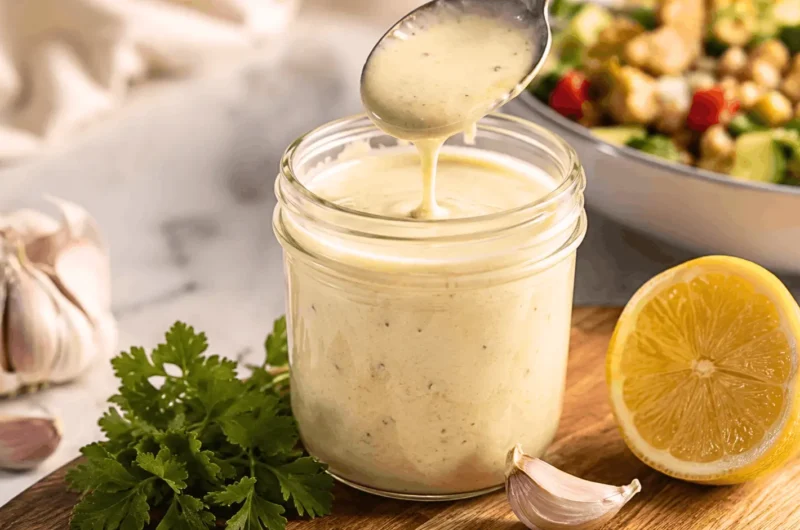
CAVA Garlic Dressing Recipe (Copycat) – Easy & Creamy
Course: Dressing / SauceCuisine: MediterraneanDifficulty: Easy8
servings5
minutes170
kcal5
minutes10
minutesA creamy, bold garlic dressing made with 5 ingredients and no cooking required. Choose thick, medium, or thin depending on how you plan to use it. The medium version is the closest to what CAVA serves.
Ingredients
Base (all three versions)
½ cup fresh garlic cloves (about 12 to 15 medium cloves)¼ cup aquafaba (liquid from canned chickpeas)
¼ cup fresh lemon juice (about 2 lemons)
1 tsp kosher salt
Thick Version (Dip and Spread)½ cup neutral oil (canola or grapeseed)
Medium Version (Bowl and Wrap, closest to CAVA)¾ cup neutral oil (canola or grapeseed)
Thin Version (Drizzle and Sauce)¾ cup neutral oil (canola or grapeseed)
3 to 4 tbsp cold water
Directions
- Add garlic cloves, aquafaba, lemon juice, and salt to a blender. Blend on high for 30 seconds until smooth and slightly frothy.
- With the blender running on low, drizzle in the oil slowly. For the thick version, this takes about 60 seconds using ½ cup oil. For the medium version, drizzle in ¾ cup oil over 3 to 4 minutes. Do not rush this step.
- For the thin version, make the medium version first. Then add cold water one tablespoon at a time on low speed until the dressing drizzles in a thin, steady stream from a spoon. Stop there.
- Taste and adjust. Add more lemon juice if it tastes too sharp. Add a splash of aquafaba if it feels too thick.
- Transfer to a glass jar and refrigerate for at least 30 minutes before serving. The flavor improves after resting and the garlic sharpness mellows.
Notes
- Thick version holds its shape when scooped. Best for dipping and spreading. Use ½ cup oil.
- Medium version is closest to CAVA. Holds a concave shape on a spoon. Use ¾ cup oil.
- Thin version drizzles clean. Add cold water one tablespoon at a time after making the medium version.
- Always use fresh garlic. Jarred garlic gives a flat, muted flavor.
- Never use olive oil. It makes the dressing bitter.
- Stores in the fridge for 5 to 7 days in an airtight glass jar. Stir before each use.
- Do not freeze. Freezing breaks the emulsion and the texture does not recover.
FAQs
What is CAVA garlic dressing made of?
CAVA garlic dressing is made with fresh garlic, aquafaba, lemon juice, salt, and a neutral oil. These five ingredients combine to create a thick, well-blended sauce. It’s intensely flavorful, aromatic, and packed with garlic flavor.
Is CAVA garlic dressing the same as toum?
The two are similar, but not the same. Both contain garlic, oil, and lemon juice. Traditional Lebanese toum is quite thick and has a paste-like texture. But CAVA’s version uses aquafaba, so it’s a little lighter and looser. It’s better for sprinkling on bowls or wraps.
Is CAVA garlic dressing vegan?
Yes, it’s made with aquafaba, so it contains no dairy products, eggs, or other animal ingredients. But if you’re serving a vegan friend, if you use egg white instead of aquafaba, the dressing is no longer vegan.
Why did my garlic dressing separate?
Most of the time the problem is with the oil. Usually oil is the main culprit. If you add oil too quickly, it becomes difficult to form an emulsion. So with the blender running, slowly pour in the oil in a thin stream—it’s best to add it drop by drop over about 3–4 minutes. If it has already separated, add 1 tablespoon of aquafaba and blend again. Most of the time that fixes it.
How long does homemade CAVA garlic dressing last?
Store in an airtight glass container in the refrigerator for up to 5–7 days. Stir well before use. Some slight separation is normal if left to sit for a while.
Can I freeze CAVA garlic dressing?
No, Freezing breaks the emulsion. Once thawed, it separates into oily and watery layers and cannot be fixed. After melting, it can separate into oily and watery layers, and then it can’t be fixed. It’s better to make a fresh batch. It only takes 10 minutes to prepare.
What oil works best for this recipe?
Use canola, grapeseed, or avocado oil. All three oils will nicely highlight the flavors of garlic and lemon. Don’t use olive oil—it’s too strong and can give the dressing a bitter taste. I learned that the first time.
Can I make this without aquafaba?
Yes, you can use one egg white. However, the dressing will no longer be vegan. The texture will be a bit thicker, closer to traditional toum or aioli. In an emergency, you can also use one tablespoon of cold water, but the dressing won’t be as creamy.
How do I fix dressing that tastes too strong?
Add a little aquafaba and some lemon juice, then blend for a few seconds. Next, refrigerate it for one hour. That’s it. This makes the intense raw garlic flavor much milder than most people expect.
What does Cava Creamy Garlic Dressing taste like?
Spicy, garlic-flavored, creamy, and bursting with fresh lemon taste. Thanks to the aquafaba, it’s neither heavy nor thick. You might think of it as a toum, but it’s more suitable for everyday use. If you’re asking what the garlic dressing at CAVA tastes like before you order, expect a bold, garlicky bite balanced by bright lemon.
Is CAVA garlic sauce the same as CAVA garlic dressing?
Yes. CAVA garlic sauce and CAVA garlic dressing are the same product. Some people call it a sauce because it’s thick enough to use as a dip. Others call it a dressing because it works so well on bowls and salads.
Final Verdict
This is a simple 10-minute, 5-ingredient CAVA garlic dressing recipe that’s creamy, garlicky, and could actually be better than the restaurant version. There are really only three things that matter here—fresh garlic, adding the oil slowly, and chilling it in the fridge for at least 30 minutes before serving. If those three are right, the rest is easy.
This is great for anyone who makes their own CAVA Bowl Recipe or always likes the same garlic sauce with grilled meat, wraps, or roasted vegetables. If you’re a bit sensitive to strong flavors, start with 1/3 cup of garlic. After using it a few times, you can easily adjust the taste to your liking.
Have you made it? Leave a note in the comments below and let us know what you paired it with! We really want to know how it turned out.

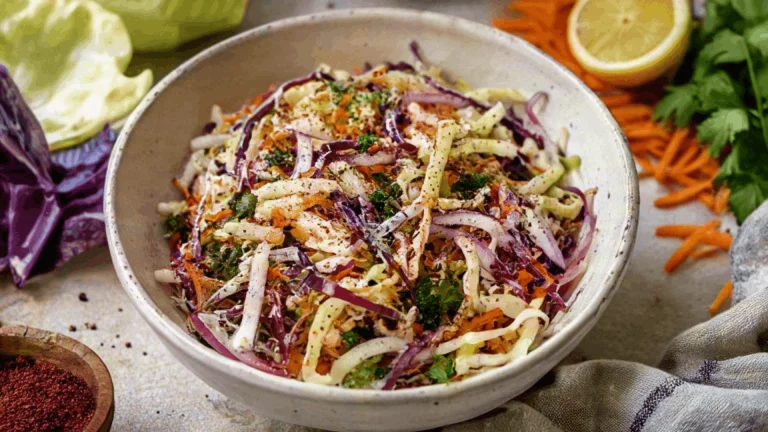

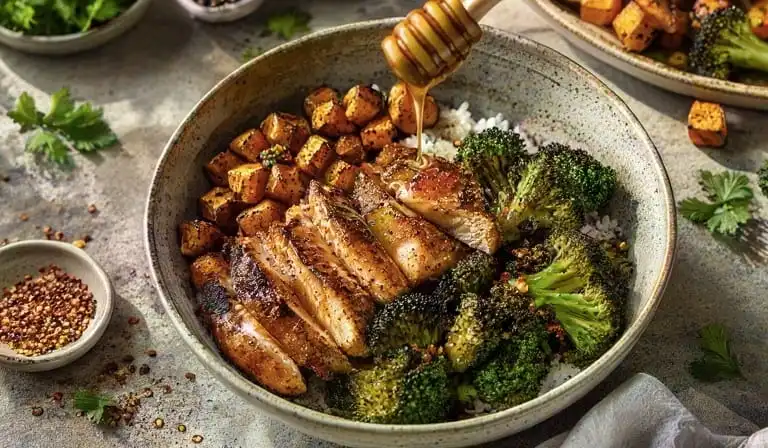
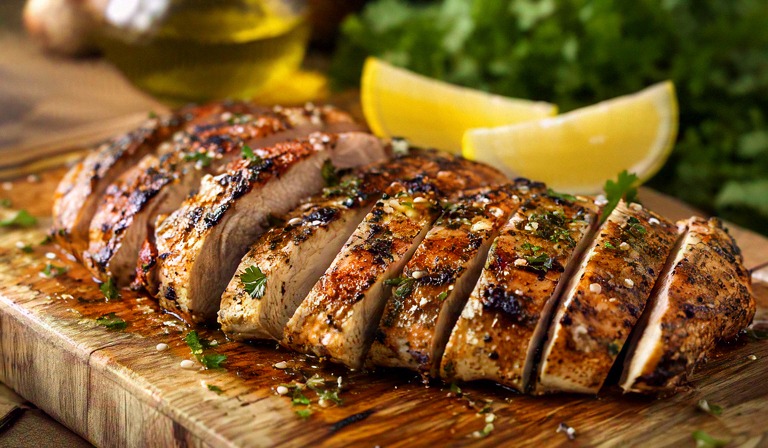
[…] to switch up the dressing entirely? Try this CAVA Garlic Dressing instead. It’s creamier and pairs just as well with the cabbage and […]