
Smoked Dino Beef Ribs – How to Get the Perfect Bark at 275°F

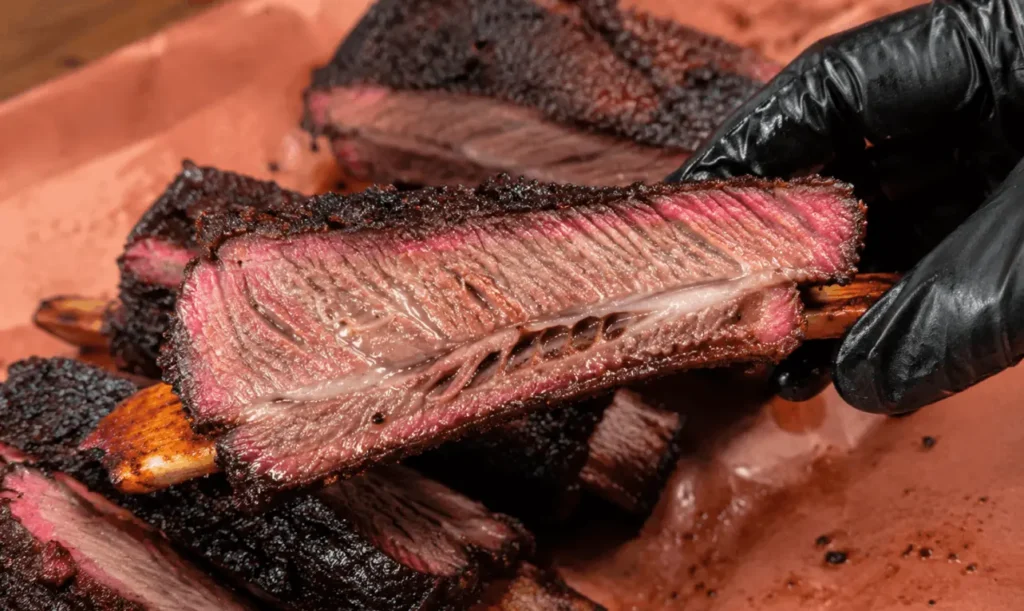
Dino beef ribs are beef plate short ribs. They are cut from the lower part of the cow’s rib cage. Taken as a rack with 3 bones. They are named dino beef ribs because of their large size and the impressive look they have after being trimmed and smoked. A single cooked bone can weigh over a pound. And a whole rack of ribs will be the star of any backyard barbecue.
This cut isn’t always available in most supermarkets. However, you can order it from the meat counter. When placing your order, say “beef plate ribs” or “123A short ribs.” This cut is available year-round at online meat retailers.
This guide shows how to buy the right cut, season it, and smoke it slowly over low heat at 275°F, bone-side down. Apply a good rub. Smoke for the first hour, then spritz every hour after that. When the internal temperature of the meat reaches 200–205°F and the probe slides in easily, the ribs are done. Let it rest for at least 45 minutes before slicing. You’ll also find oven and pellet grill cooking tips, a full troubleshooting section, and answers to the most common questions.
Cook at 275°F for 6 to 8 hours, then let it rest for a while. The outside will develop a dark, lightly crackled bark, and inside will be juicy, tender beef. If you’re craving another cut that rewards low and slow cooking, check out this beef tenderloin recipe.
- Recipe Snapshot
- What Are Dino Beef Ribs?
- Dino Beef Ribs vs Short Ribs
- My First Plate of Dino Beef Ribs
- Why You'll Love This Recipe
- Where to Buy Dino Beef Ribs
- What to Expect From This Method
- Ingredients You'll Need for Dino Beef Ribs
- Equipment You'll Need
- How to Prepare Dino Beef Ribs
- How to Smoke Dino Beef Ribs (Step-by-Step)
- Can You Cook Dino Beef Ribs in the Oven or on a Pellet Grill?
- Dino Beef Ribs Internal Temperature
- Best Wood for Smoking Dino Beef Ribs
- Expert Tips for Perfect Dino Beef Ribs
- Common Mistakes to Avoid
- What to Serve with Dino Beef Ribs
- Storage and Reheating
- Recipe Variations
- Nutrition Information
- Health Benefits
- FAQs About Beef Dino Ribs
- Final Thoughts
Recipe Snapshot
Smoked Dino Beef Ribs
What Are Dino Beef Ribs?
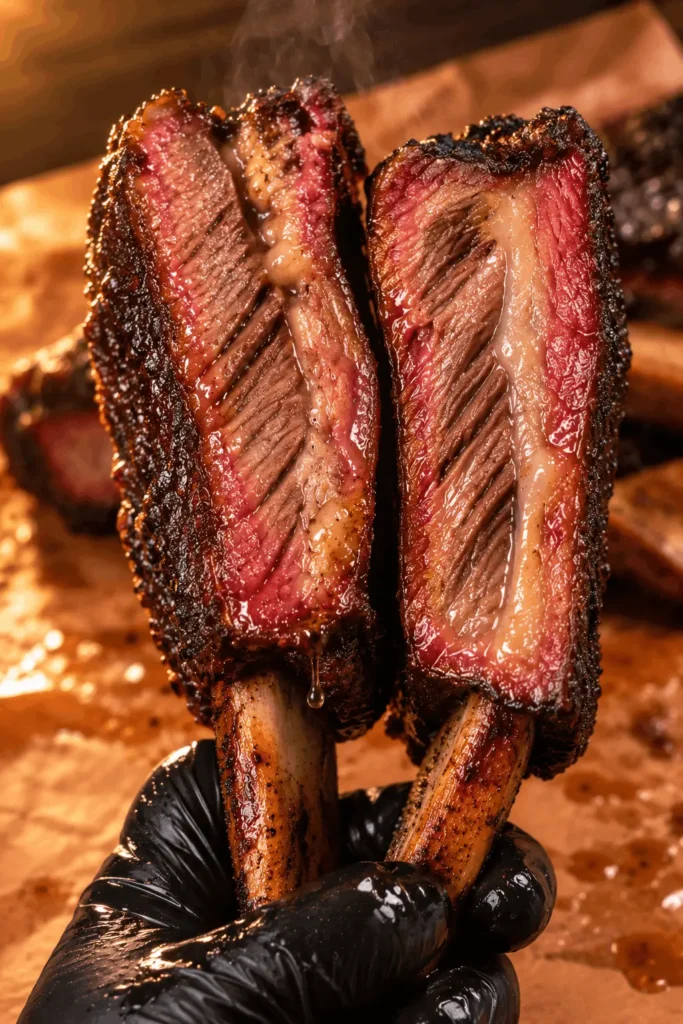
Dino beef ribs has three bones, and each bone carries a thick layer of meat on top. The main difference from other beef ribs isn’t the size of the bones. It’s that thick meat layer. Before smoking, it has a lot of marbling and fat, including a nice thick layer of fat on top.
Why Are They Called Dino Beef Ribs?
The name “dino” comes from more than just size, it’s the bones. They’re long, thick, and mostly covered in meat. When you trim and smoke a rack, the bones pull back and expose a few inches of rib, which makes the whole thing look even better. Serve a full rack on the table, and it looks like something out of a prehistoric creature. That’s why pitmasters call them dino ribs.
What Cut of Beef Are Dino Beef Ribs?
Dino Beef Ribs come from short plate, known in butchers’ parlance dinosaur ribs as NAMP 123A. It’s located under the ribeye, on the side toward the cow’s stomach. This section carries heavy marbling and a thick fat cap, which is exactly what makes it good for smoking. It’s often sold as “beef plate ribs” or “beef short ribs, plate cut”. So it’s good to know both names when buying.
Dino Beef Ribs vs Short Ribs
Dino beef ribs are a type of short rib, but not every short rib is a dino rib. The term “short ribs” covers several cuts from different parts of the cow, and they don’t all cook the same way.
| Feature | Dino Beef Ribs | Beef Short Ribs (General) |
|---|---|---|
| Cut | Plate short ribs (NAMP 123A) | Can come from the plate, chuck, or rib section |
| Bone Size | Very large, 6-8 inches | Smaller, often pre-cut into 2-3 inch pieces |
| Meat | Thick and heavily marbled | Varies by cut and trim |
| Best Cooking Method | Smoking, low and slow | Braising or smoking, depending on the cut |
| Flavor | Rich, beefy | Rich and hearty |
| Texture | Tender with a thick bark | Tender and juicy, no bark if braised |
| Typical Cook Time | 6-8 hours | 3-8 hours, depending on the cut |
Dino beef ribs are a specific type of beef short rib: the large plate short ribs prized for barbecue because of their size and marbling. If a recipe just says “short ribs” with no further detail, it’s usually talking about the smaller, pre-cut version meant for braising, not the smoker.
My First Plate of Dino Beef Ribs
I had dino beef ribs for the first time on a weekend road trip. We stopped at a small barbecue restaurant for lunch. Then my husband suddenly ordered dino beef ribs, on a whim. Actually, he usually doesn’t like to eat a lot of meat. So when that huge plate of ribs arrived at the table, we were both a bit surprised.
The very first bite told us it was something truly special. The outer bark was dark, smoky, and lightly crispy. And the meat was so tender it pulled away from the bone with almost no effort. The flavor was truly unforgettable. I was still on my first rib when my husband already reached for the second.
Even after I got home, I kept thinking about the size of those bones and the meat’s incredible tenderness. That’s when I decided that I had to try making it at home. Later I found a local butcher who could special-order the plate ribs. Then I fired up the smoker and started running through trial after trial.
After a few tries, I finally achieved the exact flavor and texture I was looking for. Now, dino beef ribs are one of my favorite things to smoke. Give them a try, and if you’re anything like me, you might just become a fan too.
Why You’ll Love This Recipe
This method keeps the spices mild so the true flavor of the beef comes through. A simple salt and pepper rub builds a dark, cracked bark without masking the meat’s natural taste. Cooking over low, steady heat allows the fat cap to render slowly. keeping the meat juicy instead of dry. The bone also acts as a natural heat shield. So this cut is more forgiving than brisket if the temperature fluctuates slightly.
Where to Buy Dino Beef Ribs
The price depends on your region and where you buy: grocery store, butcher shop, or online retailer. Dino beef ribs price per pound is typically $6 to $12. A full three-bone rack can weigh 4 to 6 pounds. So buying a rack usually costs $30 to $70.
This cut isn’t usually found on the meat counter at the grocery store. It takes up a lot of case space and doesn’t sell as fast as ground beef or chuck roast. So the best way is to ask directly at the butcher counter, in the parlance “beef plate ribs” or order them as “123A short ribs.” Most butchers can order a rack for you with a day or two of notice, though it may not be on display.
Often this cut isn’t available at local grocery stores or butcher shops. It can be found year-round in online stores. It’s usually shipped frozen. Although It costs a bit more, but there’s no hassle of searching for it.
One rack is usually enough for four to five people. Each bone is rich enough that most people are satisfied with just one rib. For a party of eight to ten, two racks are typically cooked at the same time.
What to Expect From This Method
Dino ribs behave a lot like brisket when cooking. In the first few hours, their internal temperature rises quickly. Then, once the surface moisture dries out, the temperature plateaus for a while. That’s completely normal and nothing to worry about.
Newcomers often make one mistake. They think that once the temperature reaches a certain level, the ribs are done. In reality, beef plate ribs are properly cooked only when the probe slides in easily. It’s not right to decide based on a specific temperature alone. Beef marbling and connective tissue vary from one cow to another. That’s why two ribs of the same weight can finish cooking 30 to 45 minutes apart. First, check with a probe to see if they’re tender. Then match the temperature to confirm.
Ingredients You’ll Need for Dino Beef Ribs
For the Ribs
- Beef Plate Short Ribs (Dino Ribs) = 4–6 pounds (one whole rack, bone-in)
- Yellow Mustard or Olive Oil = 1 tablespoon (as a binder for the rub)
Dry Rub
- Coarse Kosher Salt = 3 tablespoons (for seasoning and bark)
- Coarse Black Pepper = 3 tablespoons, 16-mesh if available (for crust and bite)
- Garlic Powder = 1 tablespoon (for aromatic depth)
- Paprika = 1 teaspoon, optional (for color and mild smokiness)
Optional Spritz
- Beef Broth, Apple Cider Vinegar, or Black Coffee = 1 cup (to keep the surface moist while smoking)
This is a classic Texas-style salt and pepper rub, built to let the beef carry the flavor instead of a heavy spice blend. Some pitmasters add a splash of Worcestershire sauce to the binder for extra depth, since the natural umami helps the bark darken a shade further. That step is optional, not required.
Substitutions
| Original | Substitute | Effect on Result |
|---|---|---|
| Kosher salt | Coarse sea salt | Similar bark, adjust volume since grain size differs |
| Yellow mustard binder | Olive oil or beef tallow | Slightly less tang, still helps rub adhere |
| Beef broth spritz | Apple cider vinegar | Adds a light tang, helps break down surface collagen |
| Garlic powder | Fresh minced garlic | Stronger flavor, can burn faster on the smoker |
| Paprika | Smoked paprika | Deepens color, adds mild smokiness |
Equipment You’ll Need
- Offset smoker, pellet grill, or kamado
- Instant-read thermometer for checking doneness
- Leave-in temperature probe, optional but helpful
- Pink butcher paper for wrapping and resting
- Spray bottle for spritzing
- Sharp boning or slicing knife
- Cutting board large enough for a full rack
- Insulated cooler, for extended resting
How to Prepare Dino Beef Ribs
Trim the Ribs
Trim off the thin layer of fat and silver skin on the rack so the meat is exposed. However, leave the membrane on the bone side as is. It helps keep the rack together during long cooking times, and there isn’t much meat under that membrane anyway.
Apply Binder (Optional)
If you apply a thin layer of mustard or oil, the spices will stick on well. It will burn off during cooking, so by the end of the cooking process the bark will have no distinct flavor.
Season Generously
Rub the spices all over the rack, even on the ends of both sides. Don’t just sprinkle them lightly; cover the entire rack with a thick layer of spices. This cut can handle a generous amount of spice just fine.
Let the Seasoning Set
Before smoking, let the spice-coated rack sit at room temperature for about 30 minutes. If you want a firmer bark, coat it with spices a day in advance and leave it uncovered on a rack in the fridge. This will let the top surface dry out overnight, resulting in a tougher bark the next day.
How to Smoke Dino Beef Ribs (Step-by-Step)
Step 1: Preheat the Smoker
There are two popular approaches. One is to cook slowly over low heat at 225°F. The other is to cook at a slightly higher temperature of 275°F. Both methods yield good ribs, but the results aren’t exactly the same. This cut, with its thick bone and membrane, retains heat inside for a long time. So cooking at 225°F can take more than 10 hours. But cooking at 275°F speeds things up. The higher heat also conducts through the bone more quickly. This causes the fat to render faster and the bark to set up more quickly.
This recipe uses 275°F. However, if you want to cook at a lower temperature for a longer time and have the time to babysit it, you can also cook at 225°F. Just remember that it will take a few extra hours to finish cooking.
Step 2: Smoke the Ribs
Place the rack bone-side down on the grill grate. This will protect the meat from the direct heat below. Let it smoke without moving it for the first hour. This will start to form a bark.
Step 3: Spritz the Ribs
Give the first spritz after one hour. Then spritz every 45 to 60 minutes. Be sure to spritz more on the sides and edges, as these areas dry out the fastest. This will keep the top from drying out and help the smoke continue adhering to the meat.
Step 4: Wrap (Optional)
If the internal temperature reaches 165–170°F and the bark looks set, you can wrap the meat in butcher paper. This will help it get past the stall quickly. It won’t be as soft as foil, and if you don’t wrap it, the bark will become even harder and crispier. However, it may take an additional 1 to 2 hours for the cooking to finish.
Step 5: Cook Until Probe Tender
Insert a probe and check the internal temperature when it reaches 200–205°F. The probe should slide in easily into the thickest part of the meat, with very little resistance. If you feel resistance when inserting the probe, cook for a little longer, then check again, even if the thermometer reads higher.
Step 6: Rest and Slice
Wrap the ribs in butcher paper if they aren’t already, and let them rest for at least 45 minutes to an hour before cutting. Then cut between the bones to separate each rib.
Can You Cook Dino Beef Ribs in the Oven or on a Pellet Grill?
Oven method: Preheat the oven to 275°F. Place the spice-rubbed rack on the wire rack set over a sheet pan. Place the bone-side down. Then cook for 6 to 7 hours, or until the meat is tender and the internal temperature reaches 200–205°F. You won’t get a smoke ring in the oven, but adding a few drops of liquid smoke to the rub will enhance the flavor. If you like, you can finish under the broiler for 20 to 30 minutes to develop better bark.
Pellet grill method: A pellet grill is great for cooking ribs this way. For example, a grill like a Traeger maintains the temperature on its own. First, preheat the grill to 275°F. Then cook with smoke, just like in a regular smoker. You’ll get better results using a hardwood pellet mix, because pellet grill smoke flavor is somewhat milder than that of a stick burner. So strong-flavored wood pellets like hickory or competition blends work best.
Dino Beef Ribs Internal Temperature
The target internal temperature is 200 to 205°F. At this range, the connective tissue and collagen have broken down enough for the meat to feel tender rather than tough.
Temperature is right doesn’t mean the food is fully cooked. Two different racks can read 203°F, but testing with a probe can feel completely different. So first check the temperature with a thermometer. Then insert a probe into two or three spots on the rack to make sure it’s tender.
Wait at least 45 minutes before carving the ribs. It’s even better if you can wait an hour. This allows the meat’s juices to redistribute throughout, so they won’t drip onto the cutting board when you slice.
Best Wood for Smoking Dino Beef Ribs
| Wood | Flavor Profile | Best For |
|---|---|---|
| Post Oak | Bold, earthy, clean burn | The Texas standard for beef, works with any smoker type |
| Hickory | Strong, slightly sweet | Shorter cooks, can turn bitter if overused on a long smoke |
| Oak | Balanced, medium-bold | A reliable all-around choice |
| Pecan | Sweeter, milder than hickory | Readers who want a gentler smoke flavor |
| Cherry | Light, fruity, adds color | Blending with a stronger wood, not on its own for beef |
Post oak is the top choice for this cut. Beef plate ribs already carry a deep, rich flavor, so a wood that burns clean without turning bitter over a long cook works best. Avoid light fruit woods like apple on their own. They don’t have enough body to stand up to this much beef.
Expert Tips for Perfect Dino Beef Ribs
- Buy the whole rack uncut. Individual ribs cook unevenly and tend to dry out faster.
- Season heavily. This is a big piece of meat, and light seasoning gets lost.
- Don’t open the smoker during the first hour. Let the bark set before you start spritzing.
- Use the probe test over the thermometer alone once you’re above 195°F.
- Rest longer than you think you need to. An extra 30 minutes rarely hurts this cut.
Common Mistakes to Avoid
Running the smoker at 225°F and expecting a 6-hour cook. The thick bone and membrane insulate the meat, so lower heat stretches the timeline well past 10 hours. If you’re short on time, use 275°F instead.
Buying back ribs by mistake. Back ribs are smaller, cook faster, and won’t give you the same result. Check the visual test before you buy: thick meat on top of the bone means plate ribs.
Pulling the ribs at a set temperature instead of checking tenderness. If the probe meets resistance at 203°F, it needs more time. Don’t rely on the number alone.
Skipping the rest. Slicing straight off the smoker sends all the juice onto the cutting board instead of staying in the meat. Give it at least 45 minutes.
Panicking during the stall. The internal temperature will plateau somewhere between 150°F and 170°F for an hour or more. This is normal collagen breakdown, not a sign of a failed cook. Keep the smoker steady and wait it out.
Under-rendered fat from cooking too cool. If the fat cap still looks waxy and thick after slicing, the ribs likely needed more time or higher heat. Rendered fat should look glossy and mostly melted into the meat, not sitting on top of it.
What to Serve with Dino Beef Ribs
Beef plate ribs are rich, so balance the plate with sides that cut through the fat or round out the meal.
- Baked beans
- Coleslaw
- Cornbread
- Mac and cheese
- Mashed potatoes
- Grilled vegetables
- Potato salad
- Pickles, for acidity
Storage and Reheating
How to Store
Wrap the ribs tightly in butcher paper or foil and refrigerate. They’ll stay good for up to four days. For longer storage, wrap them well and place them in the freezer for up to three months.
How to Reheat
If you want to reheat them, wrap the ribs tightly in foil or butcher paper. Add a little beef broth. Then heat in a 275°F oven for 20–30 minutes. Do not use the microwave, as it dries out the bark and can make the meat tough.
Many people don’t realize that you can get more meat than expected from a single rack. You can use the leftover meat to make meatballs. If you like, you can also chop it up and add it to a salad. You can even serve it as taco filling.
Recipe Variations
Texas-Style
Use only salt and coarsely ground black pepper. Don’t add sugar or any extra spices. The smoke from post oak wood will bring out the rest of the flavor beautifully.
Sweet BBQ
Sprinkle 2 tablespoons of brown sugar over the mixture. Then, about 20 minutes before the cooking is finished, brush on your favorite barbecue sauce.
Spicy Cajun
For a spicier, deeper-flavored bark, add cayenne pepper, smoked paprika, and dried thyme.
Garlic Butter
About 30 minutes before the cooking is finished, brush the melted garlic butter over the ribs. This will make the final flavor even richer.
Coffee Rub
Mix two tablespoons of finely ground coffee with the base rub. This will deepen the color, enhance the bark, and add a mild bitterness to bring out the flavor of fatty meat.
Nutrition Information
Base nutrition (per 3 oz cooked, USDA-verified):
| Nutrient | Amount |
|---|---|
| Calories | 400 |
| Total Fat | 35.7g |
| Saturated Fat | 15.1g |
| Cholesterol | 79.9mg |
| Sodium | 42.5mg |
| Protein | 18.3g |
| Carbohydrates | 0g |
Source: USDA FoodData Central
Per serving of this recipe (~188g / 6.6 oz cooked meat, 6 servings per rack):
| Nutrient | Amount |
|---|---|
| Calories | ~882 |
| Total Fat | ~79g |
| Saturated Fat | ~33g |
| Cholesterol | ~176mg |
| Sodium | 780-1,270mg |
| Protein | ~40g |
| Carbohydrates | 0g |
Serving size is calculated from USDA’s official cooked-yield ratio (1 lb raw bone-in ribs yields 225g edible cooked meat) applied to a 5 lb rack split across 6 servings. Sodium range reflects added rub salt, which varies depending on kosher salt brand used.
Source: Diamond Crystal vs. Morton sodium comparison
Nutrition information is an estimate calculated from USDA data and standard ingredient values. Actual values will vary based on specific products used and portion size.
Health Benefits
- Protein: ~54g per serving. Supports muscle repair and satiety.
- Vitamin B12: Well over 100% of daily value per serving. Supports nerve function and red blood cell production.
- Zinc: High content per serving. Supports immune function.
- Iron: Meaningful amount per serving. Supports oxygen transport in blood.
- Selenium: Covers a large share of daily value. Supports thyroid function.
- Tradeoff: ~1,180 calories and ~105g fat per serving, most from marbling. High in saturated fat and sodium.
Smoked Dino Beef Ribs – How To Bark Right at 275°F
Course: Main CourseCuisine: American BBQDifficulty: Intermediate6
servings30
minutes7
hours882
kcal1
hour8
hours30
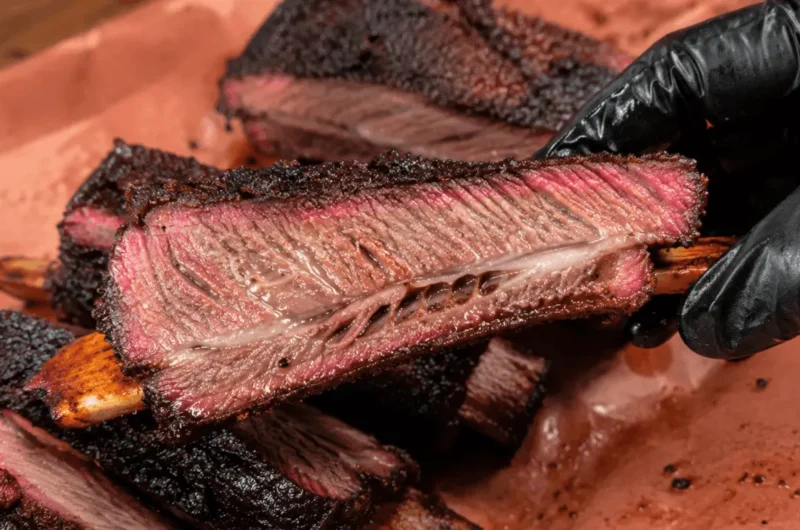
minutesSmoked dino beef ribs, seasoned with a simple salt and pepper rub and smoked low and slow at 275°F until the bark cracks and the meat pulls apart clean.
Ingredients
For the Ribs
Beef Plate Short Ribs (Dino Ribs) = 4–6 pounds (one whole rack, bone-in)
Yellow Mustard or Olive Oil = 1 tablespoon (as a binder for the rub)
Dry RubCoarse Kosher Salt = 3 tablespoons (for seasoning and bark)
Coarse Black Pepper = 3 tablespoons, 16-mesh if available (for crust and bite)
Garlic Powder = 1 tablespoon (for aromatic depth)
Paprika = 1 teaspoon, optional (for color and mild smokiness)
Optional SpritzBeef Broth, Apple Cider Vinegar, or Black Coffee = 1 cup (to keep the surface moist while smoking)
Directions
- Trim the rack, leaving the bone-side membrane intact.
- Coat with mustard or oil, then season heavily with the dry rub on all sides.
- Let the seasoning set for at least 30 minutes at room temperature, or overnight in the fridge for deeper bark.
- Preheat the smoker to 275°F.
- Place the rack bone-side down and smoke undisturbed for the first hour.
- Spritz every 45 to 60 minutes after the first hour.
- Wrap in butcher paper once the internal temperature hits 165 to 170°F, if using the wrap method.
- Smoke until the internal temperature reaches 200 to 205°F and the meat probes tender.
- Rest wrapped for 60 minutes before slicing between the bones.
Notes
- Running at 225°F instead of 275°F works but can push total cook time past 10 hours.
- Skipping the wrap gives a harder bark but adds 1 to 2 hours to the cook.
- Judge doneness by probe feel, not just the thermometer reading.
- Nutrition values are estimates. See the Nutrition Facts section for full sourcing.
FAQs About Beef Dino Ribs
Where can I buy dino beef ribs?
Ask your local butcher counter for “beef plate ribs” or “123A short ribs.” Most stores don’t display this cut but can order it. Online meat retailers also carry plate ribs year-round if local sourcing comes up empty.
What are dino beef ribs?
Dino beef ribs are beef plate short ribs, cut from the lower rib cage in a three-bone rack. They get their nickname from their large size and dramatic look once trimmed and smoked.
How do you smoke dino beef ribs?
Season the rack heavily, smoke at 275°F bone-side down, spritz after the first hour, and cook until the internal temperature reaches 200 to 205°F and the meat probes tender. Rest at least 45 minutes before slicing.
What temperature should you smoke dino beef ribs at?
275°F is the recommended smoker temperature for this cut. Running at 225°F works too, but the thick bone and membrane insulate the meat so well that the cook can stretch past 10 hours.
Are dino beef ribs the same as short ribs?
Dino beef ribs are a type of short rib, specifically the large plate short ribs used for barbecue. Not all short ribs are dino ribs. Smaller, pre-cut short ribs are usually meant for braising instead.
How long does it take to smoke dino beef ribs?
Plan on 6 to 8 hours at 275°F, plus 45 minutes to an hour of resting. Cook time varies with rack size and whether you wrap during the cook.
Should I wrap dino beef ribs?
Wrapping in butcher paper once the bark is set speeds up the cook and helps push through the stall. Skipping the wrap gives a harder, crustier bark but adds 1 to 2 hours to the total time.
Can I cook dino beef ribs in the oven?
Yes. Cook at 275°F on a wire rack over a sheet pan until the internal temperature hits 200 to 205°F, roughly 6 to 7 hours. You won’t get a smoke ring, but a broiler finish helps darken the bark.
How do I know when dino beef ribs are done?
Check the internal temperature first, aiming for 200 to 205°F. Then confirm with a probe test. The probe should slide in with almost no resistance. If it doesn’t, give the ribs more time.
What’s the difference between dino beef ribs and beef back ribs?
Dino beef ribs (plate ribs) have thick meat stacked on top of large bones. Beef back ribs come from higher on the rib cage and have most of their meat between the bones instead of on top, with less meat overall.
How much do dino beef ribs cost?
Expect to pay $6 to $12 per pound. A full rack usually weighs 4 to 6 pounds, putting a typical rack in the $30 to $70 range depending on your source.
Final Thoughts
The biggest secret to cooking dino beef ribs well is patience. First, trim them properly. Then coat them thoroughly with spices and cook at 275°F. To check if they’re done, don’t rely on time. Use a thermometer and probe to confirm. If you follow this method, you’ll get a dark bark and tender, juicy meat every time.
This cut pairs wonderfully with smoked beef tenderloin. You can include it as a lighter cut on your beef smoking menu. And if you want a more eye-catching dish, it also pairs wonderfully with smoked tomahawk steak. And if you’re looking to see how this compares to a leaner rib option, you can also check out the beef Flanken Ribs recipe.
Give this method a try. Then don’t forget to share your experience in the comments. If you ran into a stall that took longer than expected to get through, or if you used a different wood blend, please mention that below as well. Your experience will be a great help to others who want to make these ribs next time.


[…] you’re looking for more beef dinner ideas, be sure to try my Smoked Beef Back Ribs, Smoked Dino Beef Ribs, and Smoked Beef Tenderloin recipes. They make great weekend meals and are perfect for anyone who […]