Grilled Leg of Lamb Recipe with Garlic Herb Marinade

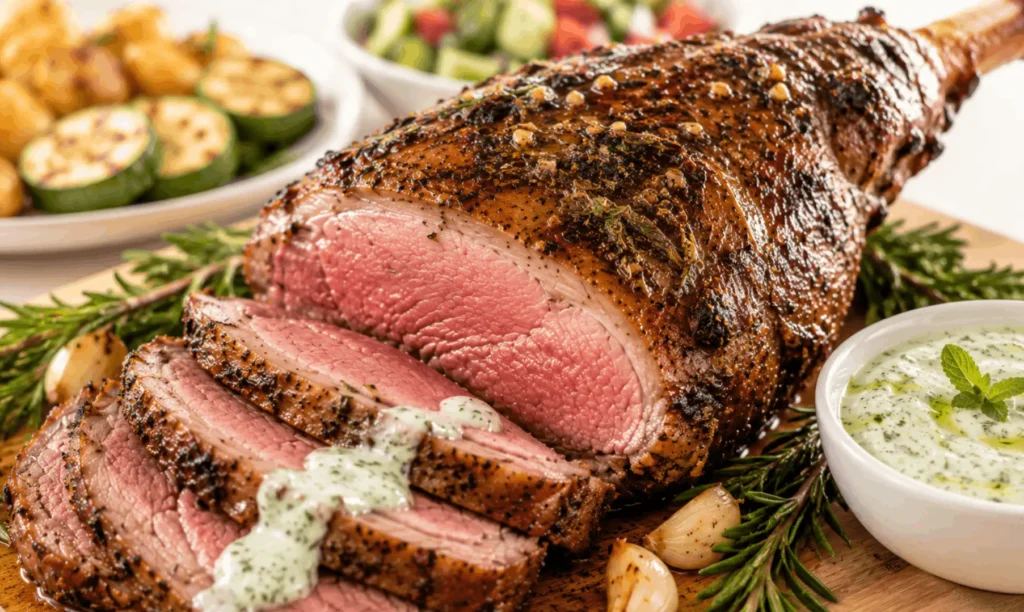
Making a perfect grilled leg of lamb doesn’t require anything complicated. This recipe shows exactly that, and it’s built to be the best grilled leg of lamb recipe for anyone. Cooking the meat on the bone-in is much easier. It adds more flavor to the meat without any extra fuss. And with a two-zone grilling method, this slow grilled leg of lamb turns out tender every time, without any guesswork. Whether it’s bone-in or boneless, the meat turns out tender and juicy, with a beautiful, deep golden crust. Whether it’s bone-in or boneless, the meat turns out tender and juicy, with a beautiful, deep golden crust.
Have you ever wondered why leg of lamb gets tough when you cook it on the barbecue? Or felt that a whole leg of lamb is too big for your backyard grill? If size is the issue, a butterflied leg of lamb solves that by laying the meat flat. This guide has simple solutions to both problems. Here’s the complete list of ingredients. You’ll also find nine step grilling instructions. You’ll get separate directions for both gas and charcoal grills. From marinating to serving at the table, the whole process takes less than two hours. If you’ve ever been confused about temperatures or cooking times, don’t worry. The temperature charts provided here will clear up all your doubts.
- What Is Grilled Leg of Lamb?
- Why You'll Love This Grilled Leg of Lamb Recipe
- What I Learned Testing This Recipe
- Recipe Snapshot
- Ingredients You'll Need
- How to Prepare a Leg of Lamb for Grilling
- Best Cut of Lamb for Grilling
- Equipment You'll Need
- Step-by-Step: How to Grill Leg of Lamb
- Gas Grill vs. Charcoal Grill
- Grilled Leg of Lamb Cooking Time and Temperature
- Expert Tips for Perfect Grilled Leg of Lamb
- Flavor Variations
- Nutrition Information
- What to Serve with Grilled Leg of Lamb
- Storage and Reheating Tips
- Common Mistakes to Avoid
- Health Benefits of Grilled Leg of Lamb
- FAQs about Grilled Leg of Lamb
- Final Thoughts
What Is Grilled Leg of Lamb?
To grill a whole leg of lamb, first rub it thoroughly with spices. Then sear it directly over high heat. Next, cook it slowly over indirect heat so the meat cooks evenly. This is what makes a grilled leg of lamb one of the most convenient cuts for grilling, because the meat is naturally tender and cooks beautifully even at high temperatures.
Bone-In vs. Boneless Leg of Lamb
Grilling a bone-in leg of lamb keeps the meat beautifully shaped. The bone prevents the juices from escaping, making it more flavorful. On the other hand, cooking a boneless leg of lamb is a bit faster. It’s also much easier to carve since there’s no hassle of separating the bone. In this article, we’ll show you how to grill a bone-in leg of lamb. If you want to cook a boneless cut, check out our guide on grilling boneless leg of lamb. And if you want to cook it even faster and more evenly, our guide to a butterflied grilled leg of lamb will also be very helpful.
Why You’ll Love This Grilled Leg of Lamb Recipe
This recipe gives you a crisp, well-seasoned crust on the outside and a juicy, pink center on the inside. The garlic herb marinade works into every bite, not just the surface. It’s built for a grill, so you skip heating up the kitchen during warm months. And it’s flexible enough to work for a holiday centerpiece or a Saturday backyard dinner.
What I Learned Testing This Recipe
Many people are a bit intimidated by grilling an entire leg of lamb. That’s because of its large size and unusual shape. I often see a common mistake: people try to cook it like a steak by simply using high heat. The outside burns quickly, but the inside still isn’t tender or cooked to a safe temperature. The two-zone method is a simple solution to this problem. First, sear it well over direct heat to get a beautiful color and great flavor. Then, cook it slowly over indirect heat. This creates a nice crispy crust on the outside, while the meat inside doesn’t overcook and dry out.
I first made this recipe for a completely impromptu family dinner. The lamb was slowly cooking. Just then my husband came into the kitchen and saw everything. A little later my sister arrived too, and the meat was carved at exactly the right moment. My father-in-law ate from the outside all the way to the center and immediately said it was cooked evenly throughout. It was really nice to hear that. And my sister, who usually prefers goat meat over lamb, also commented on how tender and delicious the meat was.
I still remember that moment. Now, whenever I think of grilled leg of lamb, that night is the first thing that comes to mind. I realized then that it wasn’t just a special occasion or holiday dish. It can be the highlight of a wonderful dinner with the whole family.
Recipe Snapshot
Grilled Leg of Lamb
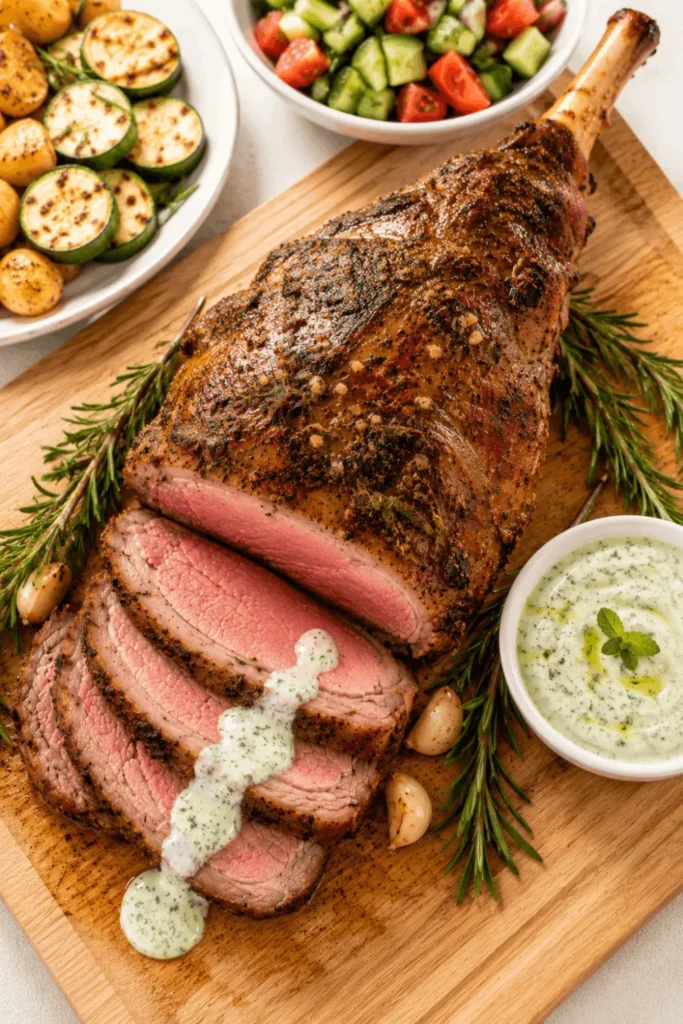
Ingredients You’ll Need
For the Lamb
- 1 bone-in leg of lamb (4–6 pounds)
- 3 tablespoons olive oil
- 1 tablespoon kosher salt
- 1 teaspoon freshly ground black pepper
Garlic Herb Marinade
- 6 garlic cloves, minced
- 3 tablespoons fresh rosemary, chopped
- 2 tablespoons fresh thyme, chopped
- ¼ cup olive oil
- 2 tablespoons fresh lemon juice
- 1 teaspoon kosher salt
- ½ teaspoon black pepper
Read More: Smoked Beef Tenderloin (Reverse-Sear) – Juicy & Crusty
How to Prepare a Leg of Lamb for Grilling
- Trim any thick pockets of fat, leaving a thin, even layer.
- Pat the lamb dry with paper towels.
Make the Garlic Herb Marinade
This garlic herb grilled leg of lamb marinade is a very simple way to make lamb even more delicious. A well marinated grilled leg of lamb holds flavor all the way through, not just on the surface. At the same time, it keeps the meat juicy when grilling. In fact, fresh rosemary, thyme, garlic, and lemon are very important for cooking lamb. They don’t mask the meat’s natural flavor. Instead, they form a beautiful, fragrant, and delicious crust on the outside. I often use this kind of marinade.
Instructions:
- Whisk together the olive oil, lemon juice, garlic, rosemary, thyme, salt, and pepper until well combined.
- Place the lamb in a large zip-top bag or shallow dish.
- Pour the marinade over the lamb and coat every surface evenly.
- Cover and refrigerate for at least 4 hours, up to 10 hours for deeper flavor.
Grilled Leg of Lamb Marinating Tips
- Never reuse marinade that has touched raw meat unless it has been boiled.
- Marinate for 4-10 hours for the best flavor.
- Avoid marinating longer than 10 hours, as the lemon juice can begin to soften the meat too much.
- Remove the lamb from the refrigerator 30–45 minutes before grilling so it cooks more evenly.
- Reserve a portion of the marinade before adding the raw lamb if you plan to use it as a finishing sauce.
Best Cut of Lamb for Grilling
The best lamb for grilling is a 4 to 6 pound bone-in leg, an excellent choice for even cooking. When buying the meat, make sure the fat layer on the leg isn’t too thick or too thin. Instead, it’s best if the fat layer is thin and evenly distributed. In fact, during grilling this fat layer helps keep the meat moist and juicy. If you want a leg of lamb that’s easy to carve but still wants some extra flavor from the bone, you can ask the butcher for a semi-boneless leg.
Equipment You’ll Need
- Gas or charcoal grill
- Instant-read meat thermometer
- Tongs
- Drip pan (for charcoal setups)
- Sharp carving knife
- Gallon zip-top bag or large dish (for marinating)
Step-by-Step: How to Grill Leg of Lamb
Step 1: Bring the lamb to room temperature
About 45 minutes before grilling, take the leg of lamb out of the fridge. Cold meat doesn’t cook evenly on the grill, so leave the leg lightly covered on the counter.
Step 2: Pat the lamb dry
Use paper towels to dry the surface. A dry surface gets a better sear.
Step 3: Remove the lamb from the marinade
Let any excess drip off, then place it on the grill.
Step 4: Preheat your grill
Heat the grill to medium-high heat, that is, between 400°F and 450°F. It’s very important to have two separate temperature zones on the grill. One zone will be hotter, where you’ll first sear the meat, and the other will be relatively cooler, where the meat will cook more slowly. This also keeps the meat inside tender and juicy.
Step 5: Sear the lamb first
Place the lamb directly over the heat. Sear both sides for about 4 to 5 minutes each, until they turn a deep, golden-brown. This creates a delicious flavor layer on the outside of the meat. Then, if you cook it slowly, that flavor is better retained.
Step 6: Move to indirect heat
Once it’s seared, move the lamb to the cooler side of the grill. Then close the grill lid. In fact, it’s at this stage that the meat slowly cooks all the way through. This prevents the outside from burning and keeps the inside tender and juicy.
Step 7: Check internal temperature often
Insert a meat thermometer into the thickest part of the leg, away from the bone.. The temperature at this spot gives the most accurate result. If you prefer it medium-rare, remove it when the internal temperature reaches 130°F. For medium, cook it to 140°F.
Step 8: Rest before slicing
After taking the lamb off the grill, place it on a cutting board. Then lightly cover it with aluminum foil. Let it rest for 15 to 20 minutes. This resting time keeps the juices in the meat instead of letting them seep out onto the cutting board.
Step 9: Slice against the grain
When cutting lamb, slice it thinly against the grain. This way, each piece is much more tender and easier to eat, enhancing both the flavor and texture of the meat.
Gas Grill vs. Charcoal Grill
Both grill types work well for leg of lamb. The main difference comes down to heat control and flavor.
| Feature | Gas Grill | Charcoal Grill |
|---|---|---|
| Heat control | Precise, easy to adjust | Takes practice, needs monitoring |
| Setup time | Minutes | 15-20 minutes |
| Flavor | Clean, mild | Smokier, richer |
| Best for | Beginners, weeknight cooking | Extra flavor, weekend cooking |
Grilling Leg of Lamb on a Gas Grill
Gas grills give you steady, even heat, which makes leg of lamb easier to manage.
- Preheat all burners to high for 10 minutes, lid closed.
- Turn off one or two burners to create your indirect heat zone.
- Sear the lamb over the burners still on high.
- Move the lamb to the unlit side once seared. Close the lid.
- Keep the indirect zone around 325°F to 350°F.
- Track doneness with a meat thermometer, not just grill temperature.
Gas grills hold temperature well, so you won’t need to adjust vents or add fuel mid-cook.
Grilling Leg of Lamb on a Charcoal Grill
Charcoal grilling takes more setup, but it adds a smokier flavor. A charcoal grilled leg of lamb picks up more depth than gas, especially with a longer indirect cook.
- Light your charcoal and let it ash over, about 15 to 20 minutes.
- Bank the coals to one side of the grill. This creates your direct and indirect zones.
- Sear the lamb directly over the coals.
- Move the lamb to the empty side, away from direct coals. Close the lid.
- Keep the vents partially open to hold steady heat, around 325°F to 350°F.
- Add a few unlit coals if the fire starts to die down during a longer cook.
Charcoal needs more attention than gas. Stay near the grill and check the temperature every 15 minutes.
Grilled Leg of Lamb Cooking Time and Temperature
Cooking time depends on the weight of your lamb and your target doneness. Always confirm doneness with a meat thermometer, not the clock. This same two-zone approach works well for other large cuts, like a reverse-seared tomahawk steak.
Internal Temperature Chart
| Doneness | Internal Temperature |
|---|---|
| Rare | 120°F to 125°F |
| Medium-rare | 130°F to 135°F |
| Medium | 140°F to 145°F |
| Well-done | 160°F and above |
The USDA recommends a minimum internal temperature of 145°F for lamb, followed by a 3-minute rest. Many cooks pull lamb slightly earlier for a pink, tender center, since the temperature rises a few degrees during resting.
Grilling Time Chart by Weight
4 lb Leg of Lamb
Expect 45 to 60 minutes total grill time for medium-rare, including the sear.
5 lb Leg of Lamb
Expect 60 to 75 minutes total grill time for medium-rare, including the sear.
Expert Tips for Perfect Grilled Leg of Lamb
- Let the lamb marinate for at least 4 hours. Overnight works even better.
- Don’t skip the rest. Cutting too soon lets the juices run out onto the board.
- Use a thermometer, not guesswork. Lamb size varies too much to rely on timing alone. The same rule applies to cedar plank salmon in the oven, where internal temperature matters more than the clock.
- Trim thick fat pockets, but leave a thin layer for basting flavor.
- Keep the lid closed as much as possible during indirect cooking. Every peek adds cook time.
Flavor Variations
Garlic Rosemary
- Fresh rosemary, garlic, olive oil, salt, and pepper
- Classic and simple
- Works with almost any side dish
Mediterranean Herb
- Oregano, mint, and a splash of red wine vinegar added to your base marinade
- Gives a brighter, herbaceous flavor, closer to a mediterranean grilled leg of lamb
Greek Lemon Oregano
- Lemon juice, oregano, and a touch of Dijon mustard
- Makes a greek grilled leg of lamb that pairs well with a Greek-style salad
Dijon Herb
- Adds a tangy, slightly sharp edge that cuts through the richness of the lamb
- Dijon mustard whisked into your marinade
Nutrition Information
(Per Serving, Serves 6)
| Nutrient | Amount |
|---|---|
| Calories | 635 kcal |
| Protein | 49 g |
| Total Fat | 46 g |
| Saturated Fat | 15 g |
| Cholesterol | 176 mg |
| Sodium | 1,126 mg |
| Total Carbohydrate | 1 g |
| Fiber | 0 g |
| Sugar | 0 g |
Nutrition values are estimated using USDA data for roasted bone-in leg of lamb, plus the marinade and seasoning ingredients in this recipe. Actual values vary by cut size and how much marinade is retained. This is a general guide, not professional nutritional advice.
Source: USDA FoodData Central
What to Serve with Grilled Leg of Lamb
- Potato side dishes: Roasted fingerling potatoes or a creamy potato gratin both balance the richness of the lamb.
- Grilled vegetables: Zucchini, bell peppers, and asparagus grill quickly and add color to the plate.
- Fresh salads: A simple cucumber and tomato salad with lemon dressing cuts through the fat and adds brightness. For something creamier, try it with our garlic dressing instead of the lemon dressing.
- Sauces: Mint yogurt sauce is a classic sauce for grilled leg of lamb. A red wine reduction also works well for a heartier finish. For something bolder harissa vinaigrette brings a spicy that pairs well with the Mediterranean Herb variation above.
Storage and Reheating Tips
- Cool completely before storing.
- Refrigerate in an airtight container for up to 4 days.
- Freeze sliced lamb for up to 3 months.
- Thaw overnight in the fridge before reheating.
- Reheat in a 275°F oven, covered with foil, until warmed through.
- Avoid the microwave, since it tends to dry out the meat and toughen the texture.
Common Mistakes to Avoid
- Skipping the rest period after grilling.
- Grilling straight from the fridge without letting the lamb come to room temperature.
- Relying on cook time alone instead of a meat thermometer.
- Slicing with the grain instead of against it.
- Trimming off all the fat, which removes flavor and moisture.
- Using direct heat the whole time, which burns the outside before the inside finishes.
Health Benefits of Grilled Leg of Lamb
Each serving of this grilled leg of lamb recipe contains about 49 grams of protein. That much protein helps repair muscles and keeps you full for a long time. Lamb meat is also naturally rich in iron, zinc, and vitamin B12, nutrients that aren’t easily obtained from plant-based foods.
This is a leg of lamb with the bone in, so it contains relatively high amounts of fat and saturated fat. Each serving has about 46 grams of total fat and 15 grams of saturated fat. If you want to cut down on fat, you can trim off the excess before cooking. And if you prefer, it’s also a good idea to serve smaller portions.
Each serving of this recipe contains about 1,126 milligrams of sodium. Most of it comes from the salt in the dry rub and marinade. In fact, if you want, you can cut the salt in half. It won’t significantly reduce the flavor of this garlic herb grilled leg of lamb, because the real taste of this recipe comes from the garlic and herbs.
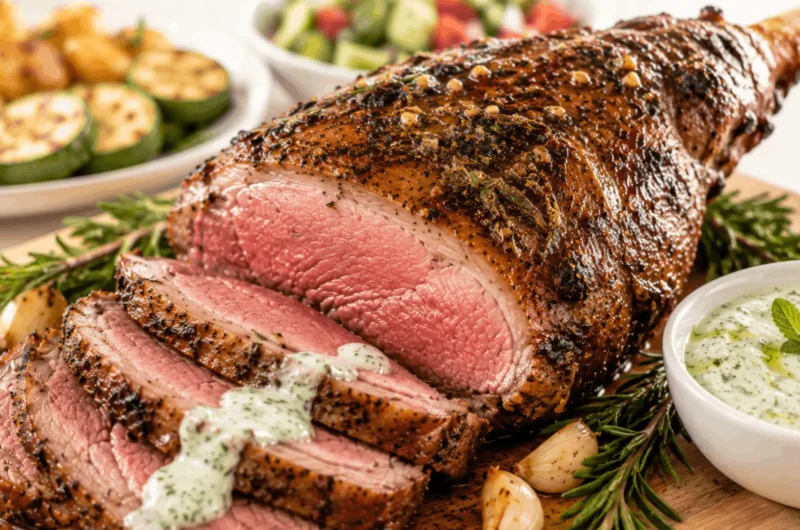
Grilled Leg of Lamb Recipe with Garlic Herb Marinade
Course: Main CourseCuisine: AmericanDifficulty: Moderate6
servings20
minutes8
hours635
kcal1
hour15
minutes9
hours35
minutesA juicy, tender grilled leg of lamb with a garlic herb marinade and a deep golden crust, made using the two-zone grilling method for even results every time.
Ingredients
For the Lamb
1 bone-in leg of lamb (4–6 pounds)
3 tablespoons olive oil
1 tablespoon kosher salt
1 teaspoon freshly ground black pepper
Garlic Herb Marinade6 garlic cloves, minced
3 tablespoons fresh rosemary, chopped
2 tablespoons fresh thyme, chopped
¼ cup olive oil
2 tablespoons fresh lemon juice
1 teaspoon kosher salt
½ teaspoon black pepper
Directions
- Trim any thick pockets of fat from the lamb, leaving a thin, even layer.
- Pat the lamb dry with paper towels.
- Whisk together the olive oil, lemon juice, garlic, rosemary, thyme, salt, and pepper for the marinade.
- Place the lamb in a large zip-top bag or shallow dish. Pour the marinade over it and coat every surface evenly.
- Cover and refrigerate for at least 4 hours, up to 10 hours.
- Remove the lamb from the fridge 45 minutes before grilling. Let it sit loosely covered on the counter.
- Pat the lamb dry again, then remove it from the marinade, letting any excess drip off.
- Preheat the grill to 400°F to 450°F, setting up two heat zones, one hot for searing and one cooler for indirect cooking.
- Sear the lamb over direct heat for 4 to 5 minutes per side, until deep golden-brown.
- Move the lamb to the cooler side of the grill. Close the lid and cook until it reaches your target internal temperature.
- Check with a meat thermometer in the thickest part of the leg, away from the bone. Pull at 130°F for medium-rare, or 140°F for medium.
- Rest the lamb on a cutting board, tented loosely with foil, for 15 to 20 minutes.
- Slice thinly against the grain and serve.
Notes
- Avoid marinating longer than 10 hours, since the lemon juice can start to soften the meat too much.
- A meat thermometer is essential here. Lamb size and shape vary too much to rely on time alone.
- Works on gas or charcoal, see the full grill-specific instructions in the article for setup differences.
FAQs about Grilled Leg of Lamb
How long does it take to grill a leg of lamb?
A 4 to 6 pound leg of lamb takes 45 to 75 minutes total grill time for medium-rare, depending on weight and grill temperature. Always confirm doneness with a meat thermometer instead of relying on time alone, since lamb shape and thickness vary.
What temperature should grilled leg of lamb be?
For medium-rare, pull the lamb at 130°F to 135°F internal temperature. For medium, aim for 140°F to 145°F. The USDA’s minimum safe temperature for lamb is 145°F, followed by a 3-minute rest.
Can I grill a boneless leg of lamb?
Yes, boneless leg of lamb grills well and often cooks faster than bone-in. It also carves easier since there’s no bone to navigate. For the full method and adjusted times, check out our grilled boneless leg of lamb guide.
Can I grill a butterflied leg of lamb?
Yes, a butterflied leg of lamb cooks faster than a whole roast because it’s flattened to an even thickness. It’s a great option for weeknight grilling. Our grilled butterflied leg of lamb guide covers the full process.
Should I grill with the lid open or closed?
Keep the lid closed during the indirect cooking phase. This traps heat and helps the lamb cook evenly, similar to an oven. Open the lid only briefly during the initial sear.
How long should I marinate a leg of lamb?
Marinate for at least 4 hours for noticeable flavor. For deeper flavor, marinate up to 10 hours. Avoid marinating longer than 10 hours, since the acid in the marinade can start to break down the texture too much.
Do I need to sear first?
Searing first builds a flavorful crust and locks in juices before the slower indirect cooking phase. Skipping the sear results in a paler, less flavorful crust, even if the inside cooks correctly.
How long should grilled lamb rest before slicing?
Rest the lamb for 15 to 20 minutes after pulling it off the grill. This lets the juices redistribute through the meat instead of spilling out when you cut into it.
Final Thoughts
Everyone will be impressed by grilled leg of lamb. But actually, once you know the two-zone grilling method, it’s not at all difficult to make. First, sear it well over high heat. Then cook it slowly over low heat. And instead of relying on guesswork, be sure to use a meat thermometer. This keeps the meat juicy while giving it a wonderfully crispy, golden crust. Use a bone-in or boneless leg of lamb; you’ll get great results either way.
This recipe is perfect for your next holiday dinner or weekend barbecue. Don’t forget to let me know how it turned out in the comments below. And if you want to learn to cook other cuts, you can also check out the Grilled Boneless Leg of Lamb and Grilled Butterflied Leg of Lamb guides.