Cedar Plank Salmon in the Oven — Perfectly Moist Every Time

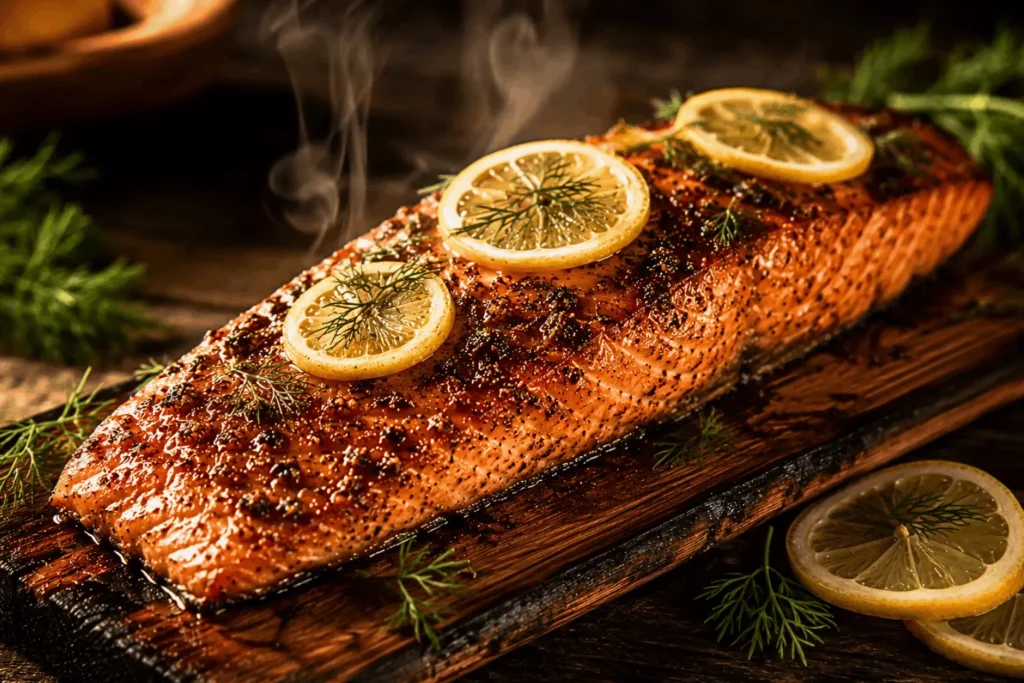
The first time I considered making cedar plank salmon in the oven, I honestly thought it would miss the whole point. Cedar planks belong on the grill, right? That’s where the smoky flavor comes from. Or so I thought.
After testing it myself, I was surprised by how well it worked. A soaked plank in a hot oven still smolders. The cedar oils still release. The salmon comes out just as moist, just as flaky — no grill required.
This guide covers the right temperature, soak time, and the Brown Sugar Dijon glaze that caramelizes beautifully in dry oven heat. No flipping, no sticking, no smoke detector drama (well, maybe crack a window). If you’ve never tried the cedar plank salmon oven method, this is your sign.
- Can You Cook Cedar Plank Salmon in the Oven?
- Why You'll Love This Cedar Plank Salmon Oven Method
- Ingredients u0026 Equipment You'll Need
- Recipe Overview
- Best Oven Temperature for Cedar Plank Salmon
- How Long to Bake Cedar Plank Salmon in the Oven
- Step-by-Step: How to Cook Cedar Plank Salmon in the Oven
- Expert Tips for Perfect Results
- Flavor Variations
- What I Learned Testing This Recipe
- What to Serve with Cedar Plank Salmon in the Oven
- Nutrition Information
- Storage and Reheating
- Health Benefits
- FAQs
- Final Thoughts
Can You Cook Cedar Plank Salmon in the Oven?
Yes — and it works better than most people expect. Here’s why: when a soaked cedar plank heats up in the oven, the trapped moisture turns to steam and carries the wood’s natural aromatic oils — called thujaplicins — directly into the fish. The result is real cedar smoke flavor, even without an open flame. The smoke is milder than the grill version, but the moisture and texture are identical.
| Factor | Grill | Oven |
|---|---|---|
| Smoke flavor | Stronger | Milder but present |
| Heat consistency | Hot spots | Very even |
| Moisture retention | Excellent | Excellent |
| Best for | Summer cookouts | Year-round cooking |
Why You’ll Love This Cedar Plank Salmon Oven Method
No Grill? No Problem
Cooking salmon on a cedar plank in the oven is very easy. You don’t need a backyard, a propane tank, or good weather. You just need a soaked cedar plank. Your oven will do the rest.
Easy Cleanup, Even Easier Cooking
No more scrubbing the grill grate to clean it. No more worrying about flare-ups. Everything cooks on a single baking sheet. And cleanup takes just a few minutes.
Even Heat, Every Time
Unlike a grill, an oven has no hot spots. So the salmon cooks evenly on all sides. There’s no risk of burning from flare-up. And you don’t have to figure out which side of the grill is hotter.
Just as Moist and Flaky as the Grilled Version
Smoke still rises from the plank. Cedarwood oil also continues to release. This light smoke and steam keep the salmon tender and juicy. Even without using a grill, there’s no loss in flavor or quality.
Ingredients & Equipment You’ll Need
Ingredients for Cedar Plank Salmon in the Oven
- 1.5 lbs salmon fillet, skin-on, center-cut
- 2 tbsp olive oil
- 2 tbsp brown sugar
- 1 tbsp Dijon mustard
- 1 tsp smoked paprika
- 2 cloves garlic, minced
- 1 lemon, zested and sliced for serving
- Salt and black pepper to taste
- 1–2 food-grade cedar planks, soaked
Ingredients Substitute
| Original | Substitute |
|---|---|
| Fresh salmon fillet | Thawed frozen salmon (fully defrosted) |
| Olive oil | Avocado oil or melted butter |
| Brown sugar | Honey or maple syrup (use ¾ the amount) |
| Dijon mustard | Yellow mustard or whole grain mustard |
| Smoked paprika | Regular paprika + tiny pinch of cumin |
| Fresh garlic | ½ tsp garlic powder |
| Kosher salt | Sea salt (use ¾ the amount) |
| Cedar plank | Alder plank (traditional Pacific Northwest alternative) |
Equipment List
- Food-grade cedar plank (at least 12 inches long)
- Rimmed baking sheet — catches drips, mandatory for oven use
- Instant-read thermometer — non-negotiable for doneness
- Oven mitts or grill gloves
- Tongs
- Small bowl for mixing glaze
- Pastry brush or spoon for applying glaze
- Spray bottle with water — safety backup if plank edges scorch
Why Brown Sugar Dijon? In dry oven heat, the brown sugar caramelizes into a sticky, slightly lacquered crust that you simply don’t get as consistently on a grill where flare-ups and variable heat get in the way. I’ve tested both, and the oven glaze is consistently cleaner.
Recipe Overview
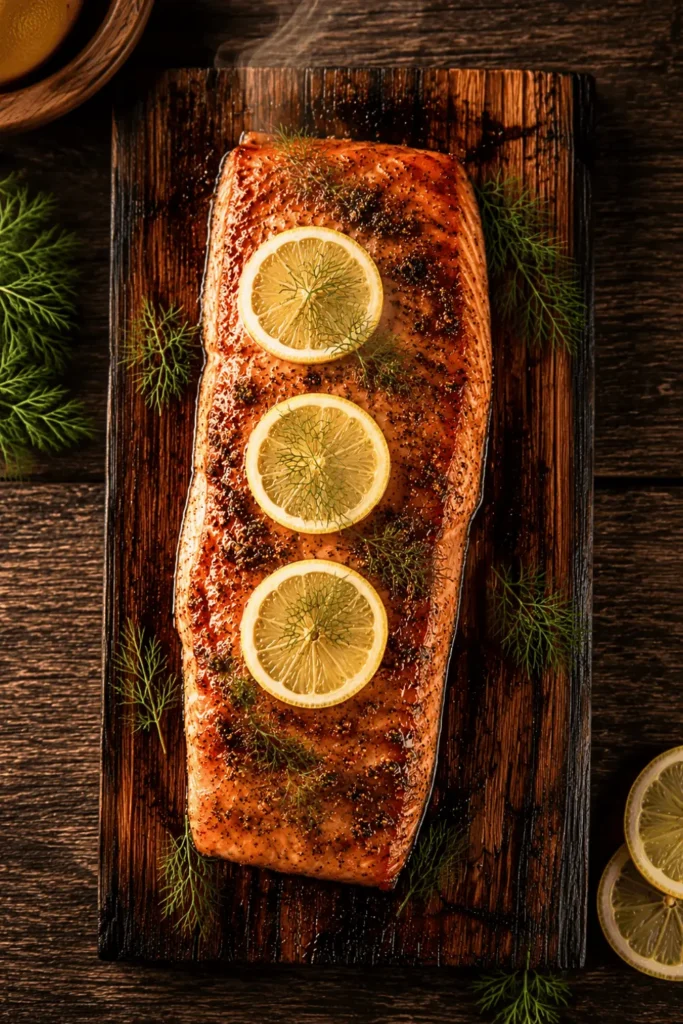
Cedar Plank Salmon in the Oven
Best Oven Temperature for Cedar Plank Salmon
The best temperature is between 375°F to 400°F. However, it may vary slightly depending on your salmon fillet and the type of glaze.
If the center-cut fillet is 1 inch thick or more, use 375°F. This lets the cedar plank heat up gradually. The salmon cooks evenly, and no part dries out.
If the salmon fillet is about ¾ inch thick or you’re using a glaze, then 400°F is best. At this temperature, the brown sugar turns a beautiful golden color. It forms a lovely glossy layer on top. In my opinion, 400°F is just right for a brown sugar Dijon glaze. It yields a great texture and a light crust.
| Temp | Result | Best For |
|---|---|---|
| 350°F | Cedar barely activates, long cook | Not recommended |
| 375°F | Even heat, moist center, gentle smoke | Thick fillets, 1 inch+ |
| 400°F | Faster cook, better glaze caramelization | Standard fillets with glaze |
| 425°F+ | Edges dry before center cooks | Avoid |
How Long to Bake Cedar Plank Salmon in the Oven
At 375–400°F, here’s what to expect based on fillet thickness:
| Fillet Thickness | Temp | Bake Time | Target Internal Temp |
|---|---|---|---|
| ½ inch (thin) | 400°F | 10–13 min | 125–130°F |
| ¾ inch (medium) | 375–400°F | 14–17 min | 125–130°F |
| 1 inch (standard) | 375°F | 16–20 min | 125–130°F |
| 1½ inch (thick) | 375°F | 20–25 min | 125–130°F |
Always use a thermometer. Start checking at 12 minutes regardless of thickness. The USDA recommends 145°F for fully cooked salmon — pull at 125–130°F if you prefer a moist, medium center.
Step-by-Step: How to Cook Cedar Plank Salmon in the Oven
1. Soak the Cedar Plank
Place the cedar plank in a baking dish filled with cold water (or apple juice, if you’d like to enhance the flavor). To keep the plank fully submerged, place a heavy can on top. Let it soak for at least 1 to 2 hours. Do this first before anything else.
2. Preheat the Oven and Pre-Heat the Plank
Preheat the oven to 375°F to 400°F. Once the oven is hot, remove the plank from the water and shake off any excess water. Then place it on a rimmed baking sheet. Heat the plank in the oven for 3 to 5 minutes before adding the salmon. This preheats the cedar plank and immediately releases its wonderful aroma. This small step is often skipped in many recipes, but it makes a big difference in the final result.
3. Prepare the Salmon
Pat the salmon thoroughly dry with paper towels. If it’s wet, the spices won’t adhere properly. Then let it sit at room temperature for 15 minutes. Using cold salmon straight from the fridge won’t cook it evenly—the edges will overcook while the center remains cold.
4. Make the Brown Sugar Dijon Glaze
In a small bowl, combine 2 tablespoons brown sugar, 1 tablespoon Dijon mustard, 1 teaspoon smoked paprika, 2 cloves finely minced garlic, and a little lemon zest, mixing well. Then Brush this mixture evenly over the salmon.
5. Place Salmon on the Plank
Carefully remove the hot plank from the oven. It will be very hot, so be cautious. Then, gently place the salmon skin-side down on the plank. Make sure no part of the fillet extends beyond the plank. Then return the plank to the middle rack of the oven. Do not place it on the top rack, as the broiler is too close and the edges of the salmon could burn.
6. Bake
Keep the oven door closed and bake for 15 to 20 minutes. Don’t open the door repeatedly. Each time you open it, the oven’s heat drops and the steam around the salmon escapes.
7. Check Internal Temperature
After 12 minutes, open the oven door and insert a thermometer into the thickest part of the salmon. If the internal temperature is 125°F, the center of the salmon will still be slightly translucent and can be easily separated with a fork. However, for cooking for infants, pregnant women, or those with weakened immune systems, cook to 145°F as per USDA guidelines.
8. Rest and Serve
Place the plank on a heat-resistant surface. Then let it sit for 3 to 5 minutes. During this time, the heat from the plank will raise the internal temperature of the salmon by another 4–5°F. Next, squeeze fresh lemon juice over it. If you like, serve it straight from the plank. This keeps the food warm and looks great.
Expert Tips for Perfect Results
- Pre-heat the plank 3–5 minutes before adding salmon. Most recipes skip this. Don’t.
- Middle rack only. Top rack puts the plank too close to the broiler element.
- Rimmed baking sheet is mandatory. Without it, drips hit the oven floor and smoke excessively.
- Keep the skin on. It acts as a natural buffer between the hot plank and the flesh. It peels away cleanly after cooking.
- Pull 5°F before your target. Carryover heat from the plank finishes the job.
- Turn on your range hood and crack a window. Light cedar smoke is completely normal. It’s not a sign something’s wrong.
Flavor Variations
The Brown Sugar Dijon glaze is the featured recipe here because it caramelizes beautifully in the oven. But here are four others worth trying:
- Lemon Herb — olive oil, minced garlic, dill, lemon zest. Clean and bright. Great for sockeye salmon.
- Maple Glazed — maple syrup, Dijon, a splash of balsamic. Rich and slightly tangy. Try soaking the plank in apple cider for this one.
- Garlic Butter — melted butter, roasted garlic, fresh parsley. Simple and deeply savory.
- Cajun — cajun seasoning, olive oil, lime juice. Bold heat that pairs surprisingly well with cedar’s sweetness.
For dry rub ideas that work on salmon, see our Best Homemade BBQ Spice Rub.
What I Learned Testing This Recipe
After testing oven temperature and salmon thickness many times, one thing has become clear. The best results were obtained at temperatures between 375°F and 400°F.
My sister was suspicious the whole time. She kept saying you’d never get a grill-like smoky smell from an oven. But when I heated the plank for three to five minutes before serving the salmon, she came into the kitchen and said, “Okay, now I can smell it.” Within the first minute, the beautiful aroma of cedar wood had filled the air.
To prevent the plank from burning, the most important thing is to soak it for at least an hour. One time I was in a hurry and only soaked it for 30 minutes. It produced a bit too much smoke. My father at the dinner table immediately noticed. He said, “The taste is a bit bitter, like burnt wood.” I’ve never soaked a plank for less time since then.
The following week I made this recipe again. This time I soaked the plank for a full two hours. I cooked skin-on sockeye salmon at 375°F. My father had it twice that day. Then he told me to write down the entire cooking method. This is the current version.
If you use the fillet with the skin on, the salmon won’t stick to the plank. That’s what happened to me every time. But when my sister made the recipe for the second time, she decided to go without the skin. Later she sent me a photo of half the fillet stuck to the plank. So it’s better to cook it with the skin on.
What to Serve with Cedar Plank Salmon in the Oven
- Grilled asparagus — the char contrasts perfectly with silky salmon
- Garlic mashed potatoes — rich and creamy, ready while the salmon rests
- Roasted cherry tomatoes and zucchini — hands-off, done at the same time
- Caesar salad — cool and crisp against the warm cedar-smoked fish
- Garlic green beans — quick, simple, and a natural pairing
For bold toppings, this CAVA Crazy Feta is surprisingly amazing dolloped on top. Or drizzle this Harissa Vinaigrette right before serving — smoky heat on cedar-smoked salmon is a genuinely good combination.
Nutrition Information
Per serving (6 oz wild sockeye salmon, raw weight, olive oil, basic seasoning — no glaze). Values are estimates.
| Nutrient | Per Serving |
|---|---|
| Calories | 288 |
| Protein | 36g |
| Total Fat | 16g |
| Saturated Fat | 2.4g |
| Omega-3 Fatty Acids | 1,600mg |
| Carbohydrates | 1g |
| Sodium | 420mg |
| Vitamin D | 120% DV |
| Vitamin B12 | 320% DV |
Note: Nutrition values change significantly with glaze options. Brown sugar glaze adds approximately 45–60 calories and 10–12g carbohydrates per serving.
Storage and Reheating
Refrigerator: If you want to keep salmon in the fridge, place it in an airtight container. It will stay good for up to three days. For even better preservation, cover the fish directly with plastic wrap and then close the lid. This will reduce air exposure, maintain flavor, and prevent the fish from spoiling quickly.
Freezer: If you want to store it in the freezer, first wrap each piece of salmon tightly in plastic wrap. Then place it in a freezer bag. This way you can keep it for up to two months. Never thaw it at room temperature. Instead, let it thaw slowly in the fridge overnight.
Reheating: If you want to reheat salmon, first place it in a baking dish. Then add 1 tablespoon of water or olive oil. Cover the dish tightly with foil. Next, heat at 275°F for 12 to 15 minutes. It’s always best to reheat salmon at a low temperature for a short time.
Best leftover use: You can serve the salmon cold on a salad or in a grain bowl—no need to reheat it. Many people say it’s one of the most enjoyable ways to eat it.
Health Benefits
Salmon is one of the richest food sources of omega-3 fatty acids (EPA and DHA). According to the American Heart Association, eating fatty fish twice a week supports cardiovascular health and reduces inflammation.
A 6-ounce serving of wild sockeye delivers 36g of complete protein, more than most people get from a single meal. It also covers 120% of your daily Vitamin D and 320% of your daily Vitamin B12, two nutrients most people consistently fall short on.
The oven method keeps it clean. No heavy sauces, no frying, no added calories beyond your seasoning and glaze. Cedar plank cooking is genuinely one of the healthiest ways to prepare fish.
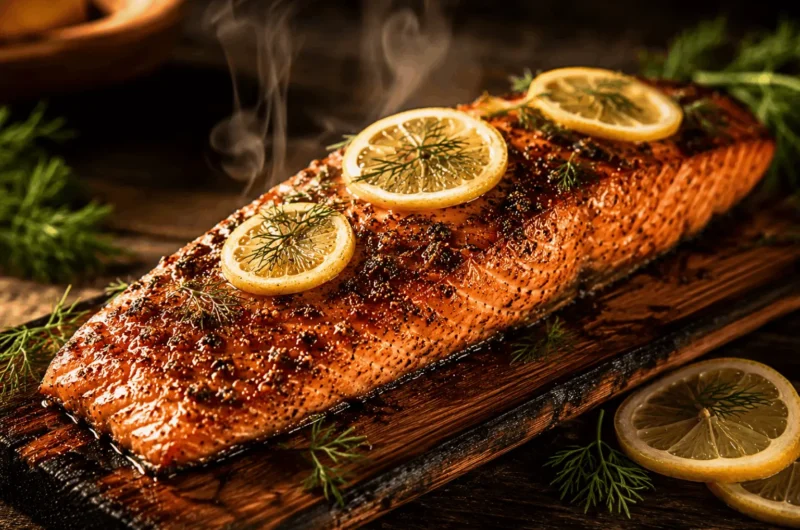
Cedar Plank Salmon in the Oven — Perfectly Moist Every Time
Course: Main CourseCuisine: Pacific NorthwestDifficulty: Easy4
servings15
minutes20
minutes288
kcal2
hours2
hours35
minutesCedar Plank Salmon in the Oven gives you the same smoky, moist results as the grilled version — no outdoor cooking required. A Brown Sugar Dijon glaze caramelizes beautifully in dry oven heat for a golden, glossy finish every time.
Ingredients
1.5 lbs salmon fillet, skin-on, center-cut
2 tbsp olive oil
2 tbsp brown sugar
1 tbsp Dijon mustard
1 tsp smoked paprika
2 cloves garlic, minced
1 lemon, zested and sliced for serving
Salt and black pepper to taste
1–2 food-grade cedar planks, soaked
Directions
- Submerge the cedar plank in cold water (or apple juice) and soak for 1–2 hours. Weigh it down so it stays fully submerged.
- Preheat the oven to 375–400°F. Place the soaked plank on a rimmed baking sheet and put it in the oven for 3–5 minutes before adding the salmon.
- Pat the salmon completely dry with paper towels. Let it rest at room temperature for 15 minutes.
- Mix brown sugar, Dijon mustard, smoked paprika, garlic, and lemon zest in a small bowl. Brush generously over the flesh side of the salmon.
- Place the salmon skin-side down on the hot plank. Make sure no part hangs over the edge. Return to the middle oven rack.
- Bake for 15–20 minutes with the oven door closed.
- Start checking internal temperature at the 12-minute mark. Pull at 125°F for medium or 145°F for fully cooked (USDA).
- Rest the salmon on the plank for 3–5 minutes. Squeeze fresh lemon over the top and serve directly from the plank.
Notes
- Thermometer is non-negotiable. Pull salmon 5°F before your target — residual heat from the plank finishes the cook.
- Soak minimum 1 hour. Two hours is better. Never use an unsoaked plank in a hot oven.
- Pre-heat the plank for 3–5 minutes before adding salmon — this activates the cedar smoke immediately.
- Keep skin on during cooking — it peels away cleanly after and protects the flesh from overcooking.
- Middle rack only. The top rack sits too close to the broiler element and will scorch the edges.
- Storage: Refrigerate leftovers up to 3 days. Reheat at 275°F covered with foil — never microwave.
FAQs
Can you cook cedar plank salmon in the oven?
Yes, you can. Place the cedar plank on a rimmed baking sheet. Then bake at 375°F to 400°F for 15 to 25 minutes, until the salmon is fully cooked. No grill needed. You’ll still enjoy the authentic aroma of cedar wood and tender, juicy salmon.
How long to cook cedar plank salmon in the oven?
For a thin fillet, bake for 10 to 13 minutes. A 1-inch-thick fillet will take 16 to 20 minutes. And for a thick center-cut fillet, bake for 20 to 25 minutes. Keep the temperature between 375°F and 400°F. Always check with a thermometer. Start checking the temperature after 12 minutes.
How to cook cedar plank salmon in the oven?
Soak the cedar plank for 1 to 2 hours. Then heat it in a 375°F to 400°F oven for 3 to 5 minutes. Next, place the spiced salmon skin-side down on the plank. Place the plank on the oven’s middle rack and bake for 15 to 20 minutes. The salmon is done when its internal temperature reaches 125°F to 145°F.
Can a cedar plank catch fire in the oven?
If you don’t soak the plank thoroughly, it can produce too much smoke or burn. However, if a well-soaked plank is placed on a rimmed baking sheet on the oven’s middle rack, there’s no risk of it catching fire. This also keeps the plank safely away from the broiler.
Do you flip salmon when baking on a cedar plank?
No, there’s no need to flip. The cedar plank controls heat as well as the cooking surface, so the salmon cooks skin-side down the entire time. You don’t have to flip it, and there’s no risk of it falling apart.
Should salmon be covered while baking on a cedar plank?
No. Covering it with foil will keep the moisture in, but the cedar wood smoke and aroma won’t be able to penetrate the salmon properly. So don’t cover it with foil when cooking on cedar planks.
Can you cook frozen salmon on a cedar plank in the oven?
Cook the salmon only after it has completely thawed. Otherwise it won’t cook evenly. The edges will overcook while the center stays cold. So before cooking, leave it in the fridge overnight to thaw thoroughly.
Can you reuse a cedar plank after oven use?
Yes, you can. If the plank isn’t too worn or warped, you can use it two to three times. After use, rinse it with hot water. Do not use soap. Then scrape off any stuck-on bits and let the plank dry thoroughly. Remember, the cedar scent and flavor are strongest the first time you use it.
Final Thoughts
Cedar plank salmon in the oven looks impressive, tastes like serious effort, and is genuinely straightforward. Soak the plank, pre-heat it, season simply, keep the door closed, trust your thermometer. That’s the whole thing.
The smoke won’t be as deep as a charcoal grill on a summer afternoon. But moist, flaky, cedar-infused salmon on any night of the year — no outdoor setup, no weather check — that’s a trade worth making.
Ready to take it outside? Our complete Cedar Plank Salmon Recipe covers gas grill, charcoal, pellet grill, and BBQ in full detail.
Tried this? Drop a comment and tell me which glaze you used. I’d love to hear how it turned out.