Cedar Plank Salmon Recipe (Perfectly Moist Every Time)

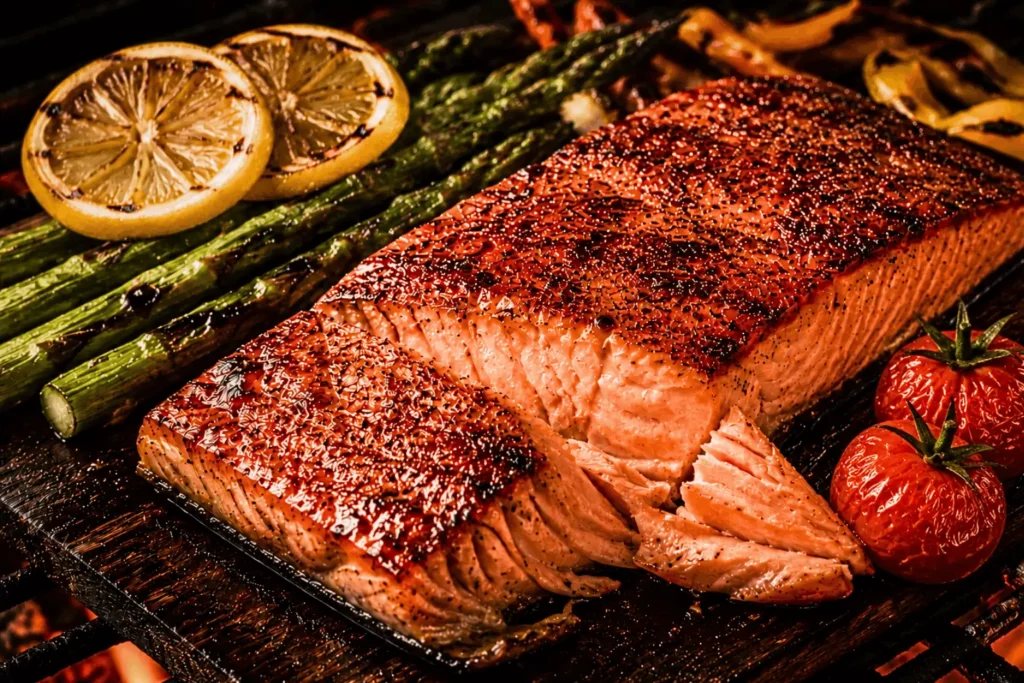
The first time I made cedar plank salmon, I burned the plank. Spoiler: the salmon was incredible anyway. That’s the beauty of this technique — it’s forgiving, and the results taste like a $30 restaurant dish.
The soaked cedar wood creates a gentle steam that keeps the fish naturally juicy and flaky, with a smoky depth you simply can’t get from a regular grill.
In this guide, I’m covering everything — the right plank, the right fish, cooking salmon on cedar plank across multiple grill types, an oven method, and marinade ideas. This is the only cedar plank salmon recipe you’ll need.
- What Is Cedar Plank Salmon?
- Recipe Overview
- Why You'll Love This Cedar Plank Salmon Recipe
- How to Choose the Best Salmon
- Ingredients u0026 Equipment You'll Need
- How to Prepare a Cedar Plank for Grilling Salmon
- Cedar Plank Salmon Recipe — Step-by-Step
- Cedar Plank Salmon Cooking Time u0026 Temperature
- How to Cook Cedar Plank Salmon on Different Grills
- Can You Cook Cedar Plank Salmon in the Oven?
- What I Learned Testing This Recipe
- Expert Tips for Perfect Cedar Plank Salmon
- Common Mistakes to Avoid
- Cedar Plank Salmon Marinade u0026 Seasoning Ideas
- Health Benefits of Eating Salmon
- Nutrition Information
- What to Serve with Cedar Plank Salmon
- How to Store and Reheat Leftovers
- The History u0026 Fun Facts of Cedar Plank Cooking
- FAQs
- Final Thoughts
What Is Cedar Plank Salmon?
Cedar plank salmon is a cooking technique – not a specific dish. Salmon fillets are placed on a water-soaked cedar wood plank and cooked over indirect heat on a grill or in the oven. Also known as cedar plank grilled salmon, this method has been around for centuries.
Here’s what makes it work: as the plank heats up, moisture in the wood turns to steam, carrying the natural aromatic oils from the western red cedar directly into the fish. The result is wood smoke flavor without a smoker – gentler than chip-smoking, cleaner, more fragrant. And because salmon never touches the grill grates, there’s zero sticking.
I’ve tested this side-by-side with grill-grate salmon using identical seasoning. The planked fillet was more moist, had deeper flavor, and produced less salmon albumin – that chalky white protein – from seeping out. The difference was obvious.
Recipe Overview
Cedar Plank Salmon: Perfectly Moist Every Time
Why You’ll Love This Cedar Plank Salmon Recipe
Smoky Flavor Without Overpowering the Fish
This isn’t the heavy smoke you get from a long BBQ session. Cedar gives salmon a soft, almost sweet smokiness that enhances the fish instead of masking it. Subtle, elegant — and exactly why people keep coming back for more.
Easy Enough for Beginners
No flipping. No worrying about fish sticking to grates. No falling apart mid-cook.The plank naturally retains heat and serves as a cooking surface, so even if it’s your first time grilling, it’s easy.
Works on Gas, Charcoal, Pellet Grills, and Even the Oven
The best part is that it can be done easily in many ways. I’ve tried it on a two-burner gas grill, a kettle charcoal grill, a Traeger, and even in a home oven. I’ve gotten equally good results every time. So this method delivers the same results consistently.
Naturally Juicy and Flaky Every Time
All planks absorb water. When heated, they slowly release that moisture, which cooks the salmon from below with a gentle steam. This keeps the fish tender and smooth and prevents it from drying out. Even if it’s cooked a bit longer than the recommended time, the fish still turns out great.
How to Choose the Best Salmon
Atlantic vs. Sockeye vs. Coho — Which Is Best?
For cedar plank cooking, I’ve tested all three and here’s my honest take:
| Type | Flavor | Fat Content | Best For |
|---|---|---|---|
| Atlantic (farmed) | Mild, buttery | High | Beginners — very forgiving |
| Sockeye (wild) | Rich, bold | Medium | Best flavor on the plank |
| Coho (wild) | Mild-medium | Medium-low | Great middle-ground option |
My personal pick: wild-caught sockeye when I want maximum flavor, or Atlantic when I’m feeding a crowd and need consistent results. Sockeye’s deep red color also looks stunning when served directly on the plank.
Skin-On or Skinless?
Always leave the fish skin on. It creates a natural layer between the flesh and the hot cedar plank, allowing the underside to cook slowly. When the salmon is done, the skin peels away cleanly often sticking to the plank, and you can serve a beautiful skinless fillet. If you start skinless, you lose that protection.
Fresh vs. Frozen Salmon
Fresh salmon is best. However, good-quality frozen works just fine. If using frozen, thaw it overnight in the refrigerator the FDA recommends never thawing fish at room temperature. Before seasoning, pat it thoroughly dry with a paper towel. Never cook partially thawed salmon on a plank the frozen center will take longer to cook while the thinner edges overcook and dry out.
Ingredients & Equipment You’ll Need
Ingredients
- 1.5 lbs salmon fillet, skin-on, center-cut preferred (wild-caught sockeye or Atlantic)
- 2 tbsp olive oil
- 1 tsp kosher salt
- ½ tsp black pepper
- ½ tsp smoked paprika
- 2 cloves garlic, minced
- 1 lemon — zested and sliced for serving
- Fresh dill or rosemary — optional, but excellent
- Cedar plank — untreated, food-grade, soaked in water
Equipment You’ll Need
- 1–2 food-grade cedar planks (at least 12 inches long)
- Baking dish or sheet pan (for soaking the plank)
- Instant-read thermometer (non-negotiable — this is your doneness insurance)
- Long-handled tongs
- Spray bottle with water (safety backup if plank edges flare)
- Sheet pan or cutting board (to rest the hot plank on after cooking)
Ingredient Substitutes & Variations
| Original | Substitute |
|---|---|
| Fresh salmon | Thawed frozen salmon (fully defrosted) |
| Olive oil | Avocado oil or melted butter |
| Kosher salt | Sea salt (use ¾ the amount) |
| Fresh garlic | ½ tsp garlic powder |
| Fresh dill | Dried dill (½ the amount) |
| Cedar plank | Alder plank (traditional PNW alternative) |
How to Prepare a Cedar Plank for Grilling Salmon
Using cedar planks for grilling salmon correctly is the step most people rush and it’s where most problems start.
Should You Soak Cedar Planks Before Grilling?
Yes and it’s not optional. Soaking prevents the wood from catching fire and creates the steam that flavors and moistens the fish. An unsoaked plank on a hot grill will smoke aggressively, then ignite. You’ll be left with ash and a ruined dinner.
How Long Should You Soak a Cedar Plank?
Minimum 1 hour but 2 hours is better. Submerge the plank fully in a baking dish or sink and weigh it down with a heavy can since cedar floats.
| Plank Thickness | Minimum Soak | Recommended |
|---|---|---|
| ¼ inch (thin) | 45 minutes | 1 hour |
| ½ inch (standard) | 1 hour | 2 hours |
| ¾ inch+ (thick) | 2 hours | 4 hours |
Pro tip: Soak in white wine, apple juice, or beer instead of plain water. The flavor is subtle but real. I’ve found apple juice works especially well with a maple glaze.
Important: Always buy planks labeled “food-grade” or “culinary cedar.” Never use lumber yard cedar, it may be treated with chemicals that are toxic when heated.
Can You Reuse Cedar Planks?
Yes, 2–3 times. If it’s not too charred or warped. After cooking, let it cool, scrape off residue, rinse with hot water (no soap), and air dry. Each use draws out more of the aromatic oils, so the first cook always gives the strongest cedar flavor.
Cedar Plank Salmon Recipe — Step-by-Step
This is the core recipe for cooking salmon on cedar plank. Follow these steps exactly and you’ll get perfect results every time.
Prep time: 15 minutes (2 hrs soaking) | Cook time: 20 minutes | Serves: 4
Step 1 – Soak the Cedar Plank
Fill a baking dish with cold water. Then place the cedar plank in the water. Press down on it with a heavy object so that the entire plank stays submerged. Let it soak for at least one hour, or two hours if possible. Do this first. Then proceed with all the other preparations.
Step 2 – Prepare and Season the Salmon
Pat the salmon completely dry with paper towels. Dry surface = better seasoning adhesion. Brush both sides lightly with olive oil. Season the flesh side generously with salt, pepper, smoked paprika, and minced garlic. Add lemon zest last and press gently so it sticks. Let it sit at room temperature for 15–20 minutes before grilling.
Step 3 – Preheat the Grill
Preheat your grill to medium-high heat (400–450°F). For indirect cooking, turn off one burner on a two-burner grill or the center burner(s) on a three or four-burner grill. The plank goes over the unlit zone.
Step 4 – Place Salmon on the Cedar Plank
Remove the plank from the water and pat the top surface dry — this helps the salmon seat properly. Place the salmon skin-side down on the plank. Make sure no part of the fish hangs over the edge.
Step 5 – Grill the Salmon
Place the loaded plank over indirect heat. Close the lid. Do not open the lid repeatedly — every peek lets heat and smoke escape. You’ll start to smell the cedar within 3–5 minutes. That’s the moment you know it’s working.
Step 6 – Check for Doneness
Start checking at the 12-minute mark. Insert an instant-read thermometer into the thickest part of the fillet. You’re looking for 125–130°F for medium (slightly translucent center, very moist) or 145°F for fully cooked per USDA guidelines.
The salmon should flake easily when pressed gently with a fork.
Step 7 – Rest and Serve
Use tongs to transfer the plank to a sheet pan or heatproof surface. Let it rest for 3–5 minutes the fish continues cooking slightly during this time. Serve directly from the plank for presentation, or slide a spatula between the skin and flesh to lift the fillets. Squeeze fresh lemon over the top and serve immediately.
Cedar Plank Salmon Cooking Time & Temperature
Here’s the direct answer first because this is actually what most people come here for.
Target temperature: Grill at 350–400°F Pull the salmon at 125–130°F internal for medium, or 145°F for fully cooked (USDA standard)
Best Grill Temperature for Salmon
350°F to 400°F is the sweet spot medium to medium-high heat. Too low and the plank never properly smokes. Too high and the edges catch fire before the salmon cooks through. If your grill runs hot, set it to medium and monitor closely.
What Internal Temperature Should Cedar Plank Salmon Reach?
| Doneness | Internal Temp | Texture |
|---|---|---|
| Medium-rare | 120–125°F | Very soft, slightly translucent center |
| Medium | 125–130°F | Moist, flakes cleanly, pink throughout |
| Medium-well | 130–140°F | Firm, fully opaque |
| Well done (USDA) | 145°F | Fully firm, no translucency |
I cook mine to 130°F. The USDA recommends 145°F — especially important for pregnant women, young children, the elderly, or anyone immunocompromised.
How Long to Grill Cedar Plank Salmon?
At 350–400°F over indirect heat: 12–20 minutes total, depending on fillet thickness.
| Fillet Thickness | Cook Time |
|---|---|
| ½ inch (thin) | 10–12 minutes |
| ¾ inch (medium) | 13–16 minutes |
| 1 inch (standard) | 16–20 minutes |
| 1½ inch (thick center-cut) | 20–25 minutes |
Always use a thermometer. Thickness guides are estimates — your grill’s actual heat output is the real variable. Start checking at the 12-minute mark regardless of fillet size.
How to Cook Cedar Plank Salmon on Different Grills
Gas Grill Method
Turn off the center burner after preheating. Place the plank over the unlit zone, close the lid, and cook 15–18 minutes. Best temperature control easiest for beginners.
Charcoal Method
Let coals ash over completely, then push to both sides. Place the plank in the center over indirect heat and cook 15–20 minutes. Grilled salmon on plank cedar over charcoal gives you the deepest, most complex smoke flavor of any method. The combination of cedar and charcoal is hard to beat.
Pellet Grill Method
Set your Traeger to 375°F and place the plank directly on the grates. No indirect setup needed pellet grills circulate heat evenly. Cook 15–20 minutes. For pellet-specific settings, smoke levels, and timing, check out our full Traeger Cedar Plank Salmon guide.
BBQ Grill Method
Salmon on a cedar plank BBQ is a classic for good reason. Push coals to both sides, plank in the center, lid closed the entire cook. Heat management is everything on a kettle — resist the urge to check. Cook 15–20 minutes.
Can You Cook Cedar Plank Salmon in the Oven?
Yes. Same smoky, moist results without firing up the grill.
- Soak plank 1–2 hours as normal
- Preheat oven to 375°F
- Place plank on a rimmed baking sheet, salmon skin-side down
- Bake 15–25 minutes until internal temp hits 125–130°F (medium) or 145°F (well done)
- Rest 3 minutes before serving
Kitchen will fill with light cedar smoke that’s normal. Turn on the range hood and crack a window.
Want the full breakdown of oven vs. grill differences, timing adjustments, and troubleshooting? Check out our complete guide to cedar plank salmon in the oven
What I Learned Testing This Recipe
I’ve made cedar plank salmon more times than I can count. Here’s what the testing actually taught me the stuff you won’t find in a generic recipe.
Why Thicker Fillets Produced Better Results
Thin fillets (½ inch or less) cook so fast they can dry out before the cedar has a chance to work its magic. Center-cut fillets that are 1 inch or thicker give you a longer cook time and that longer time on the cedar is exactly what creates the best smoky flavor. If your fish counter has both thin tail pieces and thick center cuts, always take the center cut.
The Biggest Mistake I Made (And How to Avoid It)
I didn’t soak the plank long enough on my third or fourth attempt. I thought 30 minutes was fine. It was not. The edges caught fire within 8 minutes, the bottom of the plank charred aggressively, and the salmon took on a harsh, bitter smoke flavor. The lesson: minimum 1 hour, no exceptions. If you’re short on time, use hot water instead of cold it speeds up absorption slightly.
The Seasoning Balance That Worked Best
After testing everything from complex marinades to bare salt-and-pepper, I’ve found the sweet spot: olive oil + kosher salt + smoked paprika + garlic + lemon zest. Simple, but the smoked paprika bridges the cedar smoke beautifully. If you use a marinade, keep it to 15–20 minutes maximum acid-based marinades (lemon juice, vinegar) start breaking down salmon’s texture if you go longer.
Exactly When to Pull the Salmon Off the Heat
Pull it 5°F before your target temperature. The residual heat from the plank which retains significant heat continues cooking the fish for 3–4 minutes after you remove it from the grill. If your target is 130°F, pull it at 125°F. This single adjustment was the biggest improvement I made.
What Produced the Best Smoke Flavor
Two things: pre-heating the plank before adding the salmon, and keeping the grill lid closed the entire cook. I now place the soaked plank on the hot grill for 2–3 minutes before adding the fish this gets the cedar smoking immediately and creates a more even smoke infusion. And every time you open the lid, you lose smoke. Close it and trust the process.
Expert Tips for Perfect Cedar Plank Salmon
- Don’t skip soaking the plank. One hour minimum, two if you have time. No time at all? Cook the salmon in foil instead of using a dry plank.
- Use indirect heat only. Direct flame under the plank will ignite it. If you see black smoke instead of white, move the plank to a cooler zone.
- Keep the skin on while grilling. It cooks more evenly and holds the fillet together. Remove the skin after cooking if you prefer it skinless.
- Use a thermometer, not the color test. Salmon can look done on the outside and still be raw in the center. A $15 instant-read thermometer fixes that.
- Let it rest 3-5 minutes before serving. This lets the juices redistribute. Cut into it too soon and they spill onto the plank instead of staying in the fish.
Common Mistakes to Avoid
Overcooking past 145°F – Salmon above 150°F becomes chalky and dry. Pull it early — you can always cook it a minute more, but you can’t uncook it.
Not soaking the plank long enough – Thirty minutes is not enough. The plank needs to be fully saturated to generate proper steam and resist ignition. Weigh it down and give it the full hour minimum.
Cooking over direct flames – Indirect heat is non-negotiable. Direct flame chars the plank too fast, creates harsh bitter smoke, and risks a full fire. Always keep the plank on the cooler zone.
Using very thin fillets – Thin fillets cook in 8–10 minutes, which isn’t long enough for the cedar smoke to infuse. Ask your fishmonger for center-cut pieces at least ¾ inch thick.
Opening the grill lid too often – Every peek drops the temperature 25–50°F and releases the smoke flavoring your fish. Set a timer and only check once at the 12-minute mark.
Cedar Plank Salmon Marinade & Seasoning Ideas
Less is more here. The cedar already does the heavy lifting you’re complementing it, not competing with it. Each of these takes under 10 minutes to make.
Classic Lemon Herb
- 3 tbsp olive oil
- 2 cloves garlic, minced
- Zest of 1 lemon
- 1 tbsp fresh dill (or 1 tsp dried)
- Salt and pepper to taste
Brush on flesh side. Rest 15 minutes before grilling. Clean, bright, classic.
Brown Sugar Dijon Glaze
- 2 tbsp brown sugar
- 1 tbsp Dijon mustard
- 1 tsp smoked paprika
- 1 clove garlic, minced
- Pinch of black pepper
Mix and brush over the flesh. The sugar caramelizes on top during the cook sweet, smoky, and slightly tangy.
Maple Dijon Glaze
- 2 tbsp maple syrup
- 1 tbsp Dijon mustard
- 1 tbsp balsamic vinegar
- ½ tsp smoked paprika
- Pinch of salt
Whisk together and brush before grilling. Add a second coat halfway through for a deeper glaze. Works especially well if you soaked the plank in apple juice instead of water.
Want more dry rub ideas? Try this Best Homemade BBQ Spice Rub — it works surprisingly well on salmon too. If you’d rather skip the plank and go sweet and sticky instead, our Honey Garlic Butter Salmon Recipe is worth a try.
Health Benefits of Eating Salmon
Salmon is one of the richest sources of omega-3 fatty acids (EPA and DHA). According to the American Heart Association, eating fatty fish twice a week supports cardiovascular health and reduces inflammation. A 6-ounce serving also delivers 34–38 grams of complete protein, plus vitamin B12, vitamin D, selenium, and potassium nutrients many Americans don’t get enough of. Cedar plank grilling adds no heavy sauces or frying, making it one of the cleanest, most nutritious ways to prepare it.
Nutrition Information
Per serving (6 oz wild sockeye salmon, raw weight, olive oil, basic seasoning – no glaze). Values are estimates.
| Nutrient | Per Serving |
|---|---|
| Calories | 288 |
| Protein | 36g |
| Total Fat | 16g |
| Saturated Fat | 2.4g |
| Omega-3 Fatty Acids | 1,600mg |
| Carbohydrates | 1g |
| Sodium | 420mg |
| Vitamin D | 120% DV |
| Vitamin B12 | 320% DV |
Note: Nutrition values change significantly with glaze options. Brown sugar glaze adds approximately 45–60 calories and 10–12g carbohydrates per serving.
What to Serve with Cedar Plank Salmon
Grilled Asparagus
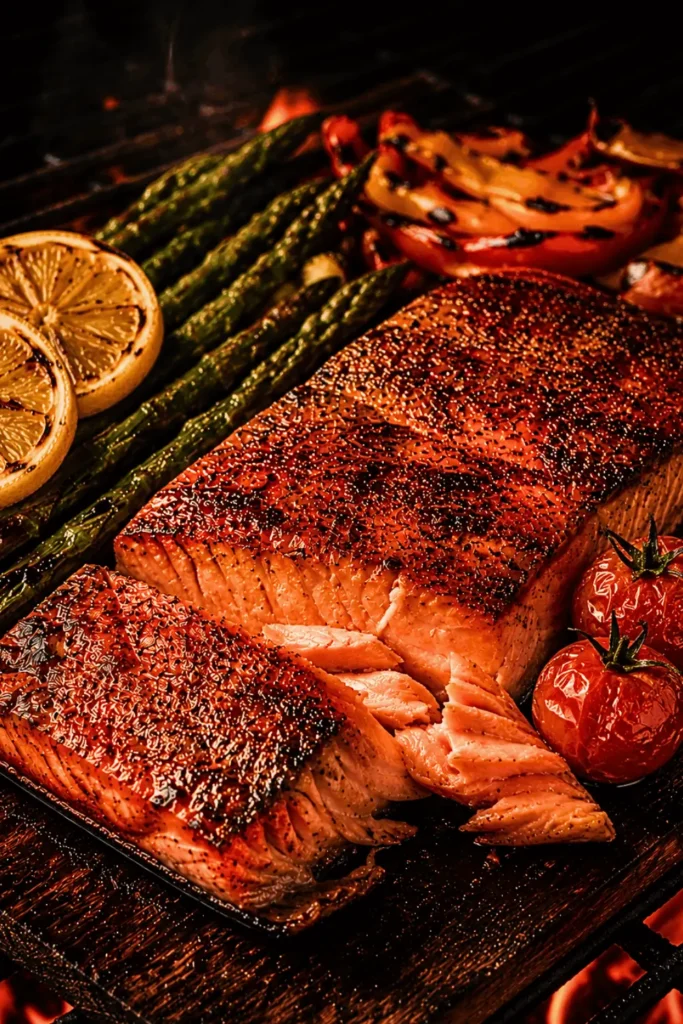
My top pairing. Toss asparagus spears in olive oil and salt, grill alongside the plank on the direct heat side, 4–5 minutes. The char on the asparagus contrasts perfectly with the silky salmon.
Garlic Mashed Potatoes
Rich, creamy mashed potatoes balance the lean fish beautifully. Make them while the salmon rests.
Roasted Vegetables
Zucchini, cherry tomatoes, and bell peppers roasted at 425°F while the grill runs is a hands-off side that comes out ready right when the salmon does.
Looking for a bold topping to serve alongside? This CAVA Crazy Feta Recipe is surprisingly amazing dolloped on cedar plank salmon.
Want something with a spicy kick? Drizzle this Harissa Vinaigrette over the top right before serving. The smoky heat pairs beautifully with cedar-smoked salmon.
How to Store and Reheat Leftovers
Refrigerating Leftovers
Store cooled salmon in an airtight container in the refrigerator for up to 3 days. Press plastic wrap directly onto the surface of the fish before sealing the container to slow oxidation and preserve flavor.
Can You Freeze Cedar Plank Salmon?
Yes. Wrap individual portions tightly in plastic wrap, then place in a zip-lock freezer bag. Freeze for up to 2 months. Thaw overnight in the refrigerator but never on the counter.
Best Reheating Methods Without Drying It Out
Best method: Place salmon in a baking dish with 1 tablespoon of water or olive oil. Cover tightly with foil. Heat at 275°F for 12–15 minutes until just warmed through. Low and slow is the only way to reheat fish without turning it rubbery.
Quick method: Flake cold leftover salmon over a salad or grain bowl and eat it cold, honestly one of the best uses for it.
Avoid: Microwave reheating. It creates uneven hot spots and dries the fish almost instantly.
The History & Fun Facts of Cedar Plank Cooking
Indigenous peoples of the Pacific Northwest slow-cooked salmon on cedar and alder planks beside open fires for centuries long before it reached a restaurant menu.
In the late 1980s and 1990s, Pacific Northwest chefs brought the technique mainstream solving every home cook’s problem of grilling delicate fish without it sticking or falling apart.
Fun Facts:
- Cedar’s natural oils — called thujaplicins — are what give planked salmon its distinctive aroma
- Salmon was often the centerpiece of a potlatch, a ceremonial Pacific Northwest gift-giving feast
- Fish were originally tied to cedar stakes angled toward the fire, not laid flat
- Alder is the most traditional plank wood — cedar spread simply because it’s more widely available
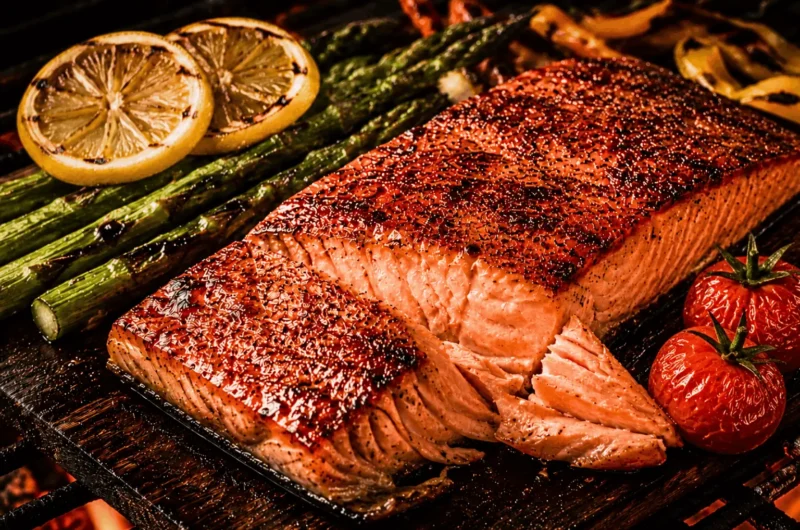
Cedar Plank Salmon Recipe (Perfectly Moist Every Time)
Course: Main CourseCuisine: Pacific NorthwestDifficulty: Easy4
servings15
minutes20
minutes288
kcal2
hours2
hours35
minutesCedar plank salmon is the easiest way to get smoky, restaurant-quality fish at home. The soaked cedar plank does all the work — keeping the salmon perfectly moist while infusing it with a gentle wood smoke flavor. Works on any grill or in the oven.
Ingredients
1.5 lbs salmon fillet, skin-on, center-cut
2 tbsp olive oil
1 tsp kosher salt
½ tsp black pepper
½ tsp smoked paprika
2 cloves garlic, minced
1 lemon, zested and sliced for serving
Fresh dill or rosemary — optional
1–2 food-grade cedar planks, soaked
Directions
- Submerge cedar plank in water and soak for 1–2 hours. Weigh it down so it stays fully submerged.
- Pat salmon completely dry with paper towels.
- Brush both sides lightly with olive oil.
- Season flesh side with salt, pepper, smoked paprika, garlic, and lemon zest.
- Let salmon rest at room temperature for 15 minutes.
- Preheat grill to medium-high heat (400–450°F). Set up for indirect heat.
- Remove plank from water and pat top surface dry.
- Place salmon skin-side down on the plank.
- Place plank over indirect heat and close the lid.
- Grill 15–20 minutes until internal temp reaches 125–130°F (medium) or 145°F (well done).
- Transfer plank to a heatproof surface and rest 3–5 minutes.
- Serve directly from the plank with fresh lemon.
Notes
- Thermometer is non-negotiable. Pull salmon 5°F before your target — residual heat from the plank finishes the cook.
- Soak minimum 1 hour. Two hours is better. Never use an unsoaked plank on a hot grill.
- Keep skin on during cooking — it peels away cleanly after and protects the flesh from overcooking.
- Oven method: Bake at 375°F on a rimmed baking sheet for 15–25 minutes. Ventilate your kitchen — light cedar smoke is normal.
- Marinade tip: If using an acid-based marinade, limit to 15–20 minutes maximum. Longer breaks down the salmon texture.
- Soak liquid tip: Try white wine, apple juice, or beer instead of plain water for subtle extra flavor.
- Storage: Refrigerate leftovers up to 3 days. Reheat at 275°F covered with foil — never microwave.
FAQs
Do You Have to Soak Cedar Planks Before Grilling?
Yes. This is an important precautionary step. It prevents the plank from catching fire too quickly on the grill. Soak it for at least one hour. If you have time, two hours is even better. Make sure the entire plank is submerged under the water.
Do Cedar Planks Catch Fire on the Grill?
Yes, a plank can catch fire. So soak it thoroughly in water first. And don’t place it directly over an open flame. Indirect heat will cause the soaked plank to emit smoke and smolder slowly, but it won’t burn through. If you see flames at the edge of the plank, remove it from the heat. Then spray a little water with a spray bottle. Keep the spray bottle handy for use if needed.
What Temperature Should Cedar Plank Salmon Be Cooked To?
The USDA recommends cooking salmon to 145°F. However, most chefs and home cooks pull the fish at 125–130°F. This yields a medium doneness and keeps the fish juicy. But if you’re cooking for pregnant women, the elderly, or those with weakened immune systems, cook it to 145°F.
Can You Reuse a Cedar Plank?
Yes. If the plank doesn’t get too burnt, you can use it two or three times. Just rinse it with hot water—don’t use soap. Then dry it thoroughly and store it. However, with each use the smoky flavor will gradually diminish.
How Long Should I Grill Cedar Plank Salmon?
Cook on indirect heat at 350–400°F for 12–20 minutes. The time will depend on how thick the fish fillet is. A 1-inch-thick center-cut fillet usually takes 16–18 minutes. Start checking the internal temperature after 12 minutes. Cook a little longer if needed.
Can I Use Cedar Plank Salmon on a BBQ?
Yes, barbecuing salmon on a cedar plank is a classic method. Prepare the barbecue for indirect heat. Place the charcoal not under the plank but to the side. First, thoroughly soak the plank. Then put it in the low-heat section, close the lid, and cook for 15–20 minutes. Instead of a gas grill, you can also use a covered kettle barbecue.
Final Thoughts
Cedar plank salmon looks impressive, tastes like you spent hours, and is secretly straightforward. Soak the plank, season simply, keep the lid closed, trust your thermometer. That’s the whole thing.
There’s something about that cedar smoke smell when you open the grill that just signals: dinner is going to be good tonight.
Tried this recipe? Drop a comment below — I’d love to hear which marinade you used and how it turned out. And if you’re ready to keep grilling, try these next: Grilled Boneless Chicken Thighs, CAVA Grilled Chicken, or this showstopper Tomahawk Steak on a Gas Grill. More of a seafood person? Don’t miss the Spicy Shrimp Roll Recipe or the Smoked Shrimp Recipe on Pellet Grill.