CAVA Lemon Herb Tahini Recipe (Copycat) — Fresh & Creamy

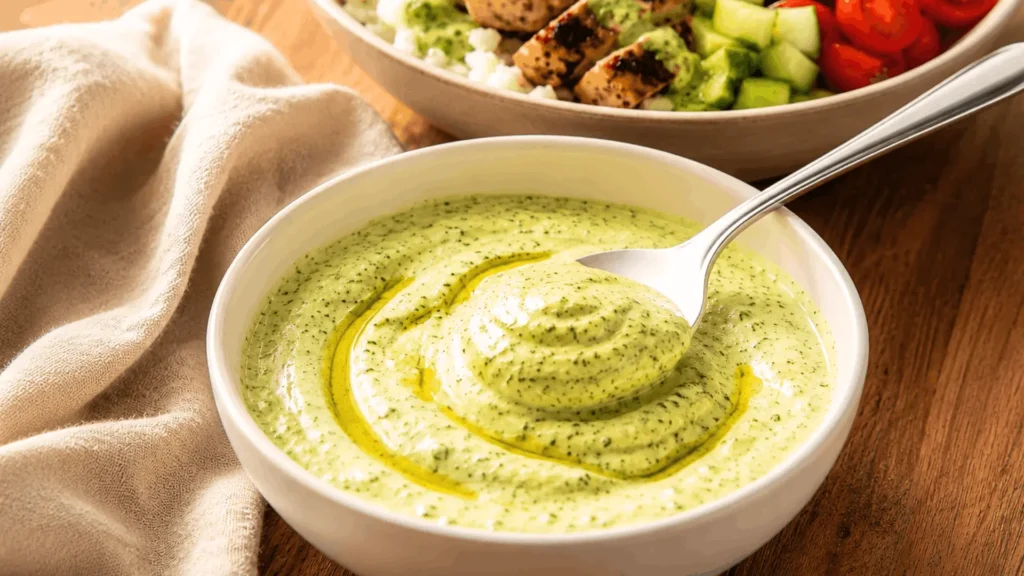
This CAVA lemon herb tahini recipe requires only 6 ingredients and can be made in just 10 minutes. Its fresh, herby flavor tastes just like the real CAVA. Then you can keep a jar in the fridge and use it with almost everything.
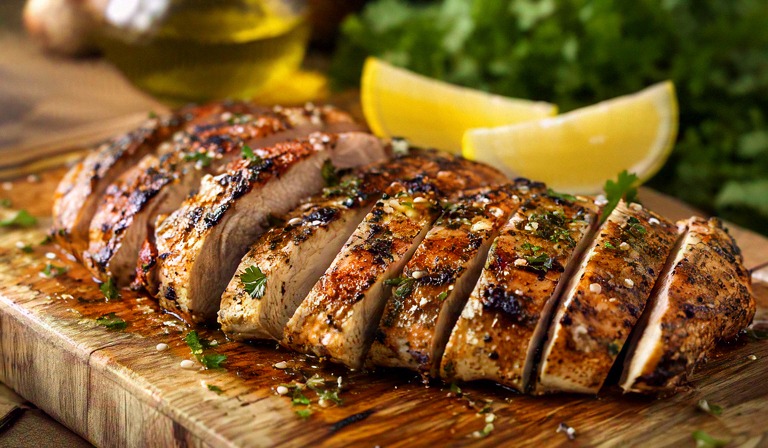
I first tried this sauce on our CAVA grilled chicken recipe. The sauce was wonderfully creamy, herby and lightly tangy. So it paired beautifully with the rich flavor of the chicken. It made the whole bowl feel even more appealing and complete. Now I often eat this sauce with roasted vegetables too. And sometimes, to boost the flavor even more, I mix in a little extra garlic dressing.
CAVA has never revealed their original recipe. So this recipe has been crafted to make the flavor as close to the original as possible. It includes tahini, lemon juice, fresh herbs, garlic, water, and salt. There’s no oil, no added sugar, and no shortcuts. Here’s how to make it.
- Quick Highlights
- Recipe Snapshot
- What Is CAVA Lemon Herb Tahini?
- Why CAVA Lemon Herb Tahini Recipe Works
- What You Need to Make CAVA Lemon Herb Tahini
- How to Make CAVA Lemon Herb Tahini
- What I Noticed While Making This Recipe
- Common Problems and Fixes
- How Your Tahini Choice Changes the Final Flavor
- Flavor Balance Breakdown
- Why Chilling Makes This Sauce Taste Better
- What Makes This Taste Like CAVA?
- Best Ways to Use CAVA Lemon Herb Tahini
- CAVA Lemon Herb Tahini vs. Other CAVA Sauces
- Make-Ahead and Storage
- Nutrition Information
- Does It Really Taste Like CAVA?
- FAQs
- Final Verdict
Quick Highlights
- Shelf life: Up to 7 days refrigerated
- Prep time: 10 minutes
- Yield: About 1¼ cups (10 servings, 2 tablespoons each)
- Diet: Vegan, dairy-free, gluten-free
- Equipment: Blender or food processor
Recipe Snapshot
CAVA Lemon Herb Tahini Recipe (Copycat)
6 ingredients. No cooking required. Ready in 10 minutes. Bright, creamy, and herby.
What Is CAVA Lemon Herb Tahini?
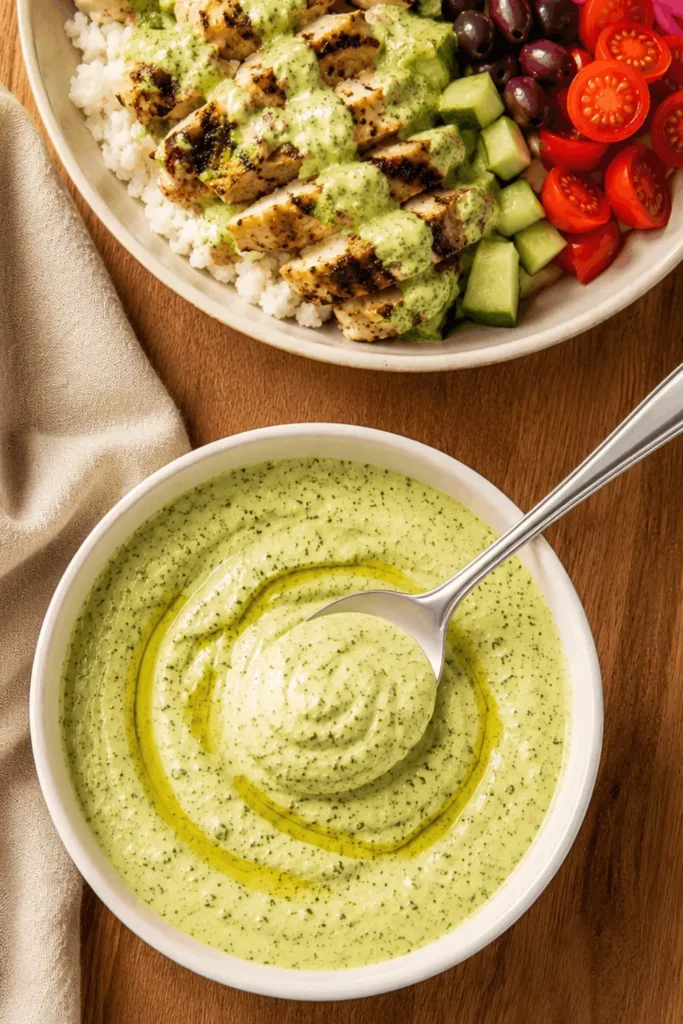
CAVA’s build-your-own bowl and pita menu offers eight free dressings, and CAVA Lemon Herb Tahini is one of them. It’s a sesame-based sauce made with tahini, lemon juice, fresh herbs, and garlic, thinned to a pourable, salad-dressing consistency rather than the thick tahini dip you’ll find at most Mediterranean restaurants.
The biggest difference between this sauce and a regular tahini sauce is the fresh herbs. Most tahini sauces only contain lemon juice, garlic, and salt. But this sauce has fresh herbs added, which gives it a beautiful green color. Because of the herbs, it has a light, grassy freshness and a hint of citrus. And compared to many of CAVA’s other dressings, it’s less spicy. So it pairs wonderfully with just about everything, from grilled chicken to roasted vegetables.
Why CAVA Lemon Herb Tahini Recipe Works
This recipe uses the same basic ingredients as CAVA: tahini, lemon juice, water, cilantro, garlic, and salt. It contains no olive oil, honey, or maple syrup. Many copycat recipes add these extras to make the sauce thicker or sweeter, but that changes the flavor balance you’re trying to match.
If you like, you can tweak a few things below to make the sauce thicker or a bit sweeter. But remember, this recipe is designed to stay as close as possible to CAVA’s original flavor. In my opinion, you should definitely try the original recipe the first time. Then, if you want, you can adjust it to your liking.
What You Need to Make CAVA Lemon Herb Tahini
- 1/2 cup tahini (smooth, pourable, not the thick, dry kind)
- 1/3 cup fresh lemon juice (about 2–3 lemons)
- 1/3 cup cold water, plus more as needed
- 1/4 cup fresh cilantro or parsley, loosely packed
- 2 garlic cloves
- 1/2 teaspoon salt, plus more to taste
Ingredient Notes
- Tahini The main ingredient of this sauce is tahini. It’s what gives the sauce its lovely nutty flavor and the right creamy texture. It’s always best to use tahini that’s thin and easy to pour. Using tahini that’s too thick or dry will make it difficult to maintain the sauce’s consistency throughout.
- Fresh lemon juice Fresh lemon juice beautifully balances the rich flavor of tahini. So be sure to squeeze fresh lemons to extract their juice and use it here. In such a simple sauce, the difference is very clearly noticeable.
- Cilantro or parsley In this lemon herb tahini, cilantro or parsley is typically used as the herb. If cilantro tastes like soap to you, don’t worry. Parsley works great in this recipe too. If you use cilantro, the flavor comes closer to CAVA’s original dressing. Most people who have made copycat recipes of this CAVA sauce say the same thing.
- Garlic The garlic flavor in this sauce shouldn’t be too intense. It wasn’t made to have the same strong garlic taste as CAVA’s original garlic dressing. Here, garlic is used only lightly to add extra flavor.
- Extra-virgin olive oil This basic recipe doesn’t use extra virgin olive oil. However, if you want to make a more traditional Middle Eastern–style tahini sauce, you can stir in 1 tablespoon of extra virgin olive oil. And if you like, you can also check out the options below.
Best Tahini Brands for This Recipe
| Brand | Texture | Flavor | Best For |
|---|---|---|---|
| Soom | Very smooth, pourable | Mild, low bitterness | Closest match to CAVA’s consistency |
| Seed + Mill | Smooth | Nutty, slightly roasted | Richer flavor profile |
| Once Again | Medium-thick | Earthy | Traditional Middle Eastern taste |
| Trader Joe’s Organic | Smooth | Mild | Budget-friendly, widely available |
| Baron’s | Thicker | Slightly bitter | Best with extra water and lemon to balance |
This isn’t a formal side-by-side taste test. It’s just a general comparison based on each brand’s familiar texture and flavor profile. So if you already have a favorite tahini, it will almost certainly work well in this recipe too. Just keep one thing in mind: is the tahini pourable, or is it very thick and dry? Because that will determine how much water you’ll need. It’s a small thing, but it makes a real difference.
Ingredient Substitutions
- No cilantro: Use parsley, or a 50/50 mix of parsley and dill.
- No fresh lemon: Bottled lemon juice works in a pinch, though the flavor will be slightly flatter. See the FAQ below for more on this.
- No tahini: Cashew butter or sunflower seed butter can substitute, though the flavor moves away from a true CAVA match.
- Want it richer: Add 1 tablespoon of extra-virgin olive oil at the end.
Equipment Needed
- Blender or food processor (a mini processor works well for small batches)
- Measuring cups and spoons
- Airtight storage container
How to Make CAVA Lemon Herb Tahini
1. Prepare the Base
First, put the tahini and lemon juice into a blender or food processor. Then add water. This way, the tahini thins out a bit before you mix in cold water, greatly reducing the chance of lumps.
2. Add the Tahini
Add about half of the water. Then pulse the blender or food processor a few times. The sauce may initially seem quite thick and a bit grainy. Don’t worry-this is completely normal. It doesn’t mean there’s any problem.
3. Blend in the Fresh Herbs
Now add cilantro or parsley, garlic, and salt. Then run the blender on high speed. Stop once the herbs are well combined and finely chopped. The sauce will turn a pale green color.
4. Adjust the Consistency
With the blender running, slowly add the remaining water in small increments. The sauce should be pourable yet lightly coat a spoon. It will thicken further as it chills in the fridge, so it’s best to start slightly thinner than your desired consistency.
5. Taste and Balance
Now taste the sauce. If it’s bitter, squeeze in a little more fresh lemon juice. And if the flavor is too sharp or strong, add a pinch of salt.
6. Chill Before Serving
Now pour the sauce into an airtight container. Then refrigerate it for at least 30 minutes before serving. This step should absolutely not be skipped. It allows all the flavors to meld together beautifully and improves the sauce’s texture. I’ll go into more detail about this step further.
What I Noticed While Making This Recipe
First, I realized that the herbs make a bigger difference in the sauce’s flavor than I had imagined. So I tried making it in a few different ways. I found that adding cilantro gives a light, citrusy freshness, while parsley makes the flavor softer and milder. Using both together gives the freshest, most balanced flavor.
My husband really loved the fresh, zesty flavor of the lemon. However, he felt that with a bit more fresh herbs, the taste would have been even better. And the sesame flavor of the tahini was just right. It didn’t overpower any other flavor; instead, it blended beautifully with everything.
Another thing really surprised me. Just the way you add water can make such a big difference in the sauce’s texture. I gradually mixed in cold water. This way, the tahini blended beautifully and turned into a perfectly creamy sauce. But if i add too much water all at once, it’s hard to control the mixture properly. Then it didn’t turn out as smoothly as I wanted.
My sister first tasted the light sesame flavor of the tahini. Then she detected the fresh herbs and lemon. It was clear that after chilling it in the fridge, all the flavors had blended together beautifully.
I noticed one more thing. This sauce tastes even better after chilling in the fridge for a while. Right after blending, the garlic and lemon flavors seemed a bit too sharp. But after about 30 minutes in the fridge, all the flavors meld together beautifully. Trust me, the sauce tastes more full-bodied, smooth, and balanced then.
The most common mistake is not blending the sauce long enough. At first it may feel a bit grainy and thick. But if you blend it for about a minute, the sauce becomes much smoother and creamier. That little extra time makes a big difference in the sauce’s flavor and texture in the end.
Common Problems and Fixes
Sauce Is Too Thick If the sauce becomes too thick, add cold water little by little, stirring occasionally as you go.
Sauce Is Too Thin If the sauce becomes too thin, add a little more tahini and mix it well again. Don’t just leave it in the fridge waiting for it to thicken.
Sauce Tastes Bitter Most of the time, the reason is the tahini itself. Tahini naturally has a slightly bitter taste. Some batches are more bitter than others, especially older tahini or tahini made with the skins on. So if that happens, adjust the flavor by adding a bit more lemon juice or a pinch of salt. And next time, remember which brand of tahini you used.
Too Much Lemon Flavor To adjust the sauce’s thickness, it’s better to add a bit more tahini to taste instead of just adding water. Tahini not only thickens the sauce but also softens and balances the lemon’s tartness.
Herbs Lost Their Fresh Color If you blend herbs for too long or while they’re hot, their fresh green color can fade. Even the flavor can taste a bit cooked. So instead of blending continuously, pulse them in short bursts. That way the herbs keep their vibrant color and their fresh taste.
Grainy or Separated Texture If the sauce turns grainy or seems separated, it’s usually because the water was added too quickly or the tahini wasn’t blended well before adding it. So blend the tahini a bit longer, and always add the water slowly, little by little. That way the sauce will be perfectly smooth and creamy.
How Your Tahini Choice Changes the Final Flavor
Not all tahinis are the same. So before choosing a jar of tahini, you should keep a few important factors in mind. Picking the right tahini makes both the flavor and texture of the sauce much better.
Hulled vs. Unhulled Tahini
Hulled tahini is made by removing the outer skins of the sesame seeds. As a result, its texture is much smoother, and its flavor is milder. On the other hand, Unhulled tahini tastes comparatively more bitter and has a slightly coarser texture. If you want to achieve a result close to the authentic CAVA flavor, use only Hulled tahini.
Fresh vs. Older Tahini
Like other nut or seed butters, tahini also becomes more bitter as it ages. So if the sauce doesn’t taste good, first check the expiration date on the tahini jar.
Thick vs. Pourable Tahini
The thicker the tahini is, the more water you’ll need to thin it out. But adding too much water also dilutes the sauce’s flavor. So, in my opinion, stir in the tahini little by little and gradually add water. That way you’ll quickly reach your desired consistency and preserve more of the flavor.
Why Some Tahini Tastes Bitter
There are usually two reasons for this. First, the sesame seeds were over-roasted during processing. Second, the tahini jar has gotten very old and started to oxidize. Once tahini turns bitter, you can’t fix that taste by adding anything to the blender. So if this keeps happening, I’d suggest switching to a different brand of tahini this time.
Flavor Balance Breakdown
| Quality | Intensity | What It Means |
|---|---|---|
| Nutty Sesame Base | Strong | Rich, earthy tahini creates the creamy foundation of the sauce |
| Bright Lemon | Strong | Fresh lemon adds brightness and balances the richness of the tahini |
| Fresh Herb Flavor | Moderate | Cilantro brings a fresh, slightly peppery finish and green color |
| Creamy Texture | Strong | Properly emulsified tahini creates a smooth, silky, pourable sauce without dairy |
| Mild Garlic Finish | Light | Garlic adds subtle savory depth without overpowering the lemon or herbs |
The nutty sesame flavor forms the rich, creamy foundation of this sauce. Fresh lemon adds brightness, while cilantro brings a light, herby lift. Garlic stays in the background, rounding out the flavor without taking over.
Why Chilling Makes This Sauce Taste Better
Chilling it isn’t just about getting the right serving temperature. In fact, over time the raw garlic’s sharp bite softens a bit. The herb flavor also spreads beautifully throughout the entire tahini. And the texture turns a bit thicker and firmer too. So this sauce clings nicely to a bowl or salad, instead of pooling at the bottom. You should let it rest for at least 30 minutes. And if you have time, resting it for an hour is even better.
What Makes This Taste Like CAVA?
A few specific traits define CAVA’s version, and they’re the traits this recipe is built around:
- Smooth but pourable — not a thick dip, but not watery either
- Bright without being overly acidic — lemon is present but doesn’t overwhelm
- Mild garlic — noticeable, not dominant
- Balanced herbs — herbal, not grassy or overpowering
- Creamy sesame finish — the tahini should be the last flavor that lingers
Best Ways to Use CAVA Lemon Herb Tahini
- Drizzled over a CAVA-style bowl
- On grilled chicken or grilled boneless chicken thighs
- As a dip for falafel
- Over roasted vegetables
- Mixed into grain bowls with rice or lentils
- As a salad dressing
- Spread inside wraps and sandwiches
- Drizzled over grilled shrimp
CAVA Lemon Herb Tahini vs. Other CAVA Sauces
| Sauce | Texture | Flavor | Best For |
|---|---|---|---|
| Lemon Herb Tahini | Creamy | Bright & herbaceous | Grain bowls |
| Garlic Dressing | Light & garlicky | Bold | Chicken |
| Harissa Vinaigrette | Thin | Smoky & spicy | Rice bowls |
| Crazy Feta | Thick | Tangy & spicy | Dips & pita |
If you’re building a full CAVA-style spread at home, these four sauces cover most of what the restaurant offers, and they layer well together in one bowl.
Make-Ahead and Storage
Refrigerator Storage This sauce keeps well in an airtight container in the fridge for up to seven days. That’s the typical shelf life for fresh, dairy-free sauce sauces made without preservatives. If you ever notice an odd smell, or if it separates into layers that won’t blend back together even after stirring, then you’ll know it’s time to throw the sauce away.
Can You Freeze It? It’s perfectly safe to freeze tahini sauce in the fridge. However, it may separate a bit after thawing. So if you freeze it, be sure to blend or whisk it again once it thaws. To maintain the best quality, store it in an airtight container in the freezer for up to one month.
Tips for the Best Texture After Storage The sauce will thicken up a bit in the fridge. That’s perfectly normal. So if you need to, just add a little water before serving to get the right pourable consistency.
Nutrition Information
Healthy Fats Tahini is primarily made from sesame seeds, and its fat content is largely unsaturated fat, according to USDA FoodData Central data on sesame butter. This recipe doesn’t add any oil, so the fat content comes entirely from the tahini itself.
Is It Vegan? Yes. Every ingredient in this recipe, tahini, lemon juice, water, cilantro, garlic, and salt, is plant-based, with no dairy, eggs, or animal products.
Nutrition Per Serving (CAVA’s own published data, per 2-tablespoon / 30mL serving)
| Nutrient | Amount | % Daily Value |
|---|---|---|
| Calories | 70 | — |
| Total Fat | 6g | 8% |
| Saturated Fat | 1g | 5% |
| Trans Fat | 0g | — |
| Cholesterol | 0mg | 0% |
| Sodium | ~130mg | 5–6% |
| Total Carbohydrates | 4g | 1% |
| Dietary Fiber | 1–2g | 5–8% |
| Sugars | 0g | — |
| Protein | 2g | 4% |
These figures come from CAVA’s own nutrition data, cross-checked across multiple independent databases that source it from CAVA, including FatSecret and FastFoodNutrition.org. All sources agree on calories (70), fat (6g), carbs (4g), and protein (2g). Sodium and fiber vary slightly (sodium 115–140mg, fiber 1–2g), likely due to differences between the in-restaurant and retail bottle versions, or rounding.
Your homemade batch should land close to these numbers, since the ingredients match. For exact figures, calculate using your tahini brand’s label and a nutrition calculator, since sodium depends on how much salt you add.
Does It Really Taste Like CAVA?
This recipe was created by looking directly at CAVA’s list of familiar ingredients. It includes tahini, lemon juice, water, fresh herbs, garlic, and salt. To preserve the authentic flavor, no sugar or oil was added.
However, it’s worth remembering that restaurant versions are made with commercial equipment and ingredients from specific suppliers. So no home recipe can guarantee exactly the same flavor.
This version focuses more on providing a close approximation of the flavor. The taste is bright, herby, nutty, and pourable. And the list of primary ingredients is also nearly the same. In fact, these are the very ingredients that CAVA itself uses.
CAVA Lemon Herb Tahini Recipe (Copycat) — Fresh & Creamy
Course: Sauce / DressingCuisine: MediterraneanDifficulty: Easy10
servings10
minutes70
kcal10
minutesA creamy, herby CAVA Lemon Herb Tahini copycat made with just 6 simple ingredients, no oil or sweetener needed. Ready in 10 minutes and perfect drizzled over grain bowls, grilled chicken, or roasted vegetables.
Ingredients
½ cup tahini, smooth and pourable
⅓ cup fresh lemon juice (about 2–3 lemons)
⅓ cup cold water, plus more as needed
¼ cup fresh cilantro, loosely packed
2 garlic cloves
½ teaspoon salt, plus more to taste
Directions
- Add the tahini and lemon juice to your blender first, before the water.
- Pour in about half the water and pulse a few times. It’ll look thick and grainy — that’s normal.
- Add the cilantro, garlic, and salt. Blend until smooth and pale green.
- Stream in the remaining water gradually until pourable but still coats a spoon.
- Taste and adjust: more lemon if bitter, more salt if too sharp.
- Chill at least 30 minutes before serving.
Notes
- Refrigerate up to 7 days in an airtight container.
- Freezes up to 1 month; whisk or re-blend after thawing.
FAQs
What is CAVA Lemon Herb Tahini?
CAVA Lemon Herb Tahini is a free dressing on CAVA’s menu made from tahini, lemon juice, fresh herbs, garlic, and salt. It has a creamy, pourable texture and a bright, herbaceous flavor, and it’s one of the milder dressings on the menu.
How do you make CAVA Lemon Herb Tahini?
Blend tahini, fresh lemon juice, cold water, fresh cilantro or parsley, garlic, and salt until smooth. Add water gradually to reach a pourable consistency, then chill for at least 30 minutes before serving for the best flavor and texture.
Is CAVA Lemon Herb Tahini vegan?
Yes. Every ingredient, tahini, lemon juice, water, fresh herbs, garlic, and salt, is plant-based. It contains no dairy, eggs, or other animal products, making it suitable for vegan diets.
Does CAVA Lemon Herb Tahini have dairy?
No. This dressing is dairy-free by ingredient list. It gets its creamy texture entirely from blended tahini, not from any dairy product.
Where can I buy CAVA Lemon Herb Tahini?
You can find it two ways. It’s available as a topping on bowls and pitas at CAVA locations, and CAVA also sells it in retail bottles at Whole Foods and on Amazon. If you’d rather make it fresh at home, this copycat recipe is a close, homemade alternative.
What ingredients are in CAVA Lemon Herb Tahini?
Based on the dressing’s known composition, the core ingredients are tahini, lemon juice, water, fresh herbs (cilantro or parsley), garlic, and salt. It does not include added oil, sweeteners, or dairy.
Can I use bottled lemon juice?
You can, but fresh lemon juice gives a brighter, more rounded flavor. Bottled lemon juice tends to taste flatter and slightly more acidic, since it’s pasteurized and often contains preservatives.
Why is my tahini sauce bitter?
Bitterness usually comes from the tahini itself, particularly if it’s older or made from over-roasted sesame seeds. Adding a bit more lemon juice or salt can help balance it, but switching tahini brands is the more reliable fix.
How long does homemade CAVA Lemon Herb Tahini last?
Stored in an airtight container in the refrigerator, this sauce keeps for up to 7 days. Always check for off smells or unusual separation before using it past that window.
Can I freeze Lemon Herb Tahini?
Yes, for up to about 1 month in an airtight container. The texture may separate slightly after thawing, so whisk or re-blend it before serving to restore its smooth consistency.
Final Verdict
The simplicity of its ingredients is a major reason why CAVA Lemon Herb Tahini has become so popular. It contains just six ingredients, with no dairy products and no added sugar. And its flavor is such that it can be used in almost any recipe, from grain bowls to grilled chicken. This copycat version follows CAVA’s known ingredient list, without adding oil or sweeteners. The result is a near-perfect imitation in terms of taste and texture. For a fully CAVA-inspired spread at home, serve it with garlic dressing, Crazy Feta, and grilled chicken for the complete bowl.
Try this recipe and let me know in the comments below how you liked it. or what you served it with. And if you want to make a full CAVA-style dinner at home, try the CAVA Bowl recipe next time.