KitchReviews, compare products, and make smarter decisions for your kitchen today.
How to Cook a Tomahawk Steak on a Gas Grill

The first time I cooked a tomahawk steak on a gas grill, I felt like a total Rockstar! That big bone, thick cut, juicy and delicious steak looked just like a steakhouse special. As fancy and difficult as it looks, it’s actually not that difficult to make.
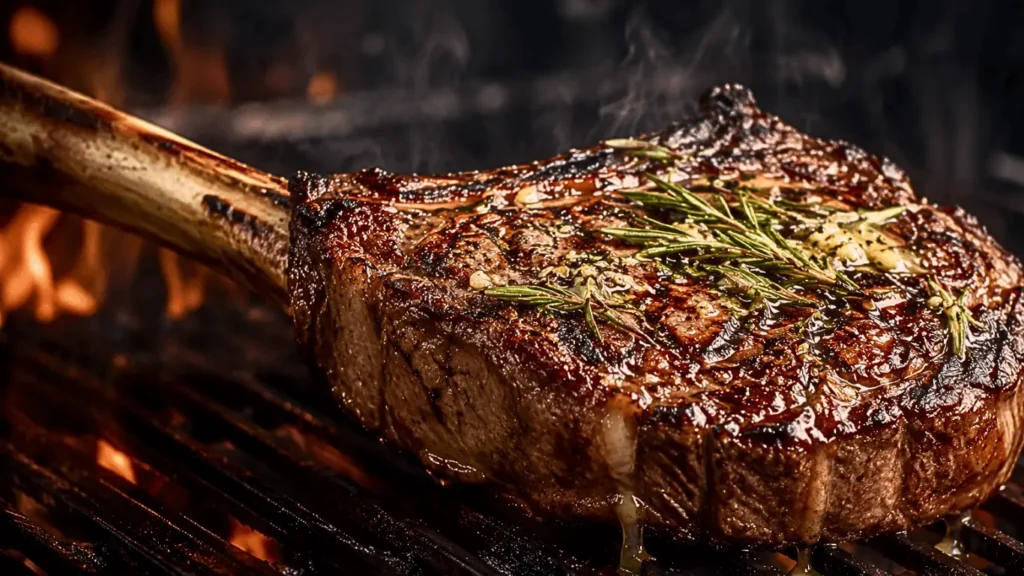
I’ve been making this recipe for many years, and honestly—it never gets old. Every time I make it, it feels like a special occasion. Here you’ll learn step by step how to cook a tomahawk steak on a gas grill that tastes just like it came from a restaurant.
So let’s fire up the grill! The great thing is, you don’t need any special equipment. With the right technique and a little patience, you can make an amazing steak.
- Why You'll Love This Tomahawk Steak on a Gas Grill
- What Is a Tomahawk Steak?
- Recipe Overview
- Why I Love Cooking Tomahawk Steak on a Gas Grill
- Equipment You'll Need
- Ingredients You'll Need for Tomahawk Steak on a Gas Grill Recipe
- Best Gas Grill Setup for Tomahawk Steak
- Step-by-Step Guide: How to Cook a Tomahawk Steak on a Gas Grill
- Tomahawk Steak Internal Temperature Guide
- Tips for the Best Tomahawk Steak on a Gas Grill
- How to Store and Reheat Leftovers
- Nutrition Information For Tomahawk Steak On Gas Grill Recipe
- FAQs
- How long to cook a tomahawk steak in a gas grill?
- What Is the Best Temperature to Cook a Tomahawk Steak?
- Can I make a tomahawk steak on a gas grill without a smoker?
- Why Is My Tomahawk Steak Tough and Chewy?
- Do You Need to Marinate a Tomahawk Steak?
- How Do I Stop My Gas Grill From Flaring Up?
- Is a Tomahawk Steak Worth the Price?
- Final Thoughts
Why You’ll Love This Tomahawk Steak on a Gas Grill
A Tomahawk Steak on a Gas Grill bbq always sounds amazing. It’s as stunning in appearance as it is extraordinary in flavor—and actually very easy to make. Once you’ve prepared it, you’ll want to make it again for barbecues, date nights, or weekend dinners.
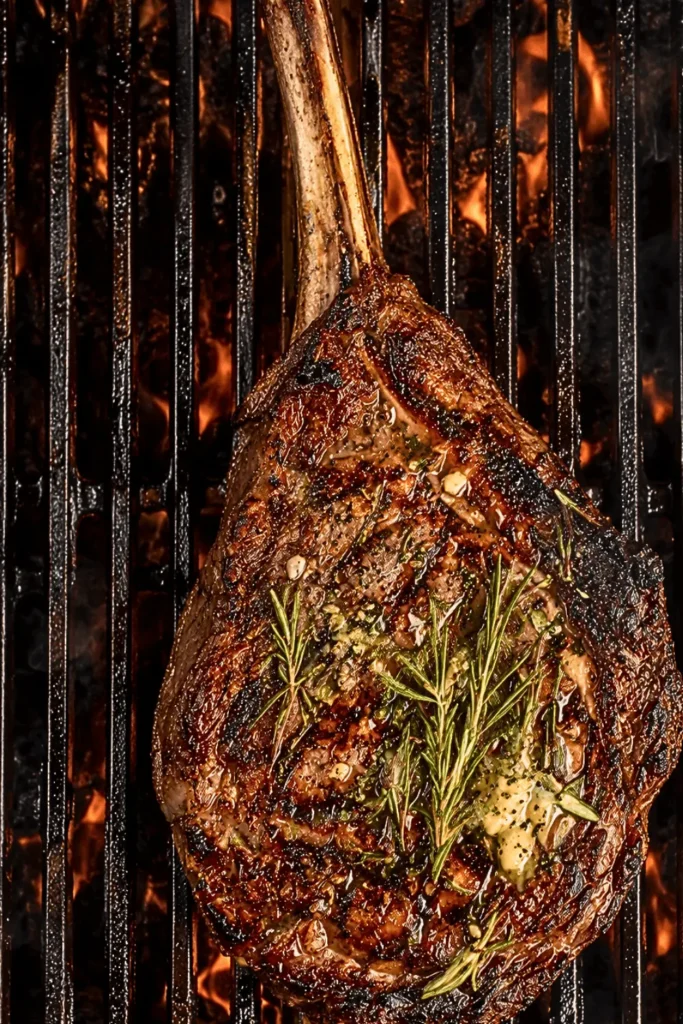
Steakhouse Flavor at Home
This recipe is one of my favorites because the flavor is the real magic here. The gas grill gives the steak a fantastic crust on the outside while keeping the inside juicy and tender.
No need for a $100 dinner reservation or a wood-fired oven—your gas grill does all the work! It saves you money and puts you in complete control of the cooking.
The best part? It tastes even more special when you make it at home!
Perfect Crust With Juicy middle
The outside is crispy and a beautiful golden brown, and the inside is soft, pink, and juicy—that’s the ideal, right? The fun part about this method is that you get both—every single time. No dry or overcooked bits, no undercooked spots. Perfect balance from edge to edge.
Easy Tomahawk Steak Gas Grill Reverse Sear Method
I know the term “reverse sear” sounds a bit technical, but it’s actually not that complicated.
The key here is to cook slowly and steadily, without rushing. First, cook the steak on low to medium heat until it’s fully cooked through, then finish it off on high heat to create a crust. That’s the whole process.
This puts you in complete control of the cooking, so there’s no need for guesswork. And the best part is—you don’t have to keep lifting the lid to check on it. You just have to trust the process.
Perfect for BBQ Parties and Sharing
Want to impress your guests without any fuss? This time, it’s your turn. A tomahawk steak is actually perfect for sharing. A large steak can easily be divided among two or more people, making dinner more fun and memorable. There’s nothing like the joy of slicing and sharing a big steak together. There’s nothing like the joy of slicing and sharing a big steak together.
What Is a Tomahawk Steak?
If you’ve never seen one up close before, it really feels like it’s leaping off the page. Big bones, thick cuts—it looks just like a steakhouse, cowboy steak on gas grill. But it’s not just about looks; there’s a real purpose behind it.
If you love bold beefy cuts like this — you’ll want to try my Beef Brisket Pastrami Recipe next. Another showstopper that’s worth every bit of effort.
Tomahawk Steak vs Ribeye — What Is the Real Difference?
The difference between a tomahawk and a ribeye is actually in the cut. Essentially, it’s the cut that sets them apart. Ribeye and tomahawk steaks are actually the same type of meat—the same rich marbling, the same deep flavor, and that familiar rich taste of high-quality beef.
The only real difference is the bone.
A ribeye is typically cut shorter, while a tomahawk keeps the entire rib bone intact—which can be about 6 to 8 inches long. It’s this long bone that gives it its tomahawk-like appearance.
In other words, it’s the same steak, just with a more dramatic presentation.
Why the Long Rib Bone Makes a Better Steak
What I like most is that big bone. And it’s not just for the bone.
During cooking, this bone acts as a natural heat barrier, helping to regulate the heat around the meat, resulting in a more evenly cooked steak that dries out less. It also helps to keep the steak stable on the grill and serves as a great handle when flipping. And you have to admit—it looks great, too.
Best Thickness for Grilling a Tomahawk Steak on a Gas Grill
This is very important—don’t skip this step.
If you’re cooking a tomahawk steak on a gas grill,, choose a cut at least 2 inches thick. That falls into the “sweet zone.” Anything thinner will cook too quickly, and you won’t get that beautiful balance from the crust to the interior.
I personally prefer a 2–2.5-inch-thick steak. That way, the center has just enough time without getting overcooked. A thicker cut means better results—that’s really the whole point, and it’s that simple.
Recipe Overview
Why I Love Cooking Tomahawk Steak on a Gas Grill
Over the years, I’ve cooked many types of steak—ribeye, New York strip, porterhouse, you name it. But nothing compares to cooking tomahawk steak on a gas grill. Honestly, nothing even comes close.
My Favorite Part About This Recipe
My favorite part of this recipe is when the steak hits the hot grill. That loud sizzle, the instant smoke, and that aroma—it draws everyone nearby!
I’ve made this for birthdays, outdoor barbecues, and weekend dinners with friends countless times. And the funny thing is, every time, they like it. The reaction never gets old.
Why This Version Works Best
I’ve tried various methods—direct sear, oven-first, charcoal vs. gas—everything. But this method has proven to be the best for reverse searing on a gas grill.
- Total control — two zones mean no guessing
- Even cook — pink edge to edge, every time
- Better crust — high heat finish on a dry surface
- Repeatable — same great result every single cook
I’ve directly compared it to the method of sear-first, and you can tell the difference right from the start. With this method, I always get better results.
Mistakes I Learned to Avoid
In the process of learning, I also made some big mistakes—ones I’ll never mistake again.
- One of my biggest mistakes was putting a cold steak straight from the fridge onto the gas grill. That overcooked the outside but left the inside undercooked. Now I always let the steak sit at room temperature for 45–60 minutes before grilling.
- Another thing I’ve learned—a wet steak never gives a good crust. If there’s water on the surface, it steams instead of searing. So before cooking, I always pat the steak thoroughly dry.
- I made another mistake—rushing the slow-cooking step. I know how great it smells; it’s truly amazing. But if you cook it too quickly, the inside doesn’t cook evenly. And “heat carryover,” or the heat continuing to work even after cooking—that’s a real thing.
- Once I left the steak on a bit too long. During its rest, its temperature climbed even higher—it went up by 8°F. So now I always keep the steak in my gas grill and pull it off the grill when its internal temperature is about 5°F below the target temperature.
And finally — The Resting Matters
- When I first cut into a Tomahawk steak, all the juices immediately ran out. Since then, I let all steaks rest for 10–15 minutes before cutting.
Every mistake has been a learning experience for me. So there’s no need to go through the trouble of making the same mistake again.
Equipment You’ll Need
At one point, i was a bit worried about it. But following the right steps on a gas grill is actually very easy and convenient.
Essential Kitchen Tools
Here’s everything I use every single time:
The Grill
- Gas grill with at least 2 burners — you need two zones
- Grill grates clean and well-oiled before cooking
Temperature Tools
- Instant read meat thermometer — non-negotiable
- Grill thermometer — to monitor indirect zone temp
Prep Tools
- Sharp chef’s knife — for slicing after resting
- Cutting board — large enough for a 2.5 lb steak
- Paper towels — for patting the steak completely dry
- Tongs — long handled for safe grill control
Basting Tools
- Small saucepan or cast iron pan — for butter baste
- Basting brush or spoon — for applying butter during sear
- Foil — for tenting during the rest period
This really is everything you need. You don’t need any fancy gadgets or expensive equipment. If you just do the basics right, everything runs smoothly.
Ingredients You’ll Need for Tomahawk Steak on a Gas Grill Recipe
The good news is you don’t need a long shopping list for this. Most of the work is done by the tomahawk itself. Want to take the seasoning even further? Check out my Best Homemade BBQ Spice Rub — it works beautifully on a tomahawk too.
You just need to add a few good ingredients, and that’s how its true flavor comes out. The things I usually use are:
The Steak
- 1 tomahawk steak (2 to 2.5 inches thick, around 2 to 2.5 lbs)
The Seasoning
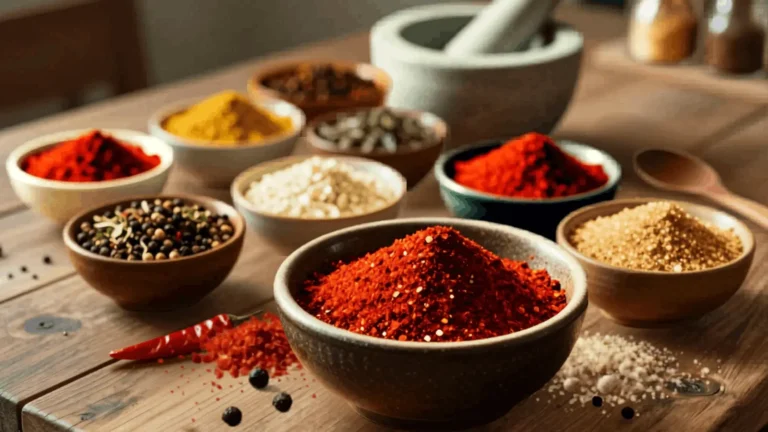
- 1½ tsp coarse kosher salt
- 1 tsp freshly cracked black pepper
- ½ tsp garlic powder
- ½ tsp onion powder (optional)
- ½ tsp smoked paprika (optional but recommended)
For the Grill
- 1 tbsp olive oil or avocado oil (to coat before cooking)
For the Butter Baste
- 2 tbsp unsalted butter
- 2 garlic cloves (crushed)
- 2 fresh rosemary sprigs
- 2 fresh thyme sprigs
For Finishing
- Flaky sea salt (for serving)
- Fresh parsley (optional garnish)
That’s the real deal. In my opinion, simple seasonings always work best. The steak you cooked is pretty pricey—so you don’t want to lose the true flavor of the beef; instead, you want to bring it out even more.
Salt, pepper, and a little heat—this combination never fails.
The biggest piece of advice I always give is this: don’t be afraid to use a little extra seasoning. Tomahawk steak is thick, so it needs more salt than you think. So feel free to add a generous amount of salt.
Best Gas Grill Setup for Tomahawk Steak
The real key to success is the right setup. Let me tell you about my first Tomahawk steak—I put it right on high heat. The result? The outside was burnt, and the inside was still raw. A total disaster!
But I learned a lot from that mistake. Most of what I know today came from that experience.
Direct Heat vs Indirect Heat — Which Is Best for Tomahawk Steak?
Most people always cook directly over heat. But when it comes to a tomahawk steak, that’s one of the most common mistakes.
Direct heat — The flame sits just below the steak, making it great for creating a crust or sear. However, it’s not ideal for cooking a thick tomahawk steak all the way through from start to finish.
Indirect heat — There’s no direct flame beneath the steak. This makes the grill function more like an oven, so the steak cooks slowly, evenly, and thoroughly all the way through.
To properly cook a tomahawk steak, you need to use these two types of heat—but in the right order. First, indirect heat to cook the steak slowly and evenly. Then, direct heat to create a beautiful crust on the outside. And that’s it, the whole technique is actually that simple.
Ideal Gas Grill Temperature for Cooking Tomahawk Steak
I’ve tested this more times than I can count.
Indirect zone — 225°F to 250°F. Low and slow. Builds internal temp without burning the outside.
Searing zone — 450°F to 500°F. Hot, fast, and loud. This is where the crust happens.
This was also one of my early big mistakes—not preheating the grill long enough before searing. As a result, the crust turned out pale and soft, exactly what I didn’t want.
So now I always give the grill 10–15 minutes to reach full temperature. If you want a good crust, you can’t skip this step.
Why Two-Zone Gas Grill Setup Works Best for Thick Steaks
This is the method I swear by. One side on. One side off. Simple as that.
Hot side — burners fully on. Your searing zone.
Cool side — burners off. Your slow cook zone.
Because a thick tomahawk steak takes a while to heat evenly all the way through, if you cook it at high heat from the start, the outside will cook more quickly, resulting in an overcooked exterior while the inside remains raw.
That’s why we use two types of heat—one for cooking slowly and evenly, and the other for developing a nice crust at the end.
Is the steak browning too quickly? Then move it to the cooler side. And if it seems like it’s taking too long, bring it closer to the heat. The best part is that you’re in control the entire time. There’s no rush, nothing to be afraid of.
In fact, they do the same thing in a steakhouse. The only difference is they use more sophisticated equipment. At home, you can achieve the same results much more easily.
Step-by-Step Guide: How to Cook a Tomahawk Steak on a Gas Grill
This is the moment all the preparations have been made for. If you’ve followed these steps, the chances of achieving great results are very high.
1: Bring the Steak to Room Temperature
Take the steak out of the fridge and let it sit on the counter for 45–60 minutes.
I know it can feel a bit awkward to leave it out that long. But trust the process. If you put a cold steak directly on a hot grill, it won’t cook evenly. The outside will cook quickly, but the inside will stay mostly cold. Bring the steak to near room temperature. If the steak is brought to near room temperature beforehand, this problem is greatly reduced.
2: Season the Tomahawk Steak
First, pat the steak thoroughly dry with a paper towel. Remember, moisture is the enemy of a good crust. The drier the surface, the better the sear. If you love bold seasoning like this — my guide on the Best Dry Rubs for Smoked Turkey covers even more rub combinations you can experiment with on any cut.
Next, season it well—not just on top, but underneath and all around as well.
- Coarse kosher salt
- Freshly cracked black pepper
- A pinch of garlic powder
Press everything on with your hands, making sure the seasonings stick well to the steak.
3: Preheat the Gas Grill
Keep the Burners on one side and Burners off on the other.
Let the grill preheat thoroughly for 10–15 minutes. Don’t skip this step.
- Hot Side (Direct Heat): 450°F–500°F
- Cold Side (Indirect Heat): 225°F–250°F
A simple test is to hold your hand over the hot side. If you can’t keep it there for more than 2 seconds, the grill is ready for searing.
4: Cook Over Indirect Heat
This step will take about 45–60 minutes. The steak’s internal temperature must reach 115°F–120°F before searing.
Check on it once every 15 minutes. The outside color will gradually turn light gray and then brown. This is completely normal.
Don’t flip it repeatedly. Avoid excessive moving. Just be patient.
5: Sear Over High Heat
This is my favorite part!
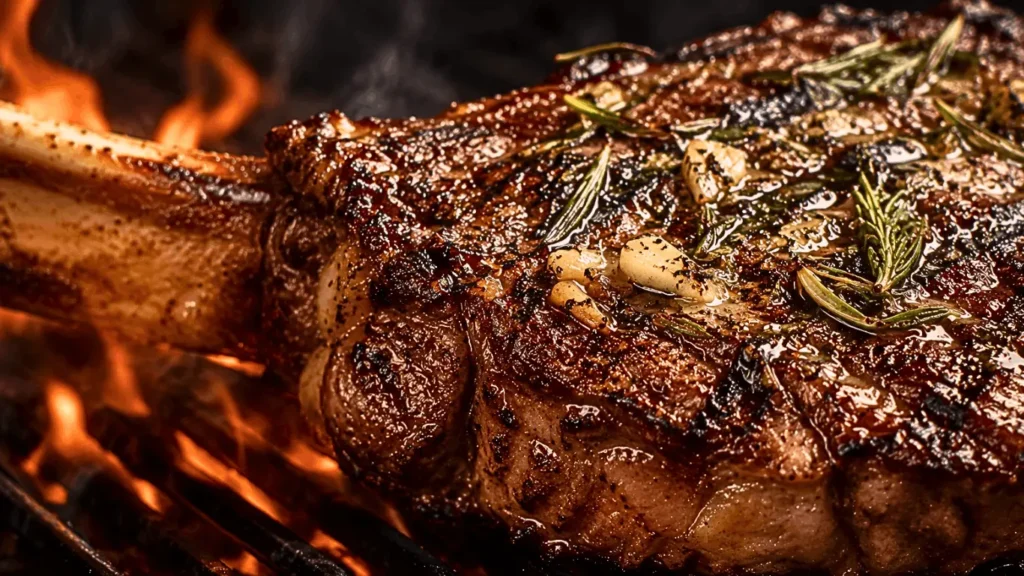
Place the steak on the hot side. That loud sizzle tells you everything is going right. Then, cook for 2–3 minutes on each side. Don’t keep flipping it. Let the grill do its work.
Keep an eye out for a deep brown, almost mahogany-colored crust. That’s where the real flavor is. I always add butter, crushed garlic, and rosemary while searing. It makes the exterior more flavorful and keeps the meat incredibly juicy.
Trust me, it makes a difference.
6: Check tomahawk steak gas grill temperature
Insert the thermometer into the thickest part of the steak. Not near the bone, because the temperature reading there isn’t accurate.
- Rare — 120°F to 125°F
- Medium Rare — 130°F to 135°F (my sweet spot)
- Medium — 140°F to 145°F
- Medium Well — 150°F to 155°F
And one more thing: always remember to remove the steak about 5°F before your desired temperature. It will continue to cook a bit more during resting. Whenever I’ve run into a problem, this rule has helped me.
7: Rest Before Slicing
Non-negotiable. Seriously.
Place the steak on a cutting board. Then gently cover it with foil and let it rest for 10–15 minutes. I know, you want to cut it and eat it right now. We all do! But if you cut too quickly, all the juices will spill out onto the board. And that happens in a matter of seconds.
Once it’s rested, sprinkle some flaky sea salt on top. Then cut it against the grain of the meat. And then you’ll see that beautiful pink center—soft, juicy, and totally worth the wait.
Tomahawk Steak Internal Temperature Guide
This is where a lot of people go wrong. They rely on color or guesswork to cook. Don’t do that. Use a good meat thermometer. That way you won’t need any guesswork. I don’t cook a tomahawk without it.
For perfectly cooked steaks every time, this is truly the most important tool.
| Doneness | Pull Off Grill | After Resting | Center Color |
|---|---|---|---|
| Rare | 115°F – 120°F | 120°F – 125°F | Deep red, cool center |
| Medium Rare | 125°F – 130°F | 130°F – 135°F | Warm pink, very juicy |
| Medium | 135°F – 140°F | 140°F – 145°F | Light pink, slightly firm |
| Medium Well | 145°F – 150°F | 150°F – 155°F | Mostly brown, firm |
| Well Done | 155°F + | 160°F + | Fully brown, very firm |
Tips for the Best Tomahawk Steak on a Gas Grill
I’ve made tomahawk steak on a weber gas grill many times. Some were amazing. Some were disasters. These tips are drawn from real-life experience. Hosting a bigger cookout? While the tomahawk rests — throw some Grilled Boneless Chicken Thighs on the grill too. Perfect way to feed a crowd.
Use a Meat Thermometer
Stop guessing. Honestly, it rarely works properly.
One of the most useful tools is the familiar thermometer. I got this trick after ruining a few good steaks by going on feel alone.
Insert the thermometer into the thickest part of the meat, but away from the bone. And remove it as soon as it reaches the desired temperature. Take the stick out.
Don’t Flip Too Often
Leave it alone. Walk away. Flipping constantly breaks crust formation. You need proper contact with the grill to get that deep, caramelized bark.
Only flip it once when searing—one time per side is enough. That’s it.
Let the Steak Rest
When grilling at home, many people skip this simple step—but don’t skip it. After cooking the steak, let it rest for 10–15 minutes. Cover it lightly with foil.
I’ve tried both ways and found that the steak that’s rested is always juicier. Every single time.
Avoid Flare-Ups
Fat drips. Flames spike. It happens.
But uncontrolled flare-ups char the outside before the inside is ready.
- Keep a spray bottle of water nearby
- Move to the cool zone if flames spike
- Trim excess fat before cooking
- Never walk away during the sear
Stay close. Stay in control.
How to Store and Reheat Leftovers
Have leftovers? Lucky you. Here are some tips for a great tasting experience.
Refrigerator Storage Tips
Wait until the steak is cold before you serve it. Do not place hot meats directly into the refrigerator.
- Cool at room temperature for 30 minutes
- Wrap tightly in plastic wrap or foil
- Put in an airtight container
- Store in the coldest part of the fridge
It can be kept for 3-4 days. I usually don’t keep it after the fourth day. And honestly, I’ve used it so many times that I can’t even count.
Best Reheating Method
Not the microwave. Please. I made that mistake once. Rubbery texture. Crust completely gone. Never again.
The oven method is the way:
- Preheat oven to 250°F
- Place steak on wire rack over baking sheet
- Heat for 20 to 25 minutes
- Finish with a 60-second sear in hot cast iron with butter
This last sear brings the crust right back. The additional minute is well-worth it.
Can You Freeze Tomahawk Steak?
Yes. Absolutely.
Cooked leftovers:
- Cool completely first
- Tightly cover with plastic wrap then foil
- Label with the date
- Freeze up to 3 months
Raw tomahawk:
- Keep vacuum sealed if unopened
- If opened — wrap tightly in plastic wrap and foil
- Freeze up to 6 months
To thaw:
- Move to fridge 24 hours before cooking
- Never thaw on the counter
- Slow and cold keeps the quality best
I’ve refrigerated and reheated Tomahawk steak many times. It’s very important to wrap it properly. Then let it thaw slowly. If you do it right, its quality really stays good—really good.
Nutrition Information For Tomahawk Steak On Gas Grill Recipe
This is an estimated calculation based on one serving. The actual amount may vary slightly depending on the size of the steak, how much fat has been trimmed, and how much butter has been used.
| Nutrient | Per Serving | % Daily Value |
|---|---|---|
| Calories | 1,200 kcal | 60% |
| Protein | 98g | 196% |
| Total Fat | 87g | 112% |
| Saturated Fat | 36g | 180% |
| Unsaturated Fat | 42g | — |
| Cholesterol | 280mg | 93% |
| Sodium | 780mg | 34% |
| Carbohydrates | 0g | 0% |
| Fiber | 0g | 0% |
| Sugar | 0g | 0% |
| Iron | 6mg | 33% |
| Zinc | 12mg | 109% |
| Vitamin B12 | 4.2mcg | 175% |
| * % Daily Values are based on a 2,000 calorie diet. Your daily values may be higher or lower depending on your calorie needs. | ||
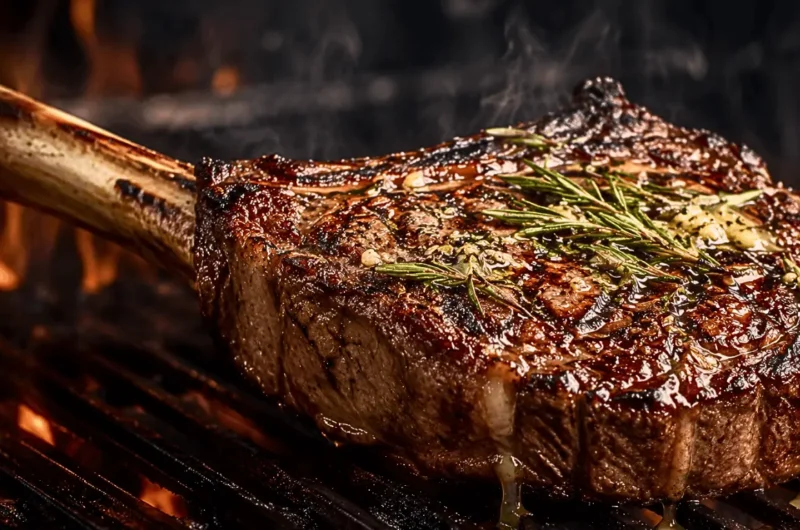
How to Cook a Tomahawk Steak on a Gas Grill
Course: Main CourseCuisine: American BBQDifficulty: IntermediateServings
2
servingsPrep time
45
minutesCooking time
1
hourCalories
1,200
kcalTotal time
1
hour45
minutesA thick, juicy tomahawk steak cooked low and slow then finished with a screaming hot sear. Steakhouse quality right in your own backyard. Simple ingredients. Big, bold flavor. A meal people will talk about long after the plates are cleared.
Ingredients
The Steak
1 tomahawk steak (2 to 2.5 inches thick, around 2 to 2.5 lbs)
The Seasoning1½ tsp coarse kosher salt
1 tsp freshly cracked black pepper
½ tsp garlic powder
½ tsp onion powder
½ tsp smoked paprika
For the Grill1 tbsp olive oil or avocado oil
For the Butter Baste2 tbsp unsalted butter
2 garlic cloves (crushed)
2 fresh rosemary sprigs
2 fresh thyme sprigs
For FinishingFlaky sea salt
Fresh parsley (optional)
Directions
- Step 1: Bring to Room Temperature Pull the steak from the fridge. Rest on the counter for 45 to 60 minutes before cooking.
- Step 2: Season the Steak Pat completely dry with paper towels. Season generously on all sides with salt, pepper, garlic powder, onion powder, and smoked paprika. Press seasoning in with your hands
- Step 3: Preheat the Grill Set up two zones. Burners on one side, off on the other. Preheat for 10 to 15 minutes. Hot side should reach 450°F to 500°F. Cool side 225°F to 250°F.
- Step 4: Cook Over Indirect Heat Place steak on the cool side. Close the lid. Cook for 45 to 60 minutes until internal temperature reaches 115°F to 120°F. Check every 15 minutes.
- Step 5: Sear Over High Heat Move steak to the hot side. Sear 2 to 3 minutes per side. Add butter, crushed garlic, and rosemary on top during the sear. Baste continuously.
- Step 6: Check Internal Temperature Insert thermometer into the thickest part away from the bone.
Rare — 120°F to 125°F
Medium Rare — 130°F to 135°F
Medium — 140°F to 145°F
Medium Well — 150°F to 155°F
Always pull 5°F before your target temperature. - Step 7: Rest and Slice Move to a cutting board. Tent loosely with foil. Rest for 10 to 15 minutes. Finish with flaky sea salt. Slice against the grain and serve.
Notes
- Always use a meat thermometer. Never guess on a cut this thick.
- Pat the steak completely dry before the sear. Moisture kills crust.
- Don’t skip the rest period. Rested steak is noticeably juicier.
- The butter baste during the sear is optional but highly recommended.
- For subtle smoke flavor — add a foil pouch of soaked wood chips to the hot burner during the slow cook phase.
- Leftovers keep in the fridge for 3 to 4 days. Reheat in a 250°F oven then finish in a hot cast iron pan.
- Freeze raw tomahawk for up to 6 months. Cooked leftovers up to 3 months.
FAQs
How long to cook a tomahawk steak in a gas grill?
The total time is roughly 1 hour to 1 hour and 15 minutes. It takes about 45–60 minutes to cook on low, then 4–6 minutes to sear. After that, wait 10–15 minutes before slicing.
What Is the Best Temperature to Cook a Tomahawk Steak?
Set the indirect zone to 225°F to 250°F, and set the sear zone to 450°F to 500°F. For medium-rare, bring the internal temperature to 125°F to 130°F. After resting, it will settle at 130°F on its own. It will settle at 135°F.
In my opinion, medium-rare is the best. I’ve tried all the levels, but nothing comes close.
Can I make a tomahawk steak on a gas grill without a smoker?
Yes, absolutely. You don’t need a smoker to get a perfect tomahawk. Just use your gas grill with a reverse-sear setup—start by cooking the steak slowly over indirect heat until it’s close to your target internal temperature, then move it over high direct heat to quickly sear the outside and build a rich, flavorful crust.
Why Is My Tomahawk Steak Tough and Chewy?
Almost always, there are three reasons for this.
- Undercooked: the fat didn’t render properly
- Overcooked: the meat fibers have dried out
- Not rested properly: all the juices come out as soon as it’s cut
I’ve done all three! But a thermometer and proper resting—these two things easily solve most problems and fix it.
Do You Need to Marinate a Tomahawk Steak?
No, there’s no need to marinate. A good Tomahawk steak’s true flavor is completely natural, and too much marinade just masks that authentic taste. Season it with salt, pepper, garlic, and butter, then sear it. That’s it—the simpler you keep it, the better.
How Do I Stop My Gas Grill From Flaring Up?
Trim off the excess fat before cooking, and keep a spray bottle of water nearby. If the fire flares up, immediately move the steak to a cool spot. Don’t get so distracted while searing that you walk away. I once did that, and when I came back, I saw the steak was burned.
Is a Tomahawk Steak Worth the Price?
Yes, absolutely—This is a high-quality ribeye, with fantastic marbling and a beautiful presentation. For the price, it’s absolutely steakhouse-quality!
I usually save up to cook outdoors for birthdays or special occasions. But a ribeye also works great for a regular weeknight dinner.
Final Thoughts
Cooking a tomahawk steak on a gas grill isn’t complicated. All you need is a simple technique, a little patience, and a good thermometer. We’ve covered everything—two-zone setup, reverse sear method, perfect internal temperature, and resting time—all of it.
The most important thing is—don’t rush, and don’t forget to let the steak rest properly. Don’t rely on smell or guesswork, because that’s what separates an ordinary steak from a truly amazing one. This has been my favorite method for many years, and every time I make the perfect tomahawk, it feels special to me—it never gets old.
Now it’s your turn. Heat up the gas grill, coat the steak well with spices, and cook it slowly over low heat. Finally, sear it quickly over high heat, then enjoy every bite! You’ve got everything you need—now just head outside and grab something amazing. Planning a full backyard feast? My Cava Grilled Chicken Recipe pairs beautifully alongside a tomahawk for a crowd that loves bold grilled flavors.